Pakistan rejects India's UN remarks on mineral wealth
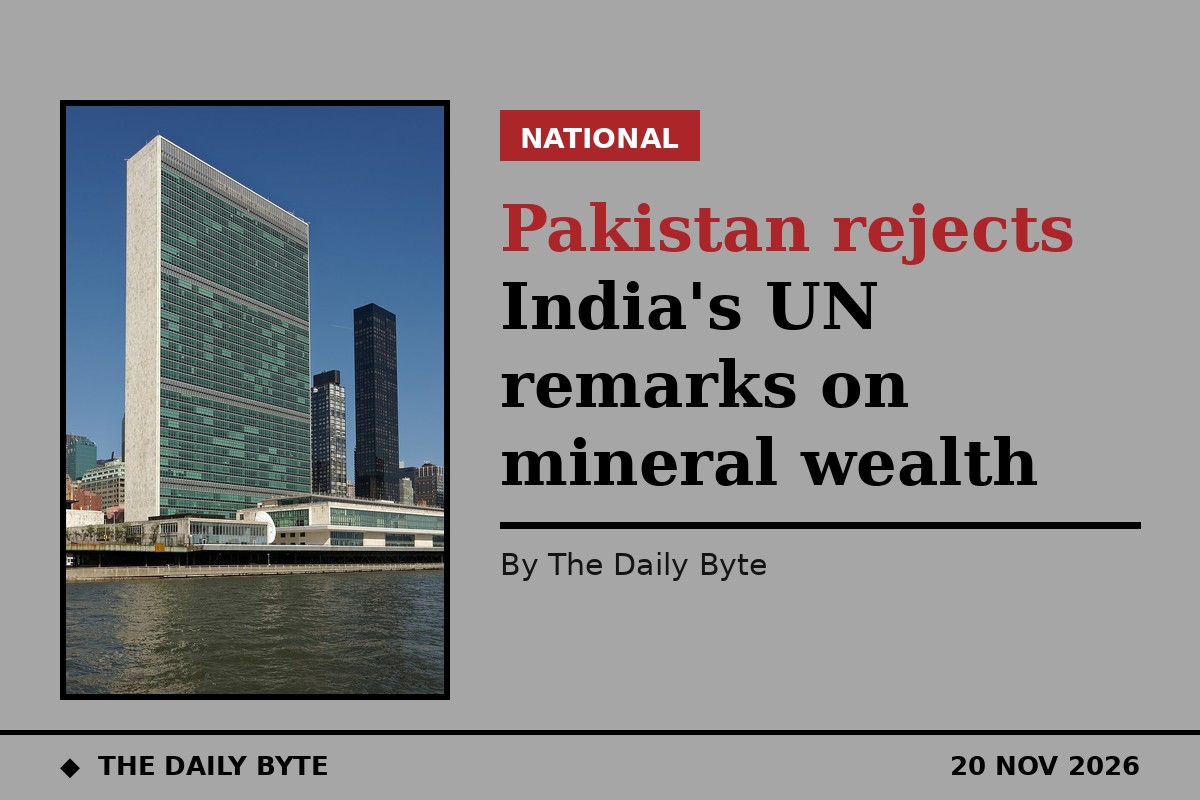
Pakistan on Friday categorically rejected remarks made by India at the United Nations about Pakistan's mineral resources, calling them undiplomatic, irresponsible and baseless. The Foreign Office said the remarks were rebutted by Pakistan's representative during the same meeting and amounted to unacceptable interference in Pakistan's internal affairs.
In a statement issued in Islamabad, Foreign Office spokesperson Ambassador Sajjad Haider Khan said the accusations "merit no attention" and had been "instantly and effectively rebutted" by Pakistan's representative. The statement described the remarks as contrary to the Charter of the United Nations and accused India of misusing the UN platform to advance what it called politically motivated allegations. APP
What India said, and how Pakistan responded
The exchange took place at a UN Security Council Arria-formula meeting on natural resources, where India's Permanent Representative responded to comments by the Pakistani delegation about the Indus Waters Treaty. According to reports of the meeting, the Indian envoy raised questions about the control of Pakistan's mineral wealth and pointed to the display of mineral samples by Pakistan's military leadership. Pakistan's Foreign Office rejected that line of argument outright, saying India had resorted to "unsubstantiated insinuations about Pakistan's institutions and leadership" instead of addressing Pakistan's concerns about what Islamabad calls India's weaponisation of shared water resources. Sabah News
The Foreign Office said India's hostility towards Pakistan's development of its mineral resources was evident in what it described as persistent efforts to undermine Pakistan's stability. It repeated Pakistan's claim, which it says is supported by evidence, that India sponsors and supports terrorist activity in Balochistan and Khyber Pakhtunkhwa aimed at disrupting development and depriving local people of the benefits of their natural resources. Those accusations against India are Pakistan's position, as set out in the Foreign Office statement; they have not been independently established.
The Indus Waters Treaty at the centre of the row
The statement returned repeatedly to the Indus Waters Treaty, which India placed in "abeyance" after the Pahalgam attack in 2025. Pakistan recalled that the Court of Arbitration constituted under the treaty ruled on 31 August 2026 that the treaty remains binding and fully in force, and that there was no legal basis for its unilateral suspension or termination. India has not accepted that ruling, and the Foreign Office said its refusal "raises serious questions about its commitment to treaty obligations and international law".
The statement also said India should implement its obligations under UN Security Council resolutions on Jammu and Kashmir, and it accused New Delhi of systematic discrimination against its Muslim, Sikh, Christian and Dalit minorities. It described India as a "serial violator" of the UN Charter, Security Council resolutions and binding treaty obligations, and said a state in forcible occupation of territory whose people it denies self-determination "has no standing whatsoever".
Why the minerals issue matters now
The dispute comes as Islamabad promotes the development of its mineral resources as a pillar of economic growth, and as the minerals sector has become a recurring theme in Pakistan's diplomacy. The Foreign Office framed the UN exchange as part of that wider contest, arguing that criticism of the minerals programme is aimed at obstructing development rather than raising a genuine concern.
For now, the episode is a diplomatic one: a sharp public rejection, a claim of an on-the-spot rebuttal, and no indication from either side of further action at the United Nations. The underlying disagreements it exposed, over the Indus Waters Treaty, the minerals programme and the long-running exchange of terrorism allegations, remain unresolved.
Sources: APP via Tez Khabar and Sabah News.