Pakistan Seeks Spanish Help to Grow Olive Oil Industry
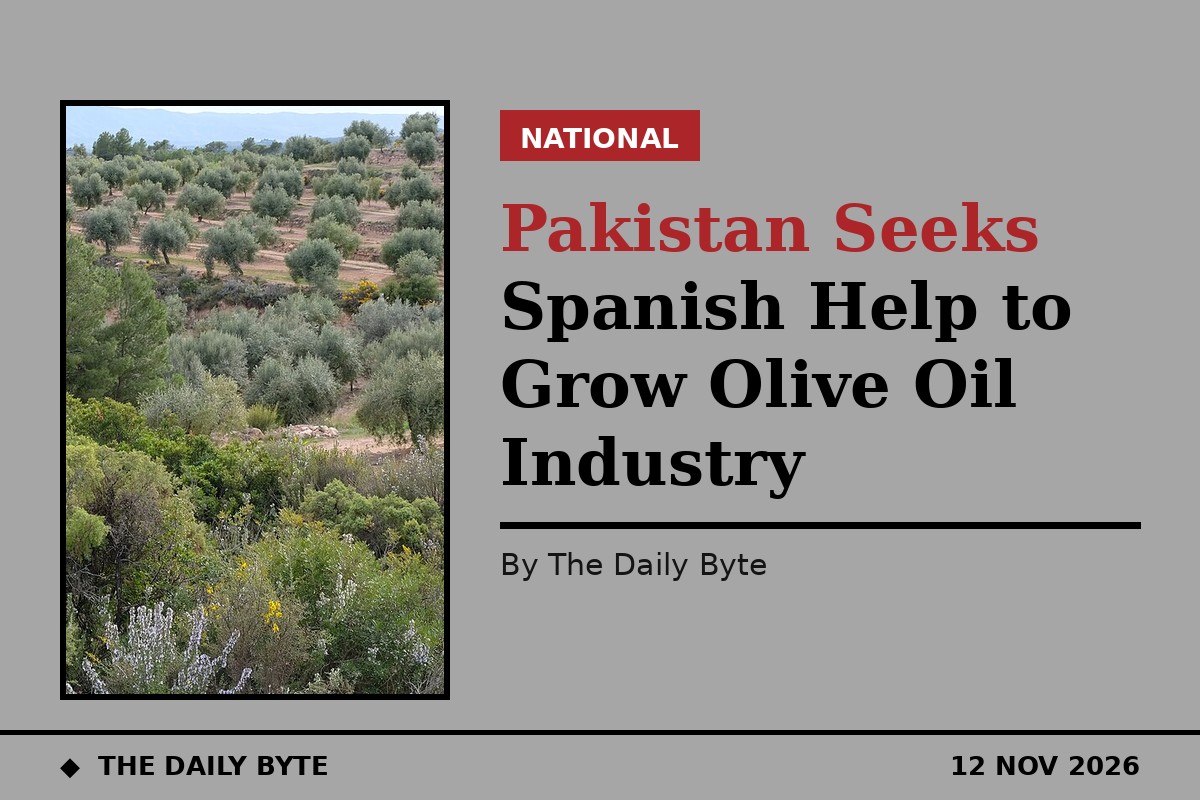
Pakistan and Spain have agreed to work more closely on farming, with a focus on olive cultivation and olive oil production, after talks between Federal Minister for National Food Security and Research Rana Tanveer Hussain and Spain's Minister of Agriculture, Fisheries and Food, Luis Planas Puchades, in Türkiye.
The understanding was reached at a meeting on the sidelines of international engagements in Türkiye, according to a press release from the food security ministry. Both sides discussed olive cultivation, olive oil production and processing, agricultural research, modern farming technologies and sustainable water management.
What the two sides agreed
Rana Tanveer Hussain highlighted Pakistan's considerable potential in olive cultivation and in building an olive oil industry, and said Pakistan could learn a great deal from Spanish experience in orchard care, processing, quality control and marketing abroad. Spain is the world's largest olive oil producer, and the talks are the latest step in a relationship that has grown steadily around the olive sector this year.
The two sides did not announce a signed treaty or a funding figure. What they announced was a shared plan to cooperate, building on contacts earlier in the year. In July, Rana Tanveer Hussain met Spain's ambassador to Pakistan in Islamabad, and the two sides agreed to explore a joint working group on agriculture covering research, technology transfer, investment, food security and trade.
Why Spain matters to Pakistan's olive plans
Pakistan imports most of the edible oil it uses, and olive oil is no exception. A report on Pakistan's olive trade found that Spain supplies the largest share of the olive oil Pakistan imports, close to 72 per cent by volume. The Pakistan Economic Survey for 2025-26 shows that local production meets only about 10 per cent of what the country needs, and Prime Minister Shehbaz Sharif has put the annual edible oil import bill at around four billion dollars.
That dependence is what the government is trying to reduce. In August 2026, the prime minister launched the Pakistan National Olive Value Chain Policy, saying that saving even 400 million dollars a year through local production would be a great success. The policy covers cultivation, processing, branding and exports, and is aimed at turning olives from a niche crop into a commercial industry.
Pakistan's olive push so far
Pakistan formally became a full member of the International Olive Council in May 2026, signing its instrument of accession at the council's headquarters in Madrid. Membership gives Pakistani producers access to international quality standards, certification systems, technical cooperation and premium export markets, and the food security ministry says more than 4.4 million hectares of land have been identified as suitable for olive cultivation, across Balochistan, Khyber Pakhtunkhwa, Punjab's Pothohar region, Sindh and Azad Jammu and Kashmir.
Portugal joined the conversation in September 2026, when Rana Tanveer Hussain visited Lisbon and praised its machinery and know-how. He suggested a joint working group on olives, invited Portuguese firms to invest in pressing, bottling and branding, and proposed training for Pakistani experts. Spain, as the world's biggest producer, is the most significant partner yet in that effort.
What happens next
The test of the new understanding will be whether it turns into concrete projects: Spanish technical help for growers, investment in pressing and bottling plants, and training for Pakistani specialists. For now, the agreement is a framework for cooperation rather than a finished deal, and neither side has said when the first joint projects will begin. Source: Mettis Global