Pakistan Tells UN India Can't Hold 240m Hostage Over Water
Pakistan has told the United Nations that India cannot hold its 240 million people hostage by weaponising shared river water, warning that New Delhi's suspension of the Indus Waters Treaty threatens regional peace and the lives and livelihoods of millions.
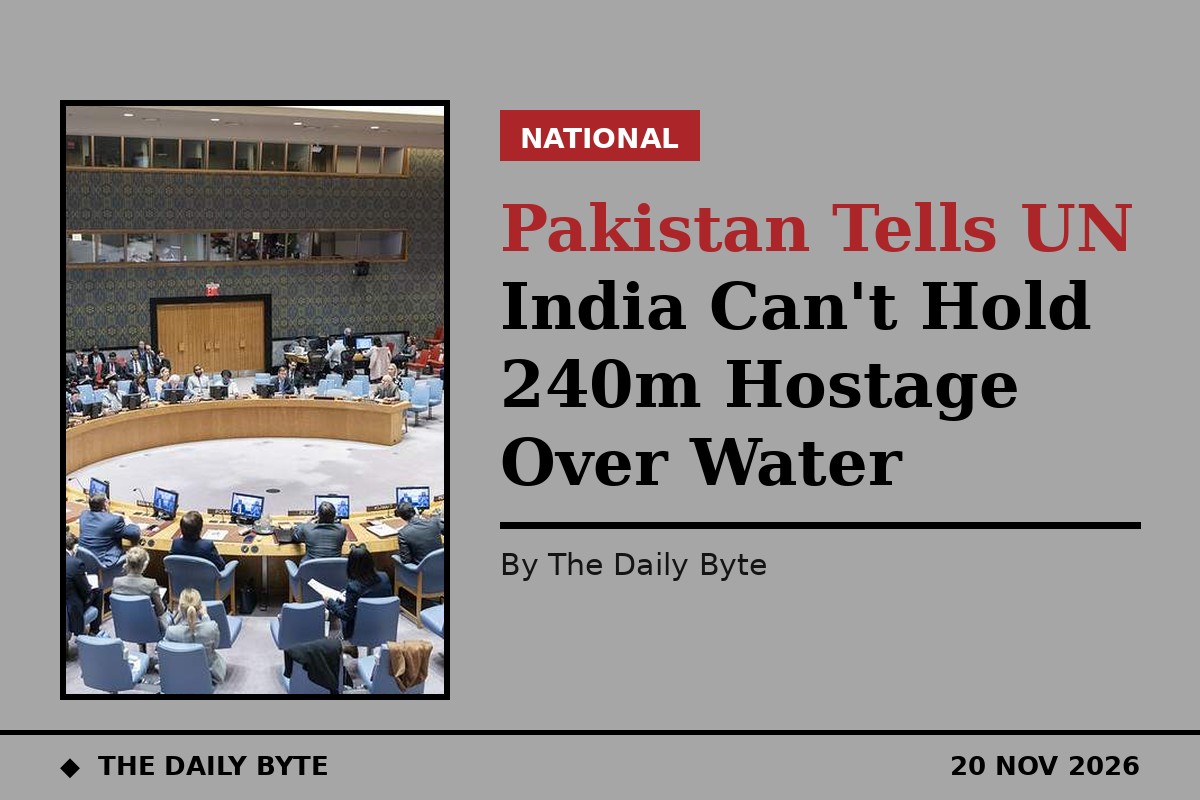
Ambassador Usman Jadoon, Pakistan's deputy permanent representative to the UN, raised the issue at an informal UN Security Council meeting in New York on Wednesday. The Arria-formula meeting, convened by Liberia, was held under the theme "Natural Resources and Conflict: Strengthening Cooperation for Prevention and Peace".
The treaty at the centre of the dispute
India placed the 1960 Indus Waters Treaty in abeyance in April 2025, following the killing of 26 people in Indian Illegally Occupied Jammu and Kashmir. New Delhi accused Islamabad of involvement in that attack, a charge Pakistan denied. The treaty, brokered by the World Bank, governs the six rivers of the Indus system: it allocates the eastern rivers Ravi, Beas and Sutlej to India, and gives Pakistan rights over the western rivers Indus, Jhelum and Chenab.
Pakistan's position is that the agreement contains no provision allowing either country to suspend or terminate it unilaterally. Jadoon pointed to an award by the Permanent Court of Arbitration dated 31 August 2026, which reaffirmed that the treaty remained fully in force and that India continued to be bound by its obligations.
What Pakistan argued in New York
Jadoon told the meeting that India had sought to use water as a tool of political pressure by placing the treaty in abeyance and threatening to stop water flows into Pakistan. He warned that such actions endangered the livelihoods and well-being of more than 240 million people and risked escalating tensions between the two nuclear-armed neighbours.
"No state should be permitted to use shared natural resources as instruments of coercion or political pressure, in violation of international law and binding treaty obligations," the envoy told delegates. He said water should serve as a bridge between neighbours, not as a lever to force concessions, and stressed that cooperation and the peaceful settlement of disputes were essential to regional stability, particularly in managing shared transboundary resources.
Call for peaceful settlement
Referring to UN Security Council Resolution 2788, Jadoon called for disputes to be addressed through the peaceful settlement mechanisms set out in Article 33 of the UN Charter, saying respect for international law and mutually agreed arrangements was indispensable to maintaining regional peace and security.
Exercising Pakistan's right of reply, First Secretary Ansar Shah told the meeting that India's suspension of the treaty was a gross violation of international law, arguing that one party cannot unilaterally hold a binding accord between two neighbouring states in abeyance because the treaty contains no provision whatsoever for such action.
Why the water dispute matters
Pakistan depends heavily on the waters of the Indus system for irrigation, drinking water and power, so any disruption to flows carries direct consequences for farming, food security and daily life across the country. Since India announced the suspension in April 2025, Pakistan has challenged the move at every forum available to it, including the Permanent Court of Arbitration, and has raised it repeatedly at the United Nations.
The wider meeting in New York examined ways to prevent conflicts linked to natural resources, curb their illicit exploitation and ensure that resource wealth benefits local populations. Pakistan used the platform to place the Indus dispute within that broader debate, warning that turning an essential shared resource into an instrument of geopolitical pressure puts regional peace itself at risk.