Pakistani Pupils Average 38% in Maths, Study Finds
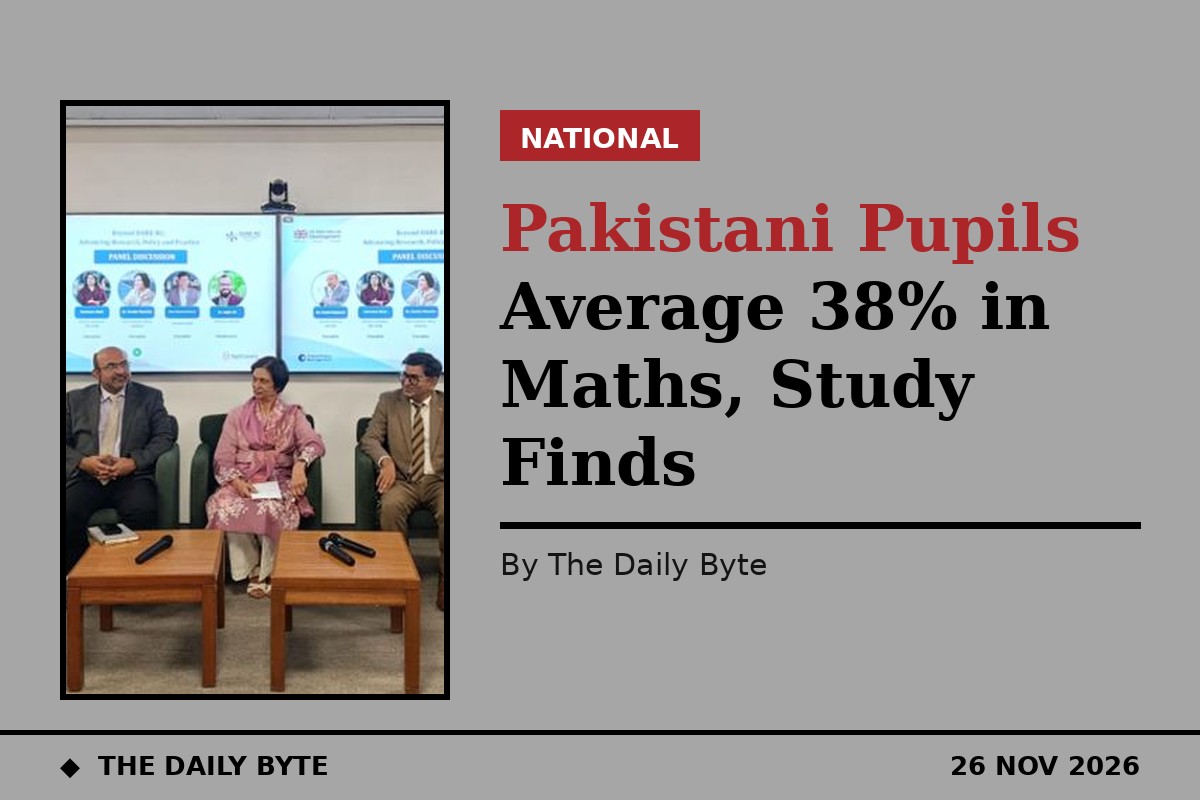
Pakistani schoolchildren scored an average of 38 per cent in mathematics and 47 per cent in science in a nationwide study presented at the Aga Khan University (AKU) in Karachi on Thursday.
The findings come from the Science and Mathematics Instruction and Learning Outcomes study, presented by AKU's Institute for Educational Development (IED) and its research partners at the closing ceremony of the Data and Research in Education - Research Consortium (DARE-RC), a three-and-a-half-year national research programme funded by UK International Development.
Researchers said the results point to the need for stronger classroom teaching and better professional development for teachers, and to wider questions about how learning is organised in Pakistan's schools.
Who carried out the study
The consortium was led by Oxford Policy Management in partnership with AKU's Institute for Educational Development and Sightsavers International. Its work aimed to build a clear picture of academic performance among children who are currently enrolled in school, and of the inequalities that shape it.
The headline figures are averages, and they hide wide differences. The study's findings point to persistent learning gaps and to education inequality across the country, with children in different provinces, and in public and private schools, performing at very different levels. Researchers stressed that the scores reflect learning among enrolled children only.
That matters because a large share of Pakistan's children are not in school at all. According to the federal education ministry's Pakistan Education Statistics Report 2023-24, released in April 2025, around 25 million children in Pakistan are out of school. Their learning, or lack of it, does not appear in the 38 per cent and 47 per cent figures at all.
Access is not the same as learning
The study adds to a growing body of evidence that Pakistan's learning crisis is not only about access. Getting children into classrooms is one challenge; what they learn once they are there is another. An average maths score of 38 per cent means that, on the tests used, pupils answered well under half of the questions correctly, and the science figure, while higher, still leaves more than half of the material unmastered.
The researchers' prescription is focused on the classroom rather than on buildings or enrolment drives alone. Better teaching, they said, and sustained professional development for teachers, are the levers most likely to move the scores. That is a slower and less visible kind of reform than opening new schools, but the study suggests it is where the largest gains are to be found.
The findings land at a time when education budgets in Pakistan are under pressure and when provinces are debating how to spend what they have. The study does not set out a funding plan, but its message is that money spent on teaching quality, rather than only on access, is money spent on the part of the system where the gaps are widest.
For parents, the figures are a reminder to look beyond enrolment. A child in school is not automatically a child learning, and the national averages suggest that many pupils are moving through the system without mastering the maths and science they are being taught.
The consortium's work is now complete, and its findings will be used by policymakers, researchers and education departments. Whether they change what happens in classrooms will depend on whether the call for better teaching and teacher development is followed by the training, support and accountability that teachers need to deliver it.