Ousted Paraguay President Peña Faces 15 Years in Jail
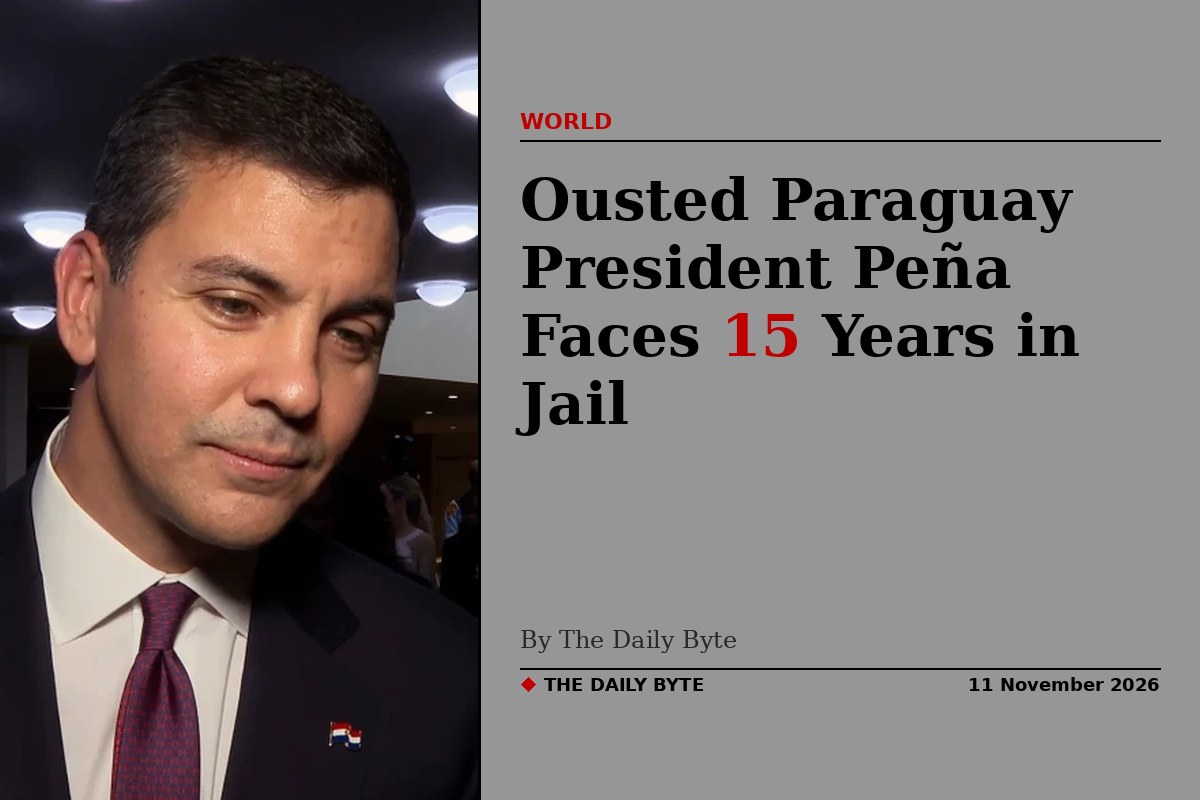
Paraguay's ousted President Santiago Peña is facing up to 15 years in prison after the collapse of Ueno Bank froze the accounts of nearly 2.9 million customers and triggered the country's biggest political crisis in years. He is in pretrial detention at a military facility while prosecutors investigate his links to the lender.
Peña has been charged with breach of trust and administration for personal gain, according to prosecutor Nancy Salomon. Each charge carries up to 10 years in prison, but under Paraguay's penal code a second conviction is halved, meaning he could serve up to 15 years if found guilty of both. He denies any wrongdoing.
Prosecutors allege that during his presidency Peña intervened in decisions about the placement, renewal and maintenance of public and pension funds in Ueno Bank, a lender whose business group he had economic and corporate ties to. He held shares in Grupo Vazquez, Ueno Bank's main shareholder, and sold his stake last year. Prosecutors also say the bank granted him two simultaneous loans in May 2024 worth 580,000 US dollars to finance the construction of his luxury summer home in San Bernardino, about 50 kilometres from the capital, Asuncion. Police raided that residence on 10 November, and days earlier investigators searching the property found what prosecutors described as a highly sophisticated security vault, along with computers, devices and potentially important documents.
How the bank collapsed
Ueno Bank grew from an obscure finance company into a household name in less than five years, claiming more than 60 percent of Paraguay's adults as customers. It lured savers with generous cash-back offers, grew to more than 70 branches, sponsored the national football team and put its name on the country's main stadium. As of last month it held roughly 800 million US dollars in public deposits, about a quarter of its total, including money from the state pension and health funds and from the operators of Paraguay's giant hydroelectric dams.
But inside the central bank, worries were growing. In June its inspectors found a pattern of risky lending to companies tied to the bank's owners, beyond what the law allows and without enough collateral. When regulators corrected the books, Ueno's capital fell to less than half the legal minimum. The central bank put the lender into resolution and then seized it, freezing accounts, shutting its app and locking its branches. Depositors queued outside branches they could not enter, and a rush to open accounts elsewhere crashed other banks' mobile apps.
From resignation to removal
After days of protests, Peña announced on Thursday 5 November that he would resign, saying he wanted to give Paraguayans peace of mind and restore stability. Minutes after his announcement, the lower house of Congress voted 78 to 0 to impeach him instead, a step that stripped him of the immunity and protections resignation would have brought. The Senate followed on Friday by voting to remove him from office, and Vice President Pedro Alliana was sworn in as president soon after. Peña is only the second Paraguayan president removed through impeachment, after Fernando Lugo in 2012.
Peña was initially placed under house arrest but was later transferred to a military facility for pretrial detention. A judge has also ordered six Ueno executives, including founder Miguel Vazquez and bank president Juan Manuel Gustale, jailed pending trial, with two others under house arrest. Prosecutors have charged 27 bank officials and associates with breach of trust and attempted fraud, alleging the bank made large loans to related companies without adequate guarantees. The Labour Ministry estimates the collapse has affected about 7,000 direct and indirect jobs at the bank and its related businesses.
What happens next
Alliana, who survived an impeachment vote in the lower chamber on the same day Peña fell, will serve as president for the next two years, completing a term that runs to August 2028. He has overhauled several ministries and appointed Jorge Schreiner as the new central bank president, replacing Carlos Carvallo, whom prosecutors have also charged. Carvallo had previously run Financiera Ueno, the bank's predecessor.
The government says recovering depositors' money is the priority. It has already paid most Ueno customers roughly 330 million US dollars from Paraguay's Deposit Guarantee Fund, which insures up to about 36,000 US dollars per customer, enough to cover the full balances of an estimated 97 percent of clients. But many Paraguayans remain angry that Peña was succeeded by his own vice president, and demonstrators in parts of the capital have demanded the removal of the whole government under the rallying cry, Out with them all.
Peña had been one of US President Donald Trump's staunchest allies in Latin America, aligning with Washington on immigration and security, including a safe third country agreement allowing asylum seekers from the United States to be transferred to Paraguay.


