Philippines, Indonesia, Vietnam turn islands to solar power
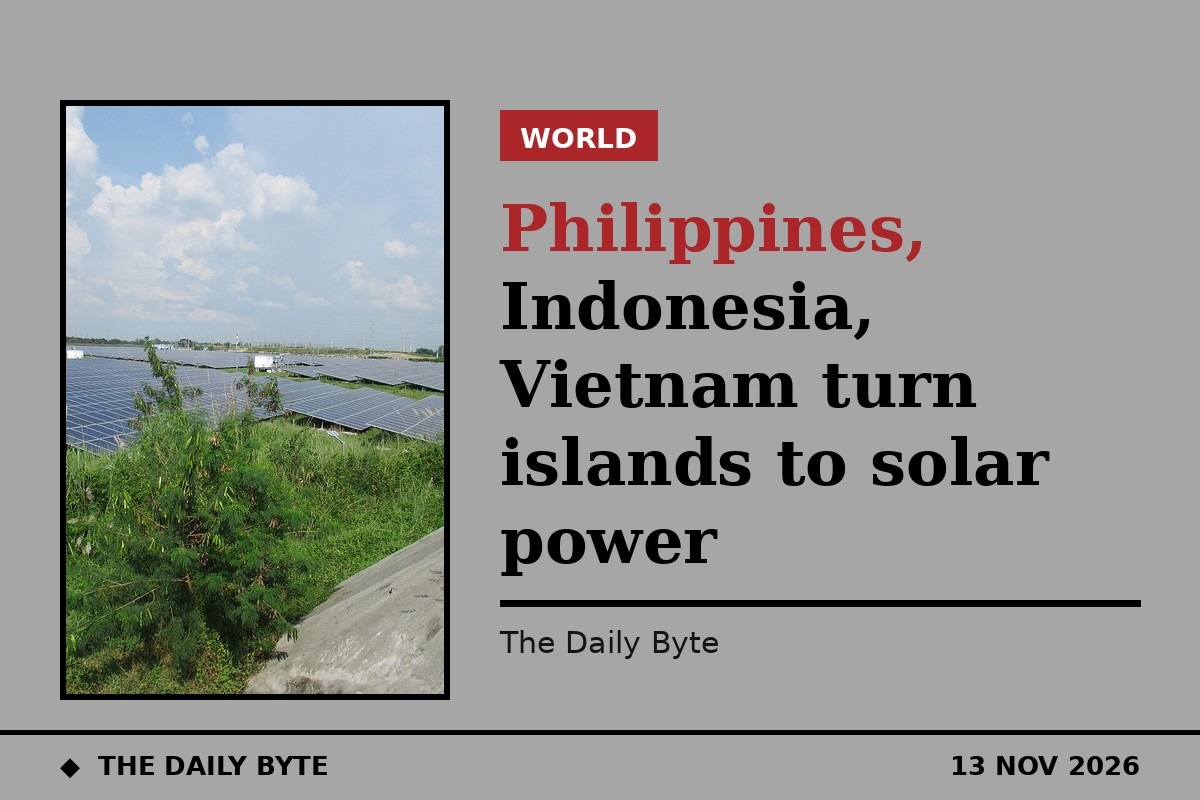
The Philippines, Indonesia and Vietnam have launched a regional partnership to move island and remote communities away from diesel power and towards solar panels and battery storage, in a new effort to cut electricity costs and build climate-resilient power systems.
The initiative was launched during an event titled Powering the Islands and Remote Communities through Solar and Battery Storage, held at the COP31 Philippine Hub during the 31st United Nations Climate Change Conference. It brings together solar industry groups from the three countries under the Asian Photovoltaic Industry Association (APVIA).
The partnership aims to boost regional cooperation, attract investment and build affordable power systems for communities that are among the most expensive to supply with electricity in South-East Asia.
Diesel still dominates island power
In the Philippines, 421 of 447 off-grid power plants, or about 94 percent, still relied on oil as of December 2025, according to the country's Department of Energy. Those diesel plants are costly to run, depend on fuel shipped in by boat, and leave island communities exposed to volatile fuel prices.
One small project shows what the change could deliver. On Cobrador Island in Romblon province, a 30-kilowatt solar-plus-battery hybrid system cut generation costs by half, from 0.47 US dollars to 0.24 dollars per kilowatt-hour, while extending electricity service from eight hours a day to 24 hours a day.
Research from Indonesia's Institute for Essential Services Reform indicates that solar-battery systems can generate electricity at roughly one-third of the cost of diesel, underlining the economic case for the switch as well as the environmental one.
Governments plan to scale up the model
The Philippine Department of Energy plans to integrate island electrification into its Green Energy Auction, which awards contracts for renewable power projects. Energy Undersecretary Felix William Fuentebella said the department was serious about bringing island electrification under the auction system.
"Island communities should not have to depend indefinitely on expensive and volatile diesel generation to secure reliable electricity. Solar and battery storage offer a practical pathway to reduce costs, strengthen energy independence and build resilience," Mr Fuentebella said.
Tetchi Capellan, chairperson of APVIA's steering committee, said the partnership was designed to turn shared ambition into real projects. "Through this partnership, we want to bring countries, industry and investors together to turn these opportunities into implementable projects," she said.
A roadmap cited in reporting on the launch forecasts that renewables could meet between 83 and 100 percent of the power needs of island communities by 2035, saving about 34 million US dollars a year in diesel costs. As of July 2026, the Philippines' on-grid solar capacity stood at 4,230 megawatts, accounting for 13.2 percent of the country's total installed capacity.
For now, the arrangement is a commitment among industry associations rather than a set of funded plants: no investment total, project list, target capacity or timetable has been disclosed. APVIA said it would keep working with regional partners and stakeholders to advance solar and storage deployment and support the shift towards more sustainable and resilient island energy systems.
Frequently asked questions
Which countries are in the solar partnership? The Philippines, Indonesia and Vietnam, through their solar industry groups under the Asian Photovoltaic Industry Association.
Why focus on islands? Island and remote communities depend heavily on diesel generators, which are expensive and unreliable. In the Philippines, about 94 percent of off-grid power plants still run on oil.
How much can solar and batteries save? On Cobrador Island in the Philippines, a solar-plus-battery system halved generation costs and extended power from eight to 24 hours a day. Indonesian research suggests solar-battery power can cost roughly a third of diesel generation.
Sources: BusinessMirror and Context.ph.