DNA Names Pittsburgh Serial Killer After 50 Years
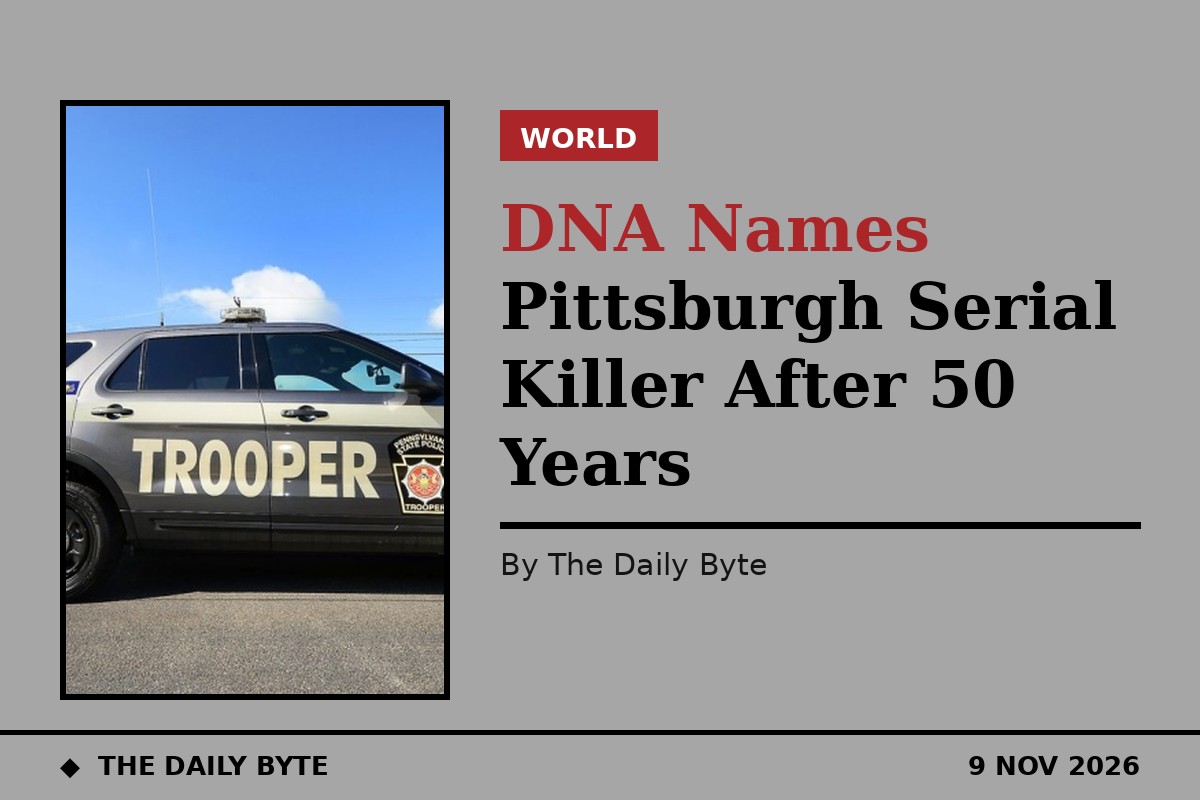
Nearly 50 years after two young women were murdered outside Pittsburgh, Pennsylvania State Police say DNA evidence has finally identified the man responsible — and confirmed that a serial killer was active in Washington County in the 1970s.
At a news conference on Wednesday 4 November, police named James Richard Clark Sr as the killer of 21-year-old Susan Rush and 18-year-old Brenda Ritter. Clark died of natural causes in 2023 at the age of 66 and was never charged. He had never been considered a suspect while he was alive.
Two murders, six months apart
Rush, a 21-year-old clerk, was last seen leaving the shopping centre where she worked on Thanksgiving Eve in 1976. She was on her way to church to meet her family for dinner, but she never arrived. Her brother found her abandoned car along a road the next morning. Her body was in the locked boot of the car. She had been sexually assaulted and strangled, and suffered a fractured larynx.
Six months later, in May 1977, Brenda Ritter was murdered after leaving her boyfriend's house on a stormy night. The recent school graduate, who had just received her beautician's licence, never made it home. Her mother reported her missing the following morning, and her body was found later that day on a hill about three-quarters of a mile from her abandoned car. Her clothes were found 50 feet from her body. She, too, had been sexually assaulted and strangled.
Investigators at the time noted similarities between the two cases, and looked into whether they were connected, but leads in both inquiries went nowhere and the cases went cold. The families waited decades for an answer.
DNA links the two cases
The breakthrough came from evidence preserved from both crime scenes. In 2008, DNA from Ritter's investigation was uploaded to CODIS, the FBI's DNA profile database, producing an unidentified male profile. The database was checked weekly, but no match to any offender profile was ever found.
In 2025, investigators submitted DNA evidence from both cases to several biotechnology companies that work with law enforcement on cold cases, including Cybergenetics Corp, Othram, PTC Laboratories and Identifinders International. Cybergenetics used its TrueAllele software to isolate the unknown person's genotypes from each sample and compare them. The company said the comparison showed an extremely high likelihood of a match, with a match strength of around one million — officially linking the two murders to the same unknown man.
"Testing identified that the same offender murdered both Susan Rush and Brenda Ritter. This testing confirmed there was a serial killer in Washington County during this time frame," said Cpl. James Petrosky of the Pennsylvania State Police Criminal Investigation Assessment Unit.
How the suspect was identified
The DNA evidence allowed investigators to develop a suspect profile that ultimately led them to Clark, according to Petrosky. Police did not give further details about how the DNA profile was connected to Clark, although the companies involved often use investigative genetic genealogy, comparing a DNA profile with those on genealogical platforms to find a relative and build out a family tree.
Clark was living in the Washington area at the time of the murders. He would have been 19 years old when Rush was killed and 20 when Ritter died. Reports describe him as a long-haul truck driver. Police declined to say whether he had a known criminal history, citing the continuing investigation.
Both victims' families have been notified and have asked for privacy, Petrosky said. Clark's family has cooperated with investigators.
Investigators fear more victims
Police have not determined whether Clark had any prior connection to the victims, and believe the encounters may have been random. But Petrosky said investigators believe Clark could have been responsible for further killings, and work is continuing to examine his past, including his trucking routes, against other unsolved cases.
"I believe that once you're a serial killer, you're always a serial killer. I believe there could potentially be more (victims)," Petrosky said.
"We don't consider the cases hopeless, we always think there's something there," he added. "It's not about us; it's about the victims and their families."
The two cases are the latest in a growing number of cold cases solved through advances in DNA technology. Earlier this year, DNA extracted from chewing gum led authorities in Washington state to the man responsible for two murders in the 1980s.


