PM Orders Roadmap for 100% Digital Payments in Pakistan
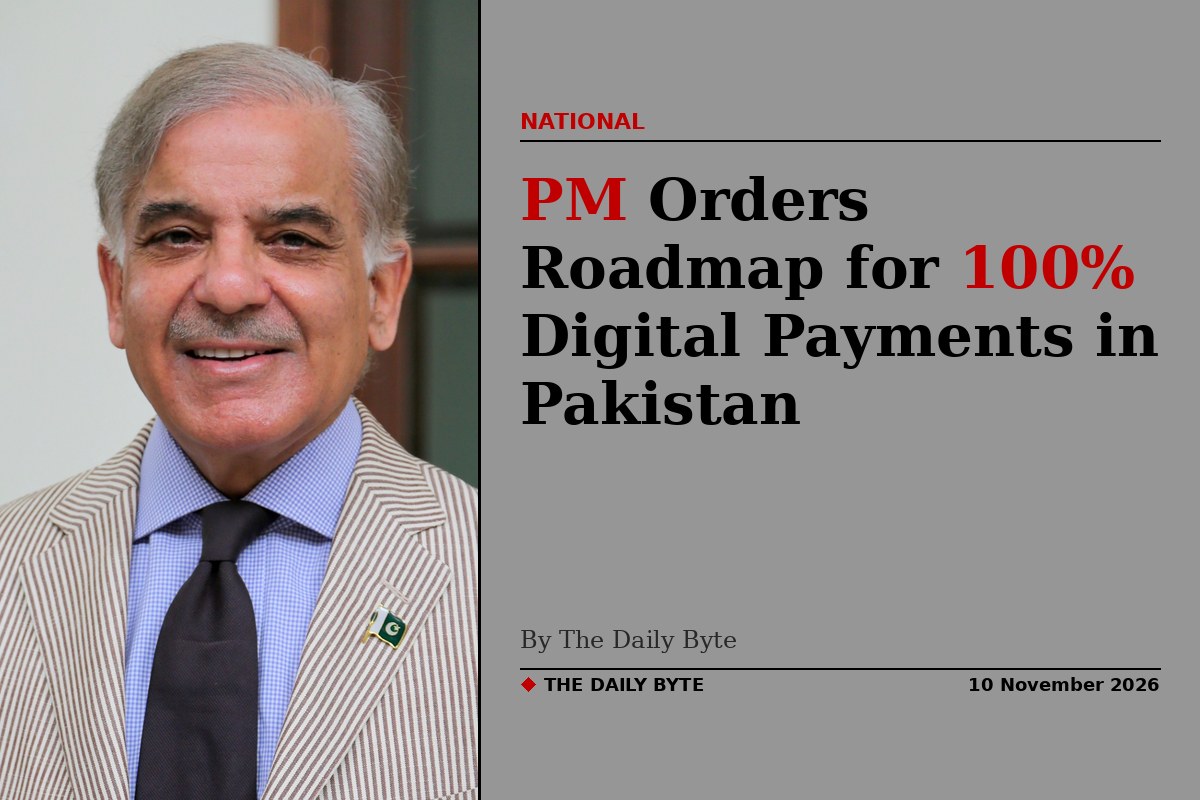
Prime Minister Shehbaz Sharif has directed the authorities to prepare a clear roadmap, with specific timelines and targets, for a fully cashless economy in Pakistan. He was chairing a high-level meeting on the promotion of digital payments in Islamabad on Friday, 6 November, according to a statement from the Prime Minister's Office.
The prime minister said promoting a cashless economy was one of the government's top priorities. He instructed all ministries and government institutions to implement the cashless economy plan in full, and asked officials to remove the obstacles faced by people trying to pay digitally.
Raast QR payments at the centre of the plan
The meeting reviewed the Raast QR Code system, which lets customers pay merchants by scanning a code with a phone. The prime minister directed that the government-backed initiative to promote digital payments between consumers and merchants through Raast QR codes should continue under government patronage, saying it was helping the government achieve its vision of a cashless economy.
He also called for an effective media campaign to encourage electricity and gas consumers to pay their bills by scanning the QR codes printed on their utility bills. The campaign is aimed at households that still pay in cash, and at small businesses that have been slow to accept digital payments.
Cheque payments end on 15 November
The meeting was told that cheque payments under the Asaan Assignment Accounts system will be discontinued from 15 November 2026. From 16 November, all payments under those accounts across the country will be made through the Raast digital payment system, and drawing and disbursing officers have already been trained for the change.
Officials also told the meeting that work on digitising payments across federal and provincial government institutions was progressing rapidly, with most institutions expected to have their payments fully digitised by December 2026. All payments under the Benazir Income Support Programme are already being made through digital wallets, the meeting was informed.
Internet access and payments without internet
The prime minister directed the authorities to ensure reliable internet connectivity across the country and easy public access to technology, so that the shift to digital payments is not limited to the big cities. Work is also under way on an advanced digital payment system for areas without internet connectivity, according to the briefing given at the meeting.
A phased 12-month implementation roadmap, covering approval, design, execution and independent assessment, was also submitted at the meeting. The roadmap sets out how the government intends to move from planning to delivery, although no date has been given for when the country would become fully cashless.
For ordinary Pakistanis, the most immediate change is the 15 November deadline for Asaan Assignment Account cheques, followed by the push to pay utility bills through QR codes. The government says the changes will make payments faster and more transparent, but their success will depend on internet access and on whether people trust the new systems enough to use them.