PMD Warns of Drought in Sindh, Balochistan, South Punjab
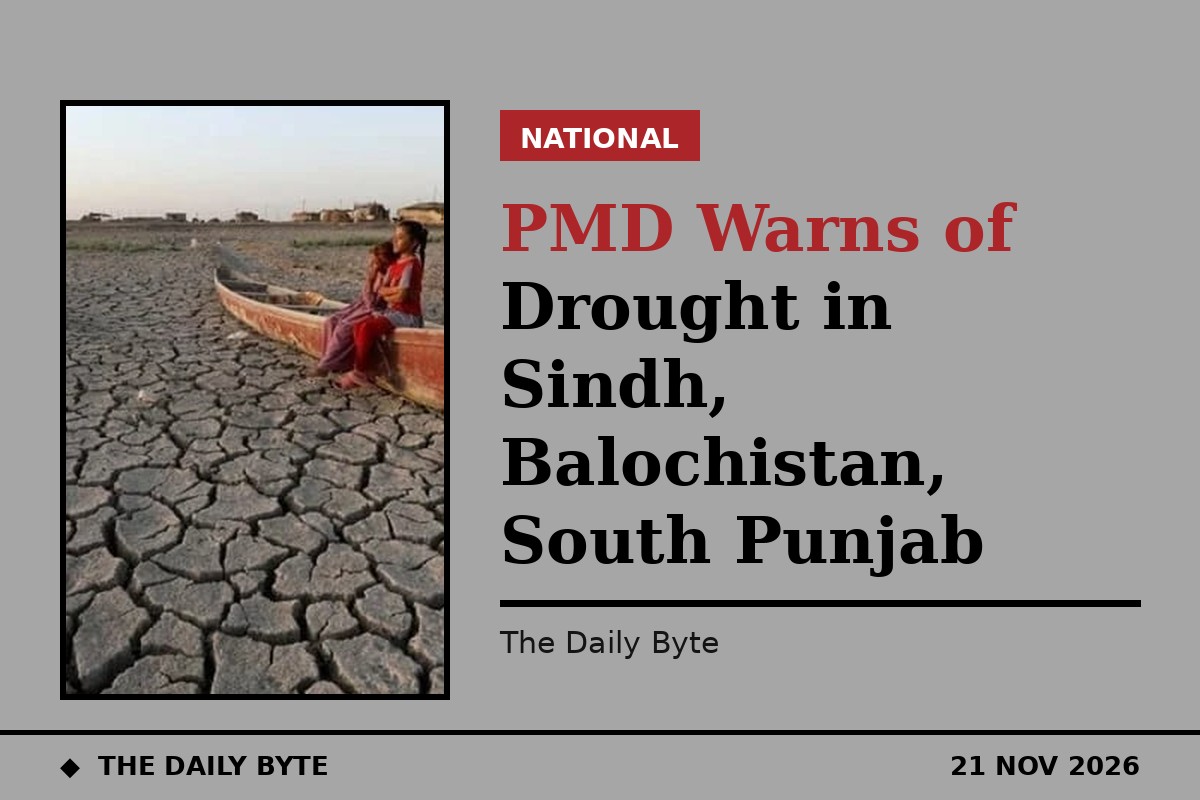
The Pakistan Meteorological Department has warned that drought conditions could worsen across Sindh, Balochistan and southern Punjab during the coming winter months, after months of rainfall far below normal left farmland, livestock and water supplies under strain.
In a Drought Watch issued on Friday, the department’s National Drought Monitoring and Early Warning Centre advised provincial governments and relevant authorities to take precautionary measures against emerging mild drought conditions. It warned that below-normal rainfall between December 2026 and February 2027 could aggravate the situation further.
The department was clear that the advisory is a precaution, not a declaration of a drought emergency. But the figures behind it are stark. Sindh, Balochistan and southern Punjab have faced persistent rainfall shortages since 1 July 2026, and the shortfall became particularly concerning after deficient monsoon rains between July and September.
Sindh is the worst affected of the three regions. The province recorded 61 per cent below-normal rainfall in July, 22 per cent below normal in August and 90 per cent below normal in September. The situation then deteriorated further: October brought a 100 per cent rainfall deficit, effectively no rain at all, followed by a 99 per cent shortfall during the first 20 days of November.
Balochistan has recorded below-normal rainfall in every one of the five assessment periods. Its deficits were 41 per cent in July, 12 per cent in August, 68 per cent in September, 80 per cent in October and 79 per cent during 1–20 November. The department said both Sindh and Balochistan had therefore experienced continuous deficits across all five periods, pointing to persistent dry conditions rather than a single failed spell of rain.
Winter rain offers little relief
Punjab recorded above-normal rainfall in July and October, but its southern districts remain vulnerable to prolonged dry spells and declining soil moisture. Meteorological officials also observed that the number of consecutive dry days has increased across southern Pakistan, with several areas going for extended periods without meaningful rainfall.
The combination of long dry spells and accumulated rainfall shortages could progressively reduce soil moisture, increase moisture loss through evaporation and plant activity, and limit the water available for farming and domestic use. Rain-fed agricultural areas and regions already facing water shortages are particularly vulnerable, the advisory said.
Winter rainfall matters because it replenishes soil moisture, supports Rabi crops and improves water availability. The department’s outlook for December 2026 to February 2027, however, points to normal to below-normal precipitation across the three regions. Insufficient winter rain after an already deficient monsoon could prevent the natural recovery of soil moisture, particularly in the rain-fed areas of Sindh, and continued dry conditions could increase water stress on crops and put additional pressure on surface water and groundwater.
Alerts and preparations under way
Separately, the National Disaster Management Authority’s National Emergency Operations Centre has placed several districts on high alert over the drought threat, identifying parts of Umerkot, Tharparkar, Mirpurkhas and Sujawal in Sindh, and Chagai and Washuk in Balochistan, as facing serious risk. Temperatures in the affected areas of Sindh have been recorded 1 to 3 degrees Celsius above normal, adding to water shortages and pressure on crops.
The Drought Watch has been circulated to federal ministries, the National Disaster Management Authority, provincial chief secretaries, irrigation and agriculture departments and provincial disaster management authorities. It calls on provincial administrations to monitor the situation through district coordination committees, activate early warning systems, identify vulnerable communities and prepare lists of people who would need assistance if conditions deteriorate.
It also recommends water conservation at farm and community level, including efficient irrigation, mulching and careful use of available water, along with district-level drought assessments, updated maps of livestock movement and water sources, and arrangements for veterinary services and animal feed. The department said its next assessment would be issued on 5 December through its monthly drought bulletin. Sindh has already announced relief measures for drought-affected communities in Tharparkar and Umerkot.