Pomegranate Prices Double in Pakistan as Afghan Trade Halts
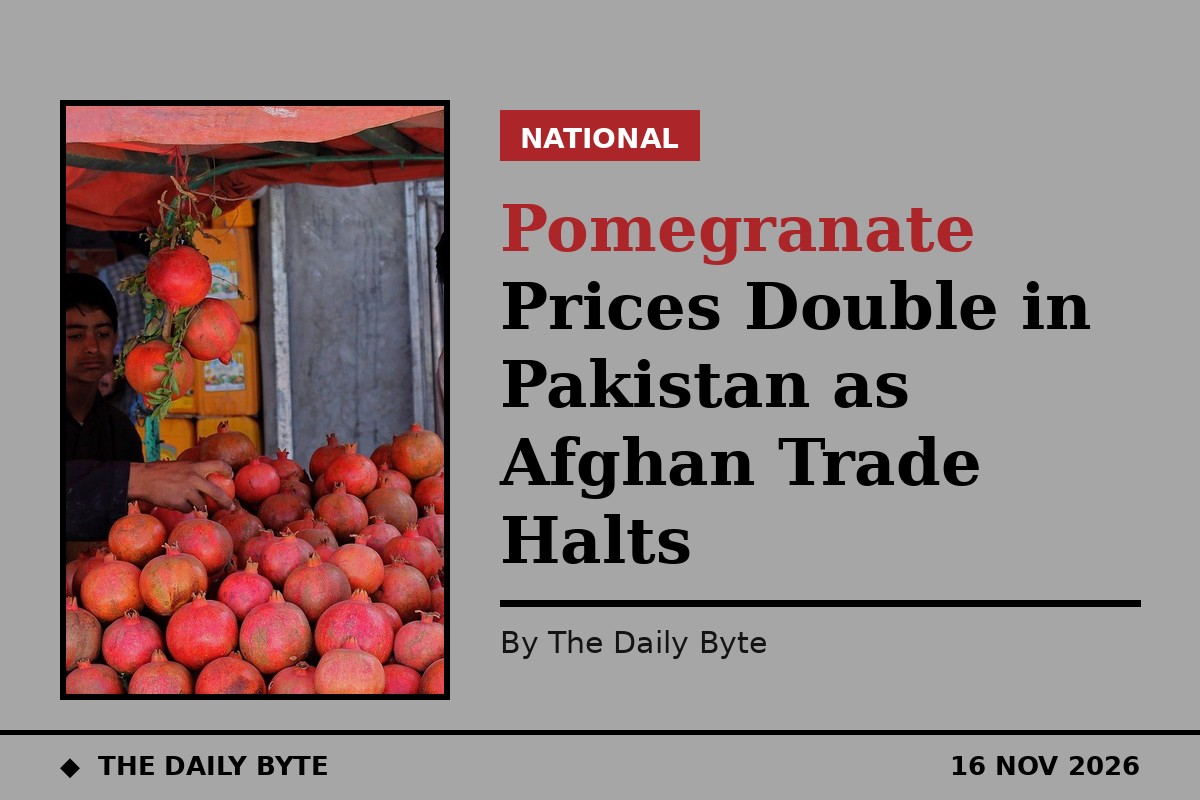
Pomegranate prices in Pakistan have more than doubled since trade with Afghanistan was suspended, leaving shoppers to pay sharply more for a fruit that once arrived in large volumes from across the border. In Quetta, the capital of Balochistan, high-quality pomegranates are now selling for about Rs900 a kilogram, compared with about Rs400 during the same period last year.
Traders say the jump is even steeper for bulk buyers. A 10-kilogram crate of large pomegranates, which cost about Rs4,000 in 2025, now sells for as much as Rs10,000. With Afghan supplies cut off, traders have been forced to rely increasingly on local production, which cannot fill the gap left by imports.
Trade halted since 2025
Pakistan was previously a major importer of Afghan pomegranates. According to Pakistan's Bureau of Statistics, the country imported more than $18 million worth of pomegranates from Afghanistan in 2024. That flow stopped when bilateral trade was suspended in 2025, as tensions between the two neighbours escalated and border crossings were closed.
The disruption has run in both directions. Pakistan's Commerce Ministry recently told a parliamentary committee that the country's exports to Afghanistan had fallen by about $1 billion since trade was suspended. Fruit and vegetable prices have also surged in Punjab, where border closures halted imports of Afghan grapes and pomegranates as well as Iranian apples and tomatoes.
Traders and consumers feel the squeeze
Hajji Jalat Khan Achakzai, a former president of the Chaman Chamber of Commerce and an importer of Afghan pomegranates, said the suspension has hit consumers as well as importers, transporters and clearing agents who depended on the cross-border fruit trade. Chaman, in Balochistan, is one of the main crossings for Afghan produce entering Pakistan.
For shoppers, the effect is visible at the stall. Pomegranates from Afghanistan, prized for their size and sweetness, have become a luxury item in markets that once sold them cheaply in season. Local growers have benefited from higher prices, but their output is not enough to bring prices back down while the border stays shut.
The other side of the border
Afghan growers are suffering the opposite problem. Grape and pomegranate prices in Afghanistan's Kandahar province have fallen by between 50 and 70 per cent since the trade routes closed, according to growers and trade officials there. Fruit that once travelled by road through Spin Boldak into Pakistan is now being shipped in limited volumes by air, at twice the transport cost, to markets in Qatar and elsewhere in Asia and Europe.
Pakistani officials have said the closures will stay in place until security concerns are resolved, insisting that the safety of citizens takes priority over commercial interests. Until the crossings reopen, pomegranate lovers on both sides of the border will keep paying the price of the stand-off — too much in Pakistan, and too little in Afghanistan. TOLQUN News first reported the price rises, citing Arab News, while FreshPlaza reported the collapse in prices for growers in Kandahar.