Pound near four-week low as dollar climbs on Fed hike bets
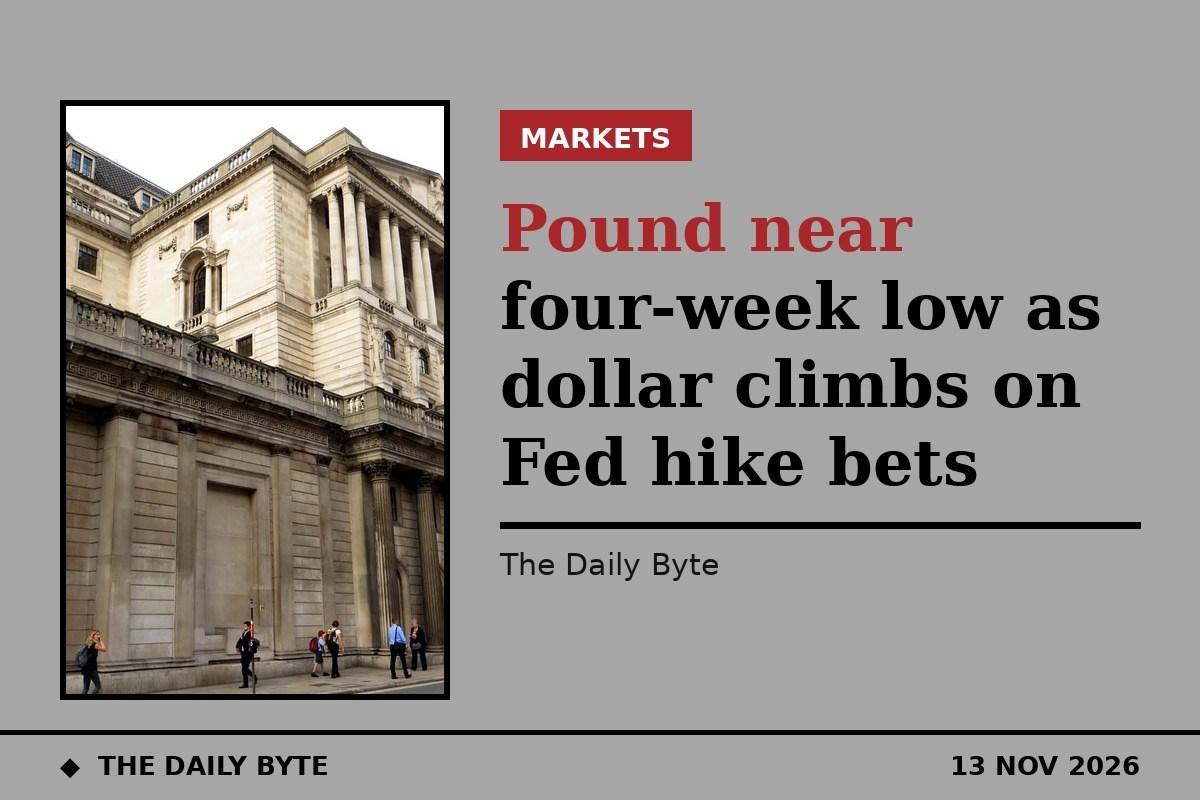
The pound held near a four-week low against the dollar on Friday 13 November, as the United States currency climbed to its strongest level since April 2025 on growing bets that the Federal Reserve could raise interest rates by more than expected next month.
Sterling was consolidating around $1.3230 during the Asian session on Friday, close to its lowest level in more than four weeks. The pair has fallen from just under $1.3450 at Monday's close to around $1.3250, with Thursday's low the lowest it had traded since 15 October.
The slide has come despite stronger than expected growth in the British economy. The pound's problem is not the domestic data, but the dollar, which has been rising on the back of hotter than expected United States inflation and a run of hawkish comments from Federal Reserve officials.
Dollar at its strongest since April
The dollar index, which tracks the greenback against a basket of currencies, stood firm near its April 2025 highs and was on track for a weekly gain of 0.9%, its biggest in more than a month. The euro slid to fresh lows near $1.1050, while the yen languished close to the key 160 per dollar level, leaving traders on alert for possible intervention from Tokyo.
United States Treasury yields have climbed with the dollar. The two-year yield peaked at 4.8920% in the early Asian session, a one-month high, while the benchmark 10-year yield rose to 5.1433%, a three-week high and back above the 5% threshold. Higher yields make dollar-denominated assets more attractive relative to sterling, euros and yen, and that is what has been pulling money towards the dollar.
Why traders expect a bigger Fed move
Investors now see a 14.5% chance of a jumbo 50-basis-point rate rise by the Federal Reserve in December, up from zero a week ago, according to the CME FedWatch tool. A Reuters market report on Friday noted that traders have three rises priced in for effectively the next 12 months, after October's consumer price data came in hotter than expected.
Several Federal Reserve officials have adopted a more hawkish tone since that inflation release. Cleveland Fed President Beth Hammack said on Thursday that policy has to become restrictive, although she argued against a half-point move. Fed Governor Christopher Waller has suggested policymakers should consider a larger, 50-basis-point rise in December if underlying price pressures remain stubborn.
That is not a settled matter. A half-point rise is still speculation, not a decision, and United States producer price data due at 13:30 GMT on Friday, along with speeches from Fed officials, could harden or soften those odds within hours.
What comes next for sterling
The Bank of England raised Bank Rate to 4.00% on 5 November, in an 8-1 vote, and bets on a further rise at its meeting on 17 December are priced at close to 80%. That could offer the pound some support, but it has not done so yet, with traders focused on the prospect of United States rates moving above Britain's.
The next tests for sterling come at home. British jobs figures are due at 07:00 GMT on Tuesday 17 November, with unemployment last at 4.7% and pay growth excluding bonuses at 3.7%. October inflation follows at 07:00 GMT on Wednesday 18 November, after 3.5% in September. Both land before the Bank of England's December decision and could shift expectations for its next move.
For now, bearish traders are watching the $1.3200 level. A break below it could open the way to further falls, while a hold above it would leave the pound consolidating near its recent lows. Exchange rates quoted in this article are as reported on Friday 13 November 2026. This is market reporting only, not financial advice.