Sterling heads for biggest weekly fall since September
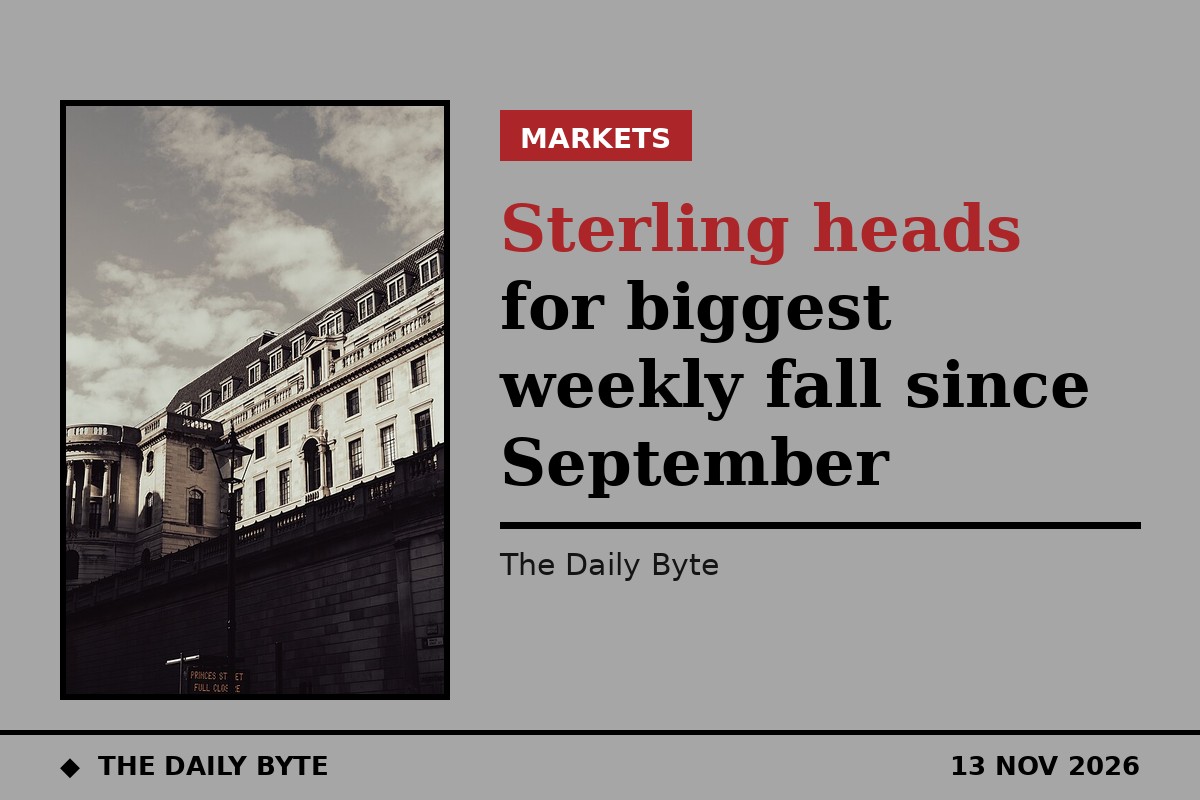
The pound was little changed on Friday but remained on course for its biggest weekly fall since September, as a strong US dollar continued to weigh on sterling. Sterling traded at $1.323 on Friday, up 0.05% on the day, according to Reuters, after four sessions of losses against the dollar.
The weekly slide has been driven mainly by the dollar rather than by domestic news. Rising US government bond yields and hawkish comments from several Federal Reserve officials have kept the greenback near 19-month highs, with the dollar index holding at 103.24 on Thursday. FXStreet reported that the pound extended its losing run for a fourth trading day on Friday, dropping to near $1.3227, close to a four-week low of $1.3222.
US inflation data set the tone for the week
The dollar's advance gathered pace after US consumer inflation for October came in hotter than expected earlier in the week. Headline prices rose 0.4% month on month, with core prices up 0.3%, reinforcing market bets that the Federal Reserve will tighten policy further. Traders have begun pricing in the possibility of a half-point rate rise from the Fed in December, pushing the yield on the benchmark 10-year US government bond back above 5%.
Attention on Friday turns to the latest US producer price figures, due at 13:30 GMT, which could add to the pressure on sterling if they point to further inflation. The pound has now given back much of the ground it gained earlier in the month, falling from just under $1.3450 at Monday's close to around $1.3250.
Bank of England hike still expected in December
Domestic developments have offered the pound only limited support. UK economic growth data published on Thursday matched expectations, with the economy growing 0.7% in the third quarter, and the figures were seen as backing the Bank of England's decision last week to raise interest rates. The Bank lifted Bank Rate to 4% on 5 November in an 8-1 vote, its first rise since August 2023.
Markets now assign roughly an 85% chance to another quarter-point rise at the Bank's next meeting on 17 December, according to Reuters. UK inflation figures due next week are expected to come in above consensus and could push those odds higher still, Nick Rees, head of macro research at Monex, told Reuters.
Pound holds firm against the euro
Against the euro, sterling has fared better. The pound edged stronger to 83.55 pence per euro on Friday, trading around its firmest level since May 2025. The contrast underlines that the week's weakness has been a dollar story: sterling has held its ground against other major currencies while the greenback has risen across the board.
For households and businesses, the immediate effect of the slide is limited while the pound stays near $1.32. But a sustained fall would raise the cost of imports priced in dollars, including energy, at a time when the Bank of England already expects inflation to climb towards 5% by the middle of next year. Traders will now watch next week's UK jobs and inflation releases for signs of whether the Bank will follow through with a second rise in December.