Punjab Raises Wheat to Rs4,500, Flour Bag to Rs1,275
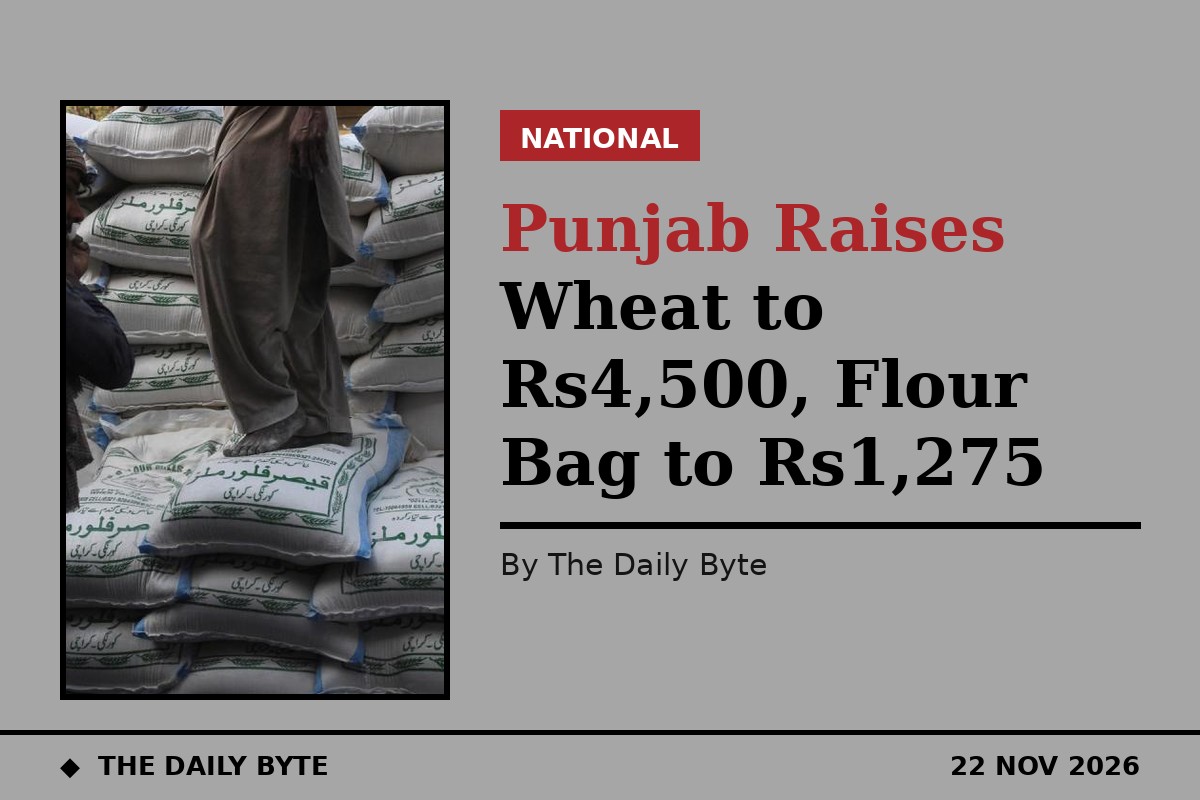
The Punjab government has raised the official price of wheat supplied to flour mills by more than 18 per cent and the retail price of a 10-kilogram bag of flour by nearly 16 per cent, in a move that will be felt in every household in Pakistan's most populous province.
Under the Punjab Wheat Release and Flour Distribution Order, 2026, issued on Friday 20 November and effective from Saturday 21 November, government wheat supplied to operational flour mills now costs Rs4,500 per 40 kilograms, up from Rs3,800, a rise of Rs700 or 18.42 per cent. On a per-kilogram basis, the grain rate moves from Rs95 to Rs112.50.
The retail price of flour follows. A standard 10-kilogram bag of atta, which was priced at Rs1,100 under the previous order issued on 19 October, will now sell for Rs1,275, an increase of Rs175 or 15.91 per cent. Per kilogram, flour rises from Rs110 to Rs127.50.
New distribution rules for mills
The order does more than change prices. It introduces a new mechanism for the distribution of government wheat, flour pricing and monitoring of stocks across the province, approved by the provincial cabinet.
Government wheat will be supplied only to eligible, licensed flour mills and atta chakkis, with payment required in advance or before release and verified by district food controllers. The Directorate General of Food will allocate district quotas by population or on a liberalised basis. Mills must disclose public and privately sourced wheat, storage, grinding and flour sales through the Food Department Inventory and Management System, with daily reporting and online records mandatory.
The order also prescribes a 70:18:12 extraction ratio for government wheat, under which 70 per cent must be milled into flour, 18 per cent into fine flour and 12 per cent into bran. Inspections and penalties for violations are built into the framework.
Why prices have risen
The increase comes after open-market wheat prices in Punjab climbed as high as Rs5,900 per maund, squeezing millers and pushing up retail flour prices. The Pakistan Business Forum told the finance minister in a letter dated 19 November that flour had exceeded Rs7,000 per 40 kilograms in places, and called for improved wheat supplies and market oversight.
The provincial government says the new order, with digital monitoring of stocks and district-wise quotas, is designed to keep government wheat reaching licensed mills at the fixed rate and to stop diversion. A spokesperson for the Food Safety and Consumer Protection Department said the order replaces the previous pricing arrangement and takes immediate effect.
The change is separate from the federal government's indicative wheat price of Rs4,500 per 40 kilograms for the 2027 crop, set on 23 October in consultation with the Punjab and Sindh chief ministers. For consumers, the immediate effect is straightforward: the staple flour bag that cost Rs1,100 a month ago now costs Rs1,275, and the provincial government will be judged on whether the new monitoring system keeps that price honest at the shop counter.