Punjab Solar Scheme Phase Two Reaches 100,000
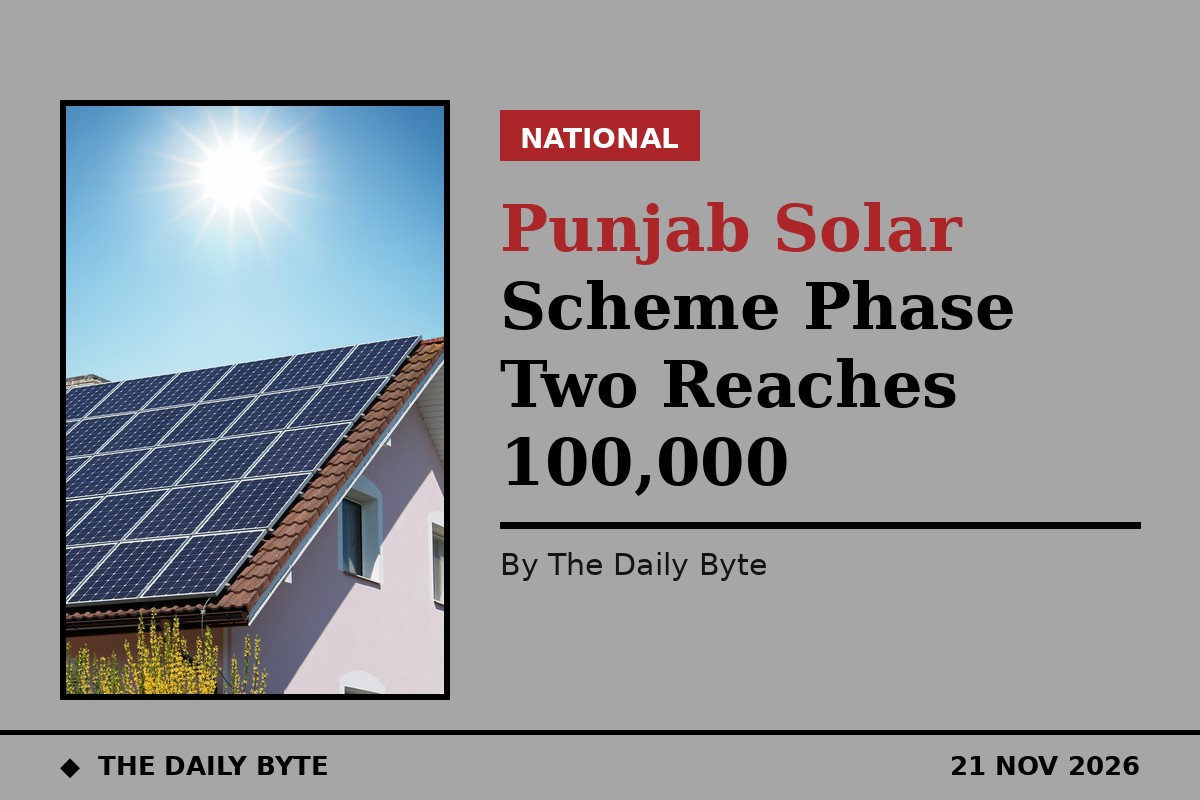
Punjab Chief Minister Maryam Nawaz Sharif has approved the second phase of the CM Solar Panel Scheme, raising the number of beneficiaries from 90,000 to 100,000 as the province expands its push into household solar energy.
The decision was taken at a special meeting on energy chaired by the chief minister in Lahore on 19 November. Provincial Minister Faisal Khokhar and the energy secretary briefed the meeting on the scheme's progress and on new energy proposals.
Under the scheme, free solar systems are provided to low-consumption households to cut their electricity bills. Officials told the meeting that the first phase attracted more than 350,000 applications and delivered panels to 89,869 households, who saved about one-third on their electricity bills. A public survey by the Energy Department found some beneficiaries reporting bills nearly halved.
Cholistan pilot and solar water supply
The chief minister also approved a pilot project to install 5,000 solar panels in Cholistan, the desert region in southern Punjab where grid electricity is limited. Officials were given in-principle approval to shift 40 water supply schemes in the region to solar energy.
The meeting also reviewed plans to convert public institutions to solar power, building on a pilot under which 76 schools have already been shifted to solar energy.
Hospitals to face energy audits
Maryam Nawaz ordered energy audits of all major hospitals in the province and directed that electrical panels be installed in each hospital according to its energy load, a step aimed at cutting running costs in the public health system.
The meeting gave in-principle approval to a pilot project to generate energy from 3,000 tonnes of waste, and the chief minister asked for a plan, in collaboration with Suthra Punjab, for waste-to-energy and biofuel projects.
Waste and biogas potential
Officials reviewed bioenergy and biofuel projects based on animal, agricultural and solid waste, including a report on a proposed biorefinery in Nankana that would use paddy and other crop residue. Plans for commercial-scale, private dairy and community-based biogas plants were also examined.
The Energy Department told the meeting that Punjab could produce 7.15 billion cubic metres of biogas a year from about 490,000 tonnes of animal waste, and that animal, agricultural and solid waste together could generate 1.6 billion units of electricity.
The decisions form part of a wider provincial effort to expand renewable energy, ease pressure on household budgets and find new uses for waste. What remains unclear is the timetable for the second phase: officials have not yet announced when registration will open, how beneficiaries will be selected or when distribution will begin.