Punjab Water Demand Outstrips Supply, FAO Warns
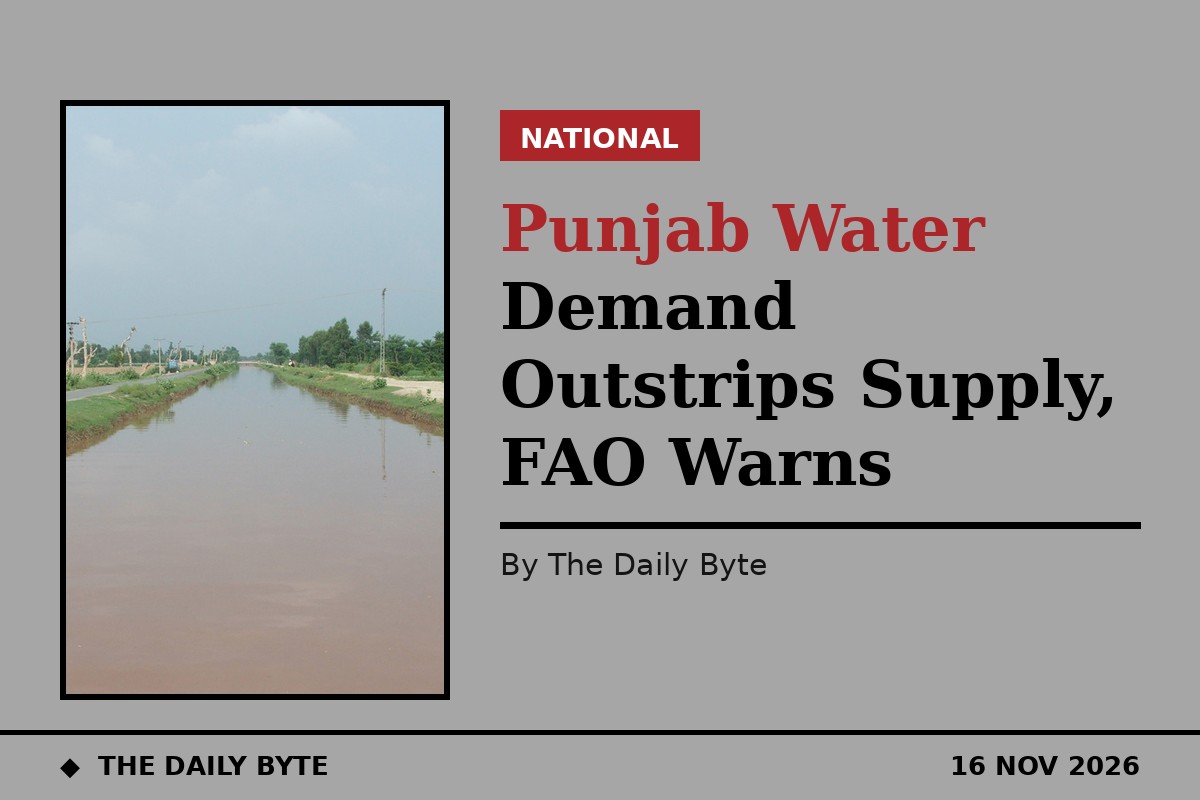
Water demand in Punjab already exceeds supply across every sector, a United Nations assessment has warned, with groundwater falling by about 5.5 billion cubic metres a year and surface water under growing pressure. The province needs an extra 10 billion cubic metres of usable water each year to bridge the gap and keep its groundwater aquifer sustainable.
The warning comes in Water and Land Accounting in Punjab, a report by the Food and Agriculture Organisation of the United Nations (FAO) published on Monday. It is the latest official alarm over a crisis that has been building for years in Pakistan's most populous province and its farming heartland.
What the assessment found
The FAO's findings rest on annual water accounts covering five water years, from 2012 to 2017. The organisation took advice from water specialists, including former Water and Power Development Authority (Wapda) chairman Shamsul Mulk and former Indus River System Authority (Irsa) chairman Rao Irshad Ali Khan.
The report identifies increasing water scarcity, continuous groundwater depletion, competition between sectors for the same water, and the need to protect renewable water resources as the major challenges facing the province. Demand has now moved ahead of supply not only in farming, but across all sectors that draw on Punjab's water.
Punjab's farmers depend heavily on groundwater to irrigate their crops, and the steady fall in the water table means wells must be drilled ever deeper. The FAO's figures put the scale of the problem in stark terms: every year, the province draws about 5.5 billion cubic metres more groundwater than nature puts back.
What the FAO recommends
The report recommends establishing a dedicated commission to review provincial water resources, the policies that govern them and the strategies already in place. The aim would be to bring water use back into balance before the depletion becomes irreversible.
Such a review would have to weigh the competing claims on a shrinking resource. Agriculture, industry and growing cities all need more water, while the rivers and aquifers that supply them are under strain from overuse and a changing climate.
Why it matters
Punjab is the backbone of Pakistan's food production, and its water crisis is therefore a national one. If groundwater keeps falling at the current rate, farmers will face rising costs and shrinking harvests, and cities will find it harder to secure drinking water.
The FAO assessment does not offer a quick fix. Its message is that Punjab is already living beyond its water means, and that closing a gap of 10 billion cubic metres a year will require hard choices about how water is shared, priced and conserved. The report's publication puts those choices squarely on the agenda of the provincial government — and the longer they are put off, the wider the gap will grow. Feature Pakistan reported the FAO findings, and Feedzop carried a corroborating account of the report.