Referendum on new provinces 'will happen', minister insists
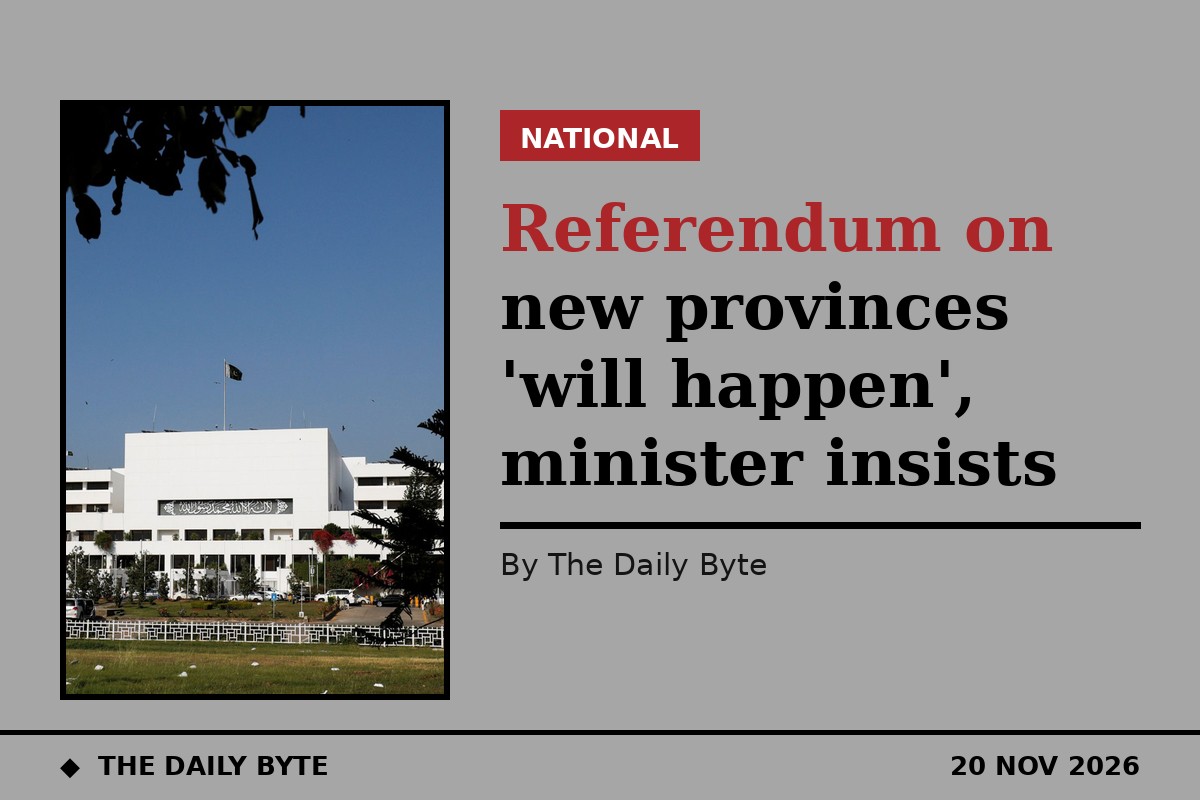
Parliamentary Affairs Minister Tariq Fazal Chaudhry said on Friday that a referendum on the formation of new provinces “will happen”, the firmest statement yet from the government on a proposal that has divided the ruling coalition.
Chaudhry was speaking after Pakistan Peoples Party (PPP) Chairman Bilawal Bhutto-Zardari delivered a speech on Tuesday opposing both the creation of new provinces and the idea of holding a referendum on the move. Bilawal had cautioned that any “forced” attempt to divide provinces, particularly Sindh, could lead to bloodshed. The federal government maintains that a referendum is a legal and constitutional method of gauging public opinion on new provinces.
Decision is firm, journalist reports
Geo News anchor Shahzad Iqbal reported on Friday that the state and the government had decided to hold a referendum “under all circumstances”, and that it would take place very soon, despite Bilawal’s opposition. Reporting on his programme, Iqbal said matters appeared to be moving rapidly towards a referendum.
Citing informed sources, Iqbal outlined an initial plan for the referendum and the creation of new provinces for the first time. The referendum would be held across the country, with results counted separately in each province and the decision made by majority vote. It would show which districts or cities in each province support the creation of new administrative provinces.
Under the reported plan, the new provinces would be formed on administrative rather than linguistic grounds. They would be full-fledged provinces, each with its own provincial assembly, chief minister and cabinet, rather than merely administrative units.
Minister stresses consensus and parliament
Chaudhry said new provinces should be created if they are necessary for Pakistan’s national interest, better governance and improvement of the administrative system. Sharing a video of a television programme on social media, he said the beginning of a positive, serious and meaningful debate on the creation of new provinces was welcome, and that all political parties and citizens should take part in discussions on the issue.
He said decisions regarding the creation of provinces should be made through national consensus and could not be imposed on any particular group or region. The matter concerns Parliament, he said, and therefore requires detailed debate and consultation in the legislature. He also said the referendum aims to find the public’s direct opinion on an issue, and that a procedure for implementing the public’s views could be decided after they are known.
The proposal so far
The proposal to redraw Pakistan’s map was first reported on 8 November 2026. It would split the country’s four provinces into twelve: Punjab into four, Khyber Pakhtunkhwa and Balochistan into three each, and Sindh into two. A nationwide referendum would be held first, and the change would then be given effect through a 28th Constitutional Amendment.
No draft of such an amendment has been published and no bill has been tabled in Parliament, and the Speaker of the National Assembly has said no draft has been received. No boundaries have been settled and no names for the new provinces have been agreed.
Other ministers have backed the idea in recent days. Information Minister Attaullah Tarar said on Tuesday that a referendum was a legal and constitutional way of finding out what the public thinks, while Interior Minister Mohsin Naqvi has described a referendum as the best way to settle the argument. Defence Minister Khawaja Asif has backed the creation of new provinces on administrative grounds, and Health Minister Mustafa Kamal has described December as a pivotal month for the initiative.
Bilawal, whose party governs Sindh, has called the referendum an unconstitutional move and warned of serious consequences if one is held. The Sindh Assembly adopted a resolution in September rejecting attempts to divide the province or create new administrative units. No date for a referendum has been announced, and the government has not said which provinces would be affected or when a vote might take place.