Rolls-Royce Accelerates £1.5bn Share Buyback
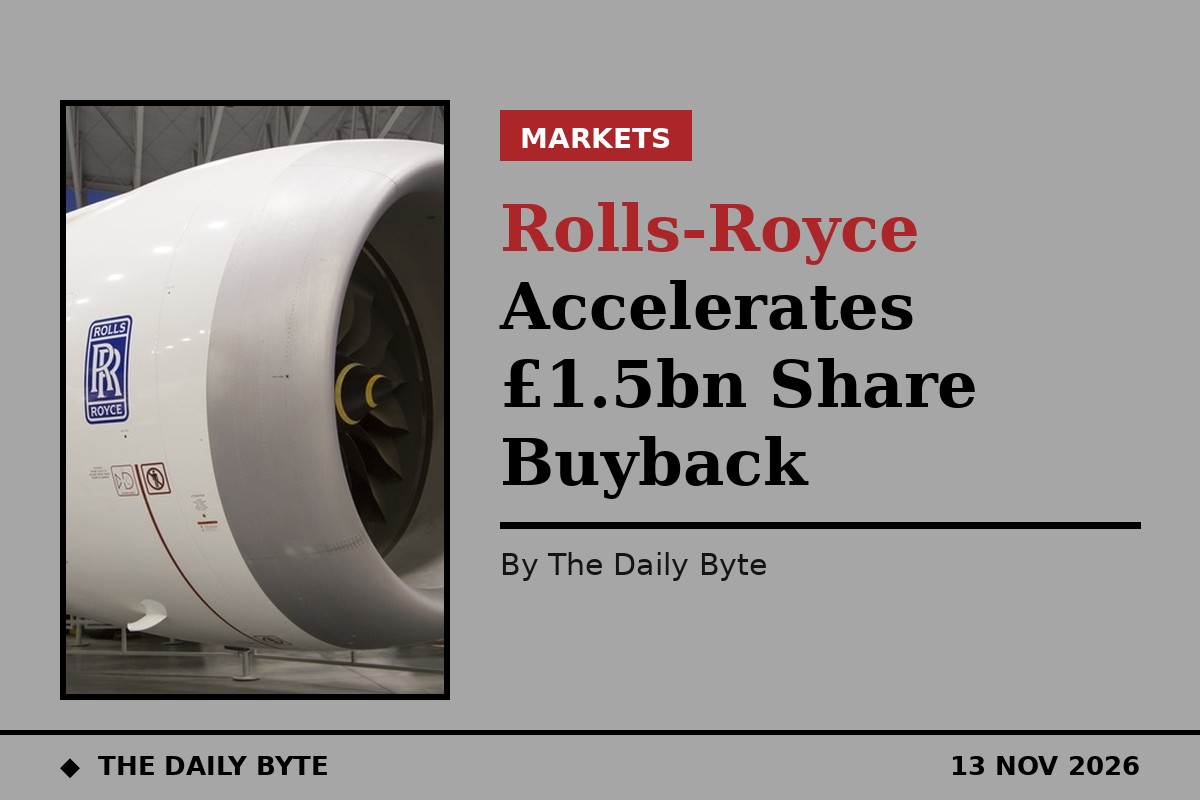
Rolls-Royce has accelerated its return of cash to shareholders, announcing a £1.5 billion interim share buyback alongside a trading update that reaffirmed its profit guidance for 2026.
The British engineering group said on Thursday, 12 November, that the buyback would be completed by the time it publishes its full-year results on 25 February 2027. The shares rose about 2.1% to 1,371p in early trading on Thursday, against the previous close of 1,342.6p, as investors welcomed the move and the company's confident outlook.
The new tranche sits inside Rolls-Royce's existing £7 billion to £9 billion buyback programme for 2026 to 2028. It does not increase the total size of that programme; instead, it brings forward cash that would otherwise have been returned later. The company said it had substantially completed its previously announced £2.5 billion buyback for 2026.
Profit guidance held at £4.7bn to £4.9bn
Rolls-Royce reaffirmed its guidance for 2026 underlying operating profit of £4.7 billion to £4.9 billion and free cash flow of £3.8 billion to £4.0 billion. Chief executive Tufan Erginbilgic said the group had "continued to deliver strong operational, strategic and financial progress in the second half of 2026", giving it further confidence in the full-year guidance.
The company also said it would revisit its medium-term financial targets when it reports full-year results in February, as previously communicated. That review will be closely watched by investors who have seen the group's valuation climb sharply during its turnaround under Erginbilgic.
Engine backlog reaches about 2,500
In Civil Aerospace, demand for large aircraft engines remains strong across widebody and business aviation. Rolls-Royce said its large engine order backlog had grown to around 2,500 engines, a sign of the long pipeline of work supporting future revenues.
Large-engine flying hours rose 4% year on year during the first ten months of 2026, reaching 114% of their 2019 level as airlines continued to fly more. The company expects full-year flying hours towards the lower end of its 115% to 120% range, because fuel-price-related capacity reductions have temporarily held back flying hours in some regions.
Power Systems orders surge 62%
The strongest growth came from Power Systems, where order intake rose 62% during the first nine months of 2026. The division's order backlog reached a record £8.6 billion at the end of September, up from £8.0 billion at the middle of the year, driven by demand for data-centre power and gas engines.
That surge reflects a broader trend in the market: as data centres expand to serve artificial intelligence workloads, they need reliable backup and primary power, and Rolls-Royce's engines are increasingly part of that supply chain. The division's performance has become an important second engine of growth alongside the recovery in civil aviation.
Shares give back some gains on Friday
The positive reaction on Thursday did not last into the end of the week. Rolls-Royce shares fell 1.4% in early trading on Friday as London's FTSE 100 traded flat, with the wider market pulling back from record highs amid uncertainty over the outlook for artificial intelligence following the resignation of Nvidia's chief executive.
The Friday dip took some of the shine off Thursday's rise, but it left the substance of the update unchanged: a company generating strong cash flow, returning more of it to shareholders sooner, and sitting on record order books in both its aerospace and power businesses.
What to watch next
The next scheduled event for investors is the full-year results on 25 February 2027, by which time the £1.5 billion interim buyback is due to be completed. The company has given no start date or broker for the programme. At those results, investors will look for the revised medium-term targets, an update on flying hours and Power Systems orders, and any further detail on how the group plans to share its growing cash flow between investment and shareholder returns. Sources: DirectorsTalk, AskTraders and TradingView.