Ruto pledges 20,000 more teachers for Kenya by December
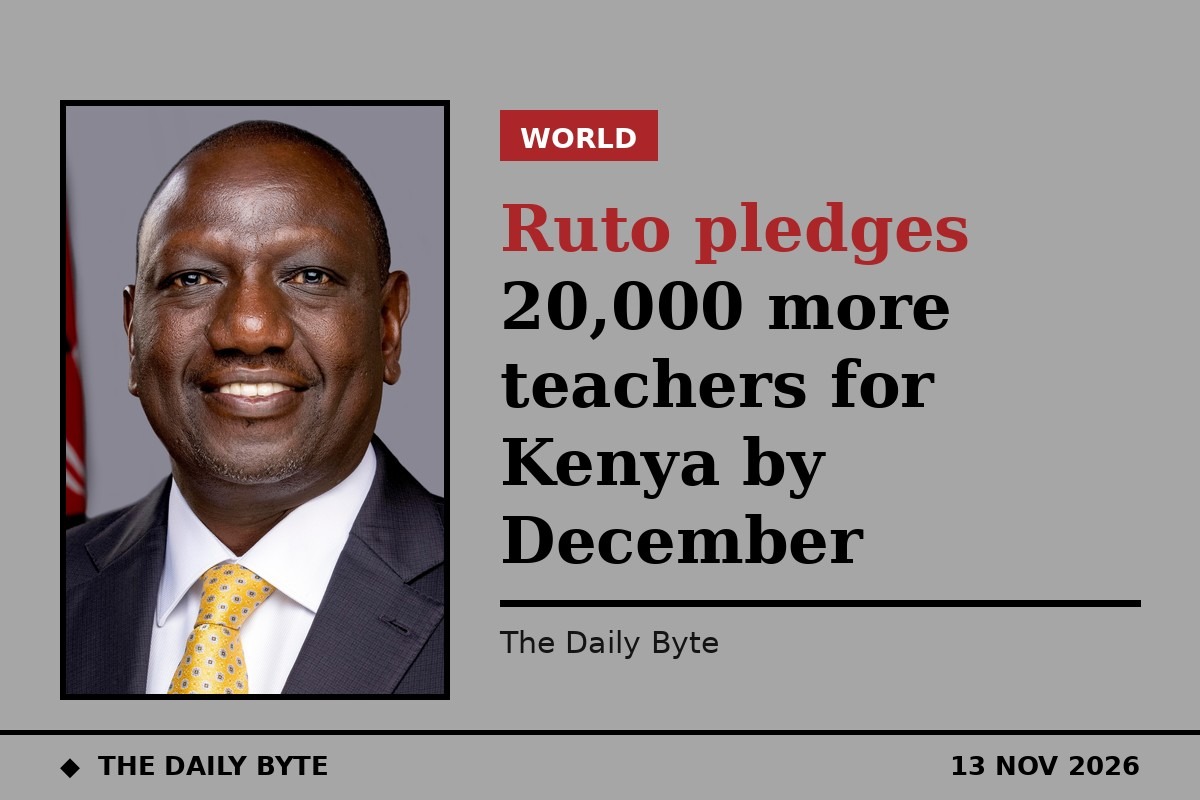
President William Ruto has announced that Kenya will recruit a further 20,000 teachers by December 2026, in a move aimed at easing staffing shortages in public schools across the country.
The President made the announcement on Thursday while addressing school heads at the Kenya Comprehensive Schools Heads Association annual general meeting and conference in Nyali, Mombasa. He said the new recruitment would take the total number of teachers hired since his administration took office to 120,000.
Ruto told delegates at the Sheikh Zayed Children Welfare Centre that his government had already recruited 100,000 teachers over the past four years. The additional 20,000, due to be employed next month, are intended to strengthen staffing in schools that have struggled with large classes and teacher shortages.
Classrooms, promotions and school funding
Alongside the recruitment pledge, the President pointed to the construction of 23,000 classrooms and the delivery of 1,600 laboratories for senior schools. He said the investment was designed to ease pressure on existing facilities and give learners adequate space in which to study.
Ruto also announced plans to promote 50,000 teachers during the current financial year, supported by KSh4 billion allocated towards implementing new Career Progression Guidelines. He said the government was investing in teachers' promotions, career advancement and welfare because teachers were central to delivering quality education.
On school financing, the President said the government had strengthened funding arrangements and was working to ensure institutions receive their allocations on time. He said more than KSh86 billion in school capitation had been released before schools opened in 2026, and that proposals to raise the current allocation of KSh2,340 per primary school learner were expected by January 2027.
Reforms under the competency-based curriculum
The recruitment announcement comes as Kenya continues its shift to the Competency-Based Education system. Ruto said the government had brought primary and junior schools under a single comprehensive management structure, with harmonised funding, staffing and governance, to improve administration and the use of resources.
Under the transition, the government facilitated the movement of 1.13 million pioneer learners to senior school in January 2026. The President said the broader reforms were aimed at building an education system that prepares learners for the world they will inherit, equipping them with the knowledge, skills and competence to think creatively, solve problems and turn ideas into practical solutions.
He also highlighted improvements in teachers' welfare, including medical cover for 426,642 teachers and 887,358 dependants, with access to more than 4,000 health facilities across the country and inpatient cover of up to KSh3 million. Teachers have also been allocated 20 per cent of affordable housing units, while the threshold at which workers begin paying income tax has been raised from KSh24,000 to KSh32,000.
Unions and school heads respond
Teachers Service Commission chairman Jamleck Muturi told the conference that the commission remained committed to supporting teachers through professional development, improved welfare and the maintenance of high professional standards. He urged school heads to provide effective leadership and to create institutions where excellence and learners' welfare remain central.
The conference, which brought together thousands of public school administrators, also heard calls from education stakeholders for sustained recruitment to address shortages, particularly following the expansion of basic education under the competency-based framework. Kenya National Union of Teachers Secretary-General Collins Oyuu was among those present at the gathering.
Ruto said engagement with teachers and their unions would continue, with the next Walimu na Rais forum scheduled for 2027. The address comes about nine months before Kenya's next general election in August 2027, with education investment forming a central part of the government's public record.