Saudi Delta Energy to explore $30bn gas pipeline and LNG plan for Pakistan
Saudi Arabian energy company Delta Energy Saudi has signed an agreement with Pakistan's Inter State Gas Systems (ISGS) to explore the development of energy infrastructure in Pakistan, with a proposed investment of about $30 billion, the two companies said in a statement on Tuesday, 17 November 2026.
The deal is a framework for studying the projects, not a final investment decision. Neither company has committed to finance or build anything yet, and that distinction matters: plans for other pipelines intended to bring gas into Pakistan have been delayed for years.
What the programme would assess
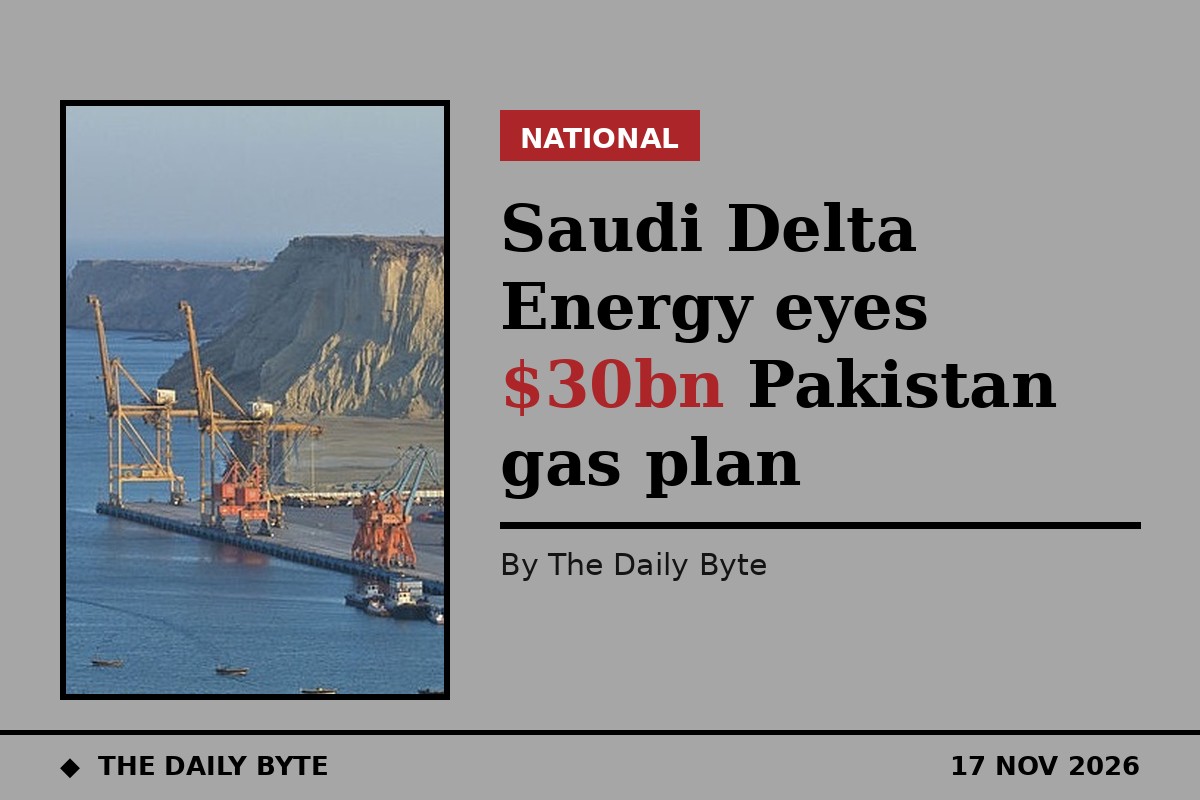
At the centre of the programme is a natural gas pipeline entering Pakistan through its western border and extending towards Gwadar, the port on the Arabian Sea in the south-west of the country. The companies said the programme would also consider a possible extension to Pakistan's eastern border, along with liquefied natural gas (LNG) facilities, gas processing and storage, and export terminals.
The programme also envisages a second pipeline running from Chaman, on Pakistan's border with Afghanistan, across Pakistan towards the Indian border near Fazilka. Delta Energy described that route as a "core strategic commitment", which would require formal engagement and agreements with the Pakistani and Indian authorities.
Where the gas could come from
Delta Energy identified Afghanistan's Kashk gas concession and other Afghan resources as potential supplies for the programme. The company stressed that the programme is separate from the Turkmenistan-Afghanistan-Pakistan-India (TAPI) pipeline and does not depend on Turkmenistan's involvement.
That separation is significant. TAPI has been discussed for decades and remains unfinished, so a parallel route fed by Afghan gas would be a different bet entirely — if the gas is there in commercial quantities and the financing follows.
What happens next
The agreement signed on Tuesday gives the two sides a framework to evaluate the projects: technical studies, feasibility work and, eventually, financing decisions. No timetable for those studies has been published, and no construction date has been set.
For Pakistan, the attraction is clear. The country faces recurring gas shortages, and a new import route landing at Gwadar — alongside LNG terminals and storage — would add supply options beyond its existing pipelines and LNG contracts. For Delta Energy, the deal extends a footprint it has already been building in the region: the Saudi firm signed agreements with Afghanistan's Ministry of Mines and Petroleum in September covering hydrocarbon exploration and a proposed 700-kilometre gas pipeline in western Afghanistan.
Until feasibility studies and financing are in place, however, the $30 billion figure remains a proposed programme value, not money committed. Readers should treat it as the scale of what is being studied, not as an investment already made.
Frequently asked questions
Has Saudi Arabia committed $30 billion to Pakistan?
No. The agreement is a framework to explore and evaluate projects worth about $30 billion. It is not a final investment decision or a commitment to finance or build them, according to the companies' statement reported by Reuters.
Where would the pipeline run?
One proposed route would enter Pakistan through its western border and run to Gwadar, with a possible extension to the eastern border. A second envisaged pipeline would run from Chaman across Pakistan towards the Indian border near Fazilka.
Is this part of the TAPI pipeline?
No. Delta Energy said the programme is separate from TAPI and does not depend on Turkmenistan. The BOE Report also reported the agreement and its terms on 17 November.
Sources: Reuters, 17 November 2026; BOE Report, 17 November 2026.