Scouts Warn Tourist Tax Could Cost Them £1 Million
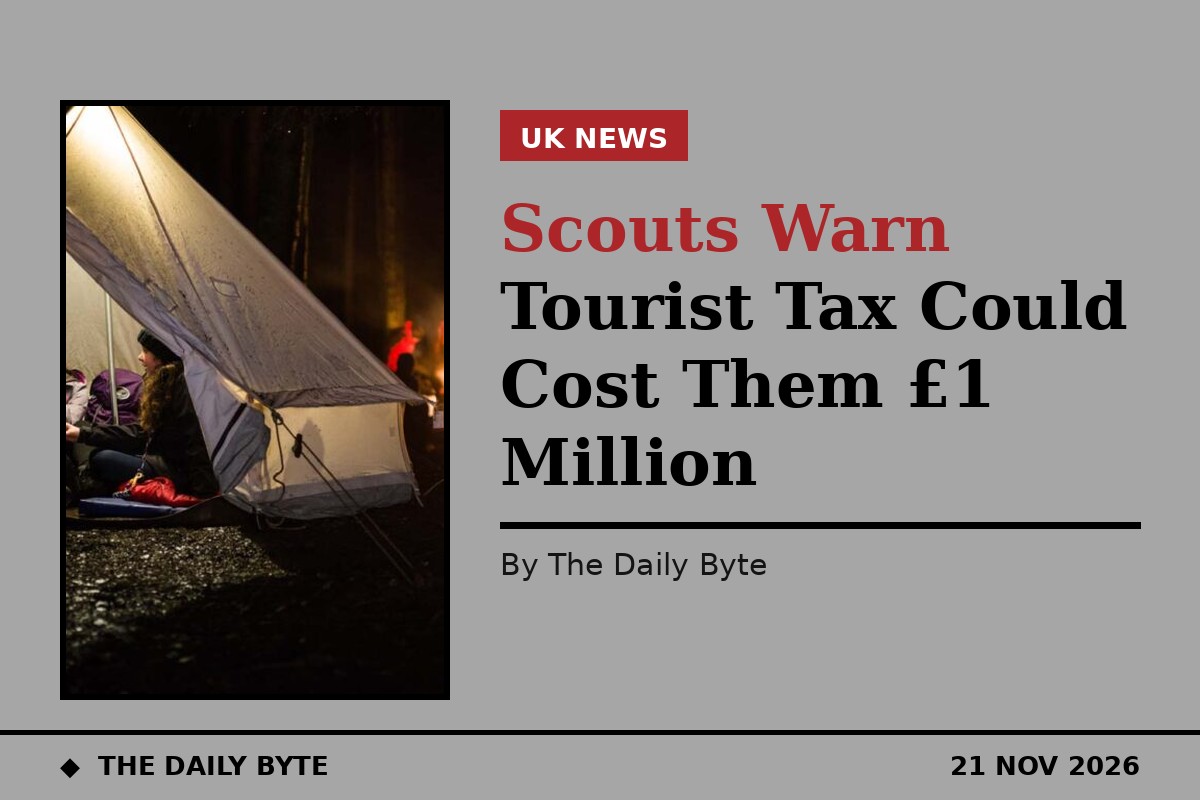
The Scout Association has warned that a proposed tourist tax could land it with a bill of £1 million a year and price some children out of camping trips.
Scout leaders say the overnight visitor levy planned by the government could be charged on the 1,423,344 overnight stays recorded each year across its Squirrels, Beavers, Cubs, Scouts, Explorers and volunteer sections. At a rate of 5%, the organisation calculates the cost at around £1 million a year.
Ministers have said local areas will be able to decide on exemptions from the levy. But the Scout Association is calling for an explicit England-wide commitment that youth groups will be spared the charge, rather than leaving the decision to each mayor or local leader.
The warning, reported on Saturday, comes as the Visitor Levy Bill moves through Parliament. The Bill would give mayors and local leaders the power to introduce a fee on overnight stays in hotels, bed and breakfasts and holiday lets.
A £1 million bill, by the Scouts’ figures
The Scout Association’s estimate is based on a 5% charge applied to its annual overnight stays. Labour regional mayors have indicated they will cap the levy at 5%, but there is no maximum limit written into the legislation, so the eventual charge could be higher in some areas.
The organisation highlighted its Linnet Clough site in Greater Manchester, which welcomes 25,000 visitors a year. Greater Manchester East Scouts estimates that, without an exemption, the proposed levy would add £11,000 a year to the costs faced by Scout groups using the site, while collecting the tax would cost more than £6,700 a year.
Chris Taylor, lead volunteer for Greater Manchester East Scouts, described the prospect as madness. “This new tent tax is madness,” he said. One Manchester troupe leader has dubbed the levy the “tent tax”.
For many Scout groups, camps are run by volunteers on tight budgets, with families contributing what they can. Leaders say even a small charge per night would add up across a weekend camp, and that the cost of administering the levy would fall on the same volunteers who organise the trips.
Calls for a nationwide exemption
Chief Scout Dwayne Fields said the organisation supports investment in local communities and believes well-crafted legislation can unlock that opportunity. But he said the Scouts are firmly opposed to any proposal that would see local mayors tax Scouts and other voluntary youth organisations for camping trips.
“We are firmly opposed to any proposal that would see local mayors tax Scouts and other voluntary youth organisations for camping trips that equip young people with skills for life, while burdening volunteers with the role of unpaid government tax collectors,” he said.
The Scout Association argues that access to affordable activities should not depend on where they take place, and that there should be a nationwide exemption. Girlguiding has raised similar concerns, with its chief executive, Felicity Oswald, warning that the levy could make trips less affordable for young members and volunteers.
Labour MP Gareth Snell, who has already challenged ministers in the Commons, said it was inconceivable that the government would have proactively considered including Scouts, Cubs or Squirrels camping with their troops at designated Scout camp sites when designing the levy. He said the easiest and fairest way to ensure those camps are excluded is to write the exemption into the Bill.
What ministers have said
MPs challenged Communities Secretary Angela Rayner about the issue when the legislation was first debated in the Commons. She told MPs that local leaders will be able to make exemptions, and that the government expects them to factor various needs into their decision-making, including those of medical visitors, disabled visitors and children.
Devolution minister Sally Jameson said strategic authorities would be able to exempt lower-cost accommodation commonly used for educational trips and groups such as Scouts and Squirrels. The Scout Association says that is not enough, because it leaves the decision to each area rather than guaranteeing the exemption everywhere.
Supporters of the levy say it would give local leaders a new way to raise money for their areas, with mayors required to share plans for how the revenue will be invested. Critics, including hospitality businesses, have warned that an uncapped charge could add to the cost of family holidays and put pressure on a sector already struggling with rising costs.
For the Scouts, the argument is simpler: volunteers should be focused on delivering opportunities for young people, not on collecting a tax. The organisation is now pressing ministers to write an exemption for youth groups into the Bill before it becomes law.