Senate Panel Tells PSX to Rebuild Investor Trust
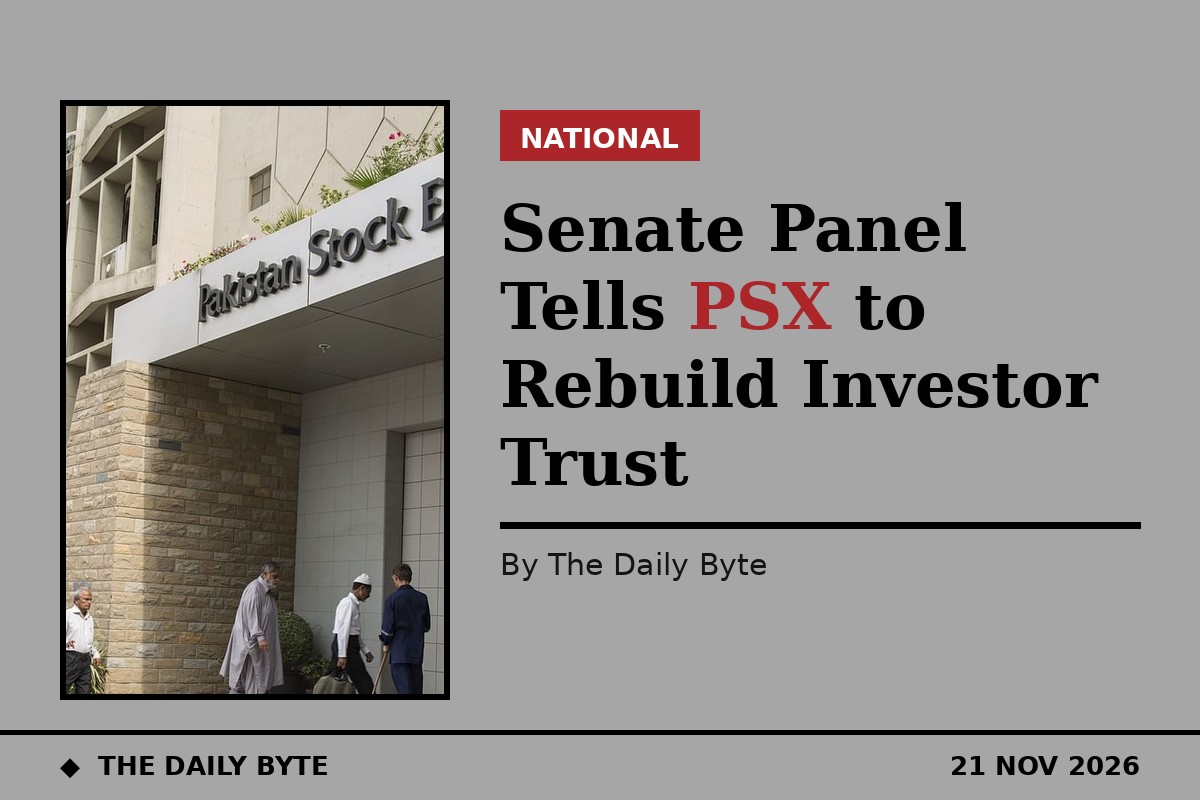
The Senate Standing Committee on Finance and Revenue has asked the Pakistan Stock Exchange to rebuild investor trust, strengthen safeguards against market abuse and submit proposals on tax incentives that could widen participation in the capital market.
The committee, chaired by Senator Saleem Mandviwalla, visited the exchange in Karachi on Friday to review capital market performance, taxation, investor protection and ways to bring more people into the market. According to an official handout of the Press Information Department, the PSX chief executive briefed the committee on operations, liquidity, transparency and prevailing tax policies.
Why investors stay away
A joint presentation by the PSX and the Securities and Exchange Commission of Pakistan focused on safeguards against misleading disclosures, manipulative practices and misconduct by listed companies. Senator Mandviwalla told the exchange to adhere to measures ensuring investor safety and market growth.
Another senator said public distrust of the PSX had discouraged people from investing, costing the economy opportunities and weakening the market’s competitiveness. PSX representatives said the investor pool needed to be deepened by educating people about how the exchange works and addressing mistrust, and the exchange said a financial literacy plan targeting universities and young investors was being prepared.
The committee was told that the capital market includes more than 200 brokers and 25 asset management companies, five of them fully Islamic, managing about $17 billion. The exchange also briefed the senators on its ownership: a Chinese consortium holds 40 per cent, domestic investors 50 per cent and other foreign investors the remaining 10 per cent. A live demonstration of the trading system was held, showing how buyers and sellers interact through brokers, and the committee was briefed on two market information mechanisms, Market by Order and Market by Volume.
Tax, forex and the road ahead
Lawmakers questioned excessive regulatory requirements and restrictions on new entrants, and asked what the private sector needed to list through initial public offerings. The PSX responded that access could not be ensured without checks and balances, and legislators stressed the need to improve accessibility and reduce the gap between the requirements for private limited companies and businesses seeking to become publicly listed.
The discussion ranged beyond the market itself. The committee was told of savings of about Rs120 billion a year from government expenditure cuts, and members discussed foreign exchange outflows of $300 million to $400 million through domestic card transactions, as well as bank SMS alert charges imposed on customers without their consent. It stressed early private-sector input in budget making, including engagement with business organisations and think tanks.
The committee asked the PSX to share any recommendations on tax incentives so they could be taken to the highest authorities. Senator Mandviwalla indicated that relevant proposals could be put before the top leadership to facilitate policy decisions, and the committee encouraged stronger engagement between the exchange, the business community and policymakers to address regulatory barriers, encourage new listings and expand investor participation.
Officials of the Central Depository Company, the National Clearing Company and the Tax Payer Office, including the chief commissioner of the Federal Board of Revenue in Karachi, attended the meeting. The visit underscored the importance of parliamentary oversight, regulatory transparency and investor protection in developing a competitive capital market — and the next step now rests with the exchange, which must turn the committee’s asks into concrete proposals.