Senate Panel Claims Rs120bn Saving in Remittances
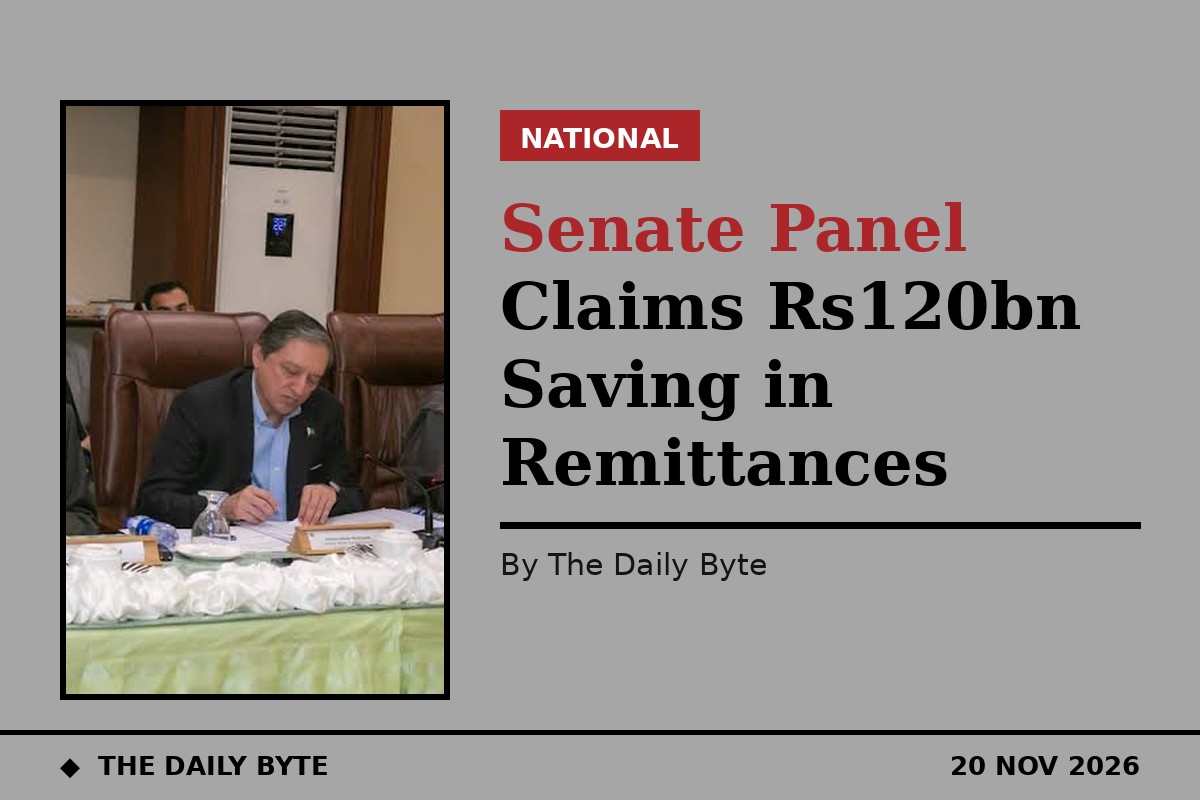
A Senate panel's intervention has eliminated about Rs120 billion in unnecessary annual government spending under the Pakistan Remittance Initiative, according to the chairman of the Senate Standing Committee on Finance and Revenue, Senator Saleem Mandviwalla. He made the claim during a visit by a Senate delegation to the Karachi Chamber of Commerce and Industry (KCCI) on Thursday, reported on Friday, 20 November.
Mandviwalla said the committee was working to reduce unnecessary foreign exchange outflows and to address banking practices that imposed additional costs on customers. He presented the remittance initiative saving as an example of parliamentary oversight identifying financial leakages, conserving foreign exchange and protecting the public interest.
The delegation's visit to the chamber was also used to press the business community to engage with parliamentary committees throughout the year, rather than only as the budget approaches. Mandviwalla said genuine recommendations from business would be taken up with the government for consideration.
Card payments and SMS charges
Mandviwalla said Pakistan was losing an estimated $300 million to $400 million a year because domestic rupee-based card transactions were being processed through international payment networks. He said the committee was pressing to address the outflow, which he described as millions of dollars leaving the country each year on transactions that never needed to leave it.
The committee is also pushing to end compulsory SMS notification charges imposed by banks without customers' explicit consent, Mandviwalla said. Both issues were raised as examples of costs borne by customers and the wider economy that parliamentary scrutiny could challenge.
Senator Anusha Rahman Ahmad Khan, chairperson of the Senate Standing Committee on Commerce, who was part of the delegation, pointed to improvements in economic indicators despite global geopolitical uncertainty. She said foreign exchange reserves had risen above $27 billion, inflation had fallen from 32 percent to 11.5 percent, and the policy rate had come down from 23.5 percent to 12 percent. She also said about Rs400 billion in tax relief and benefits had been extended to businesses under the federal budget, despite constraints linked to the International Monetary Fund programme.
Budget timing and business demands
Mandviwalla told the chamber that budget preparations generally begin in March, while business representatives often approach policymakers in June, when the budget is largely finalised. He urged KCCI to submit detailed, research-based budget proposals at least two to three months before the budget process begins, and proposed that the chamber establish a dedicated think tank to conduct budget research, prepare a shadow budget and submit evidence-based recommendations in March or April.
Zubair Motiwala, chairman of the Businessmen Group, proposed commissioning a comprehensive industrial competitiveness survey through an internationally reputed independent agency, comparing Pakistan's production costs with six competing economies: India, Sri Lanka, Thailand, Cambodia, Bangladesh and Vietnam. The study would examine electricity and gas tariffs, labour costs, interest rates and other major cost components. Motiwala noted that Pakistan's textile exports stood at about $16 billion to $17 billion, against Bangladesh's exports of around $54 billion, and said even an 8 to 18 percent difference in production costs could significantly affect international competitiveness.
KCCI President Talat Mahmood welcomed the delegation and asked the Senate Finance Committee to raise the income tax rebate for research and development undertaken by researchers and faculty members from 25 percent to 75 percent. He also called for tax exemption certificates for non-profit organisations to be extended from six to 12 months to at least three years, for the removal of additional sales tax on their K-Electric bills, and for complete exemption from customs duties on firefighting and fire safety equipment, citing the Gul Plaza, Bolton Market and Cooperative Market incidents. The parliamentary delegation acknowledged the concerns raised and said it would maintain regular engagement with the chamber, with a meeting of the Senate Standing Committee on Commerce possibly arranged in Karachi.