Shehbaz seeks $188bn for Pakistan clean energy at COP31
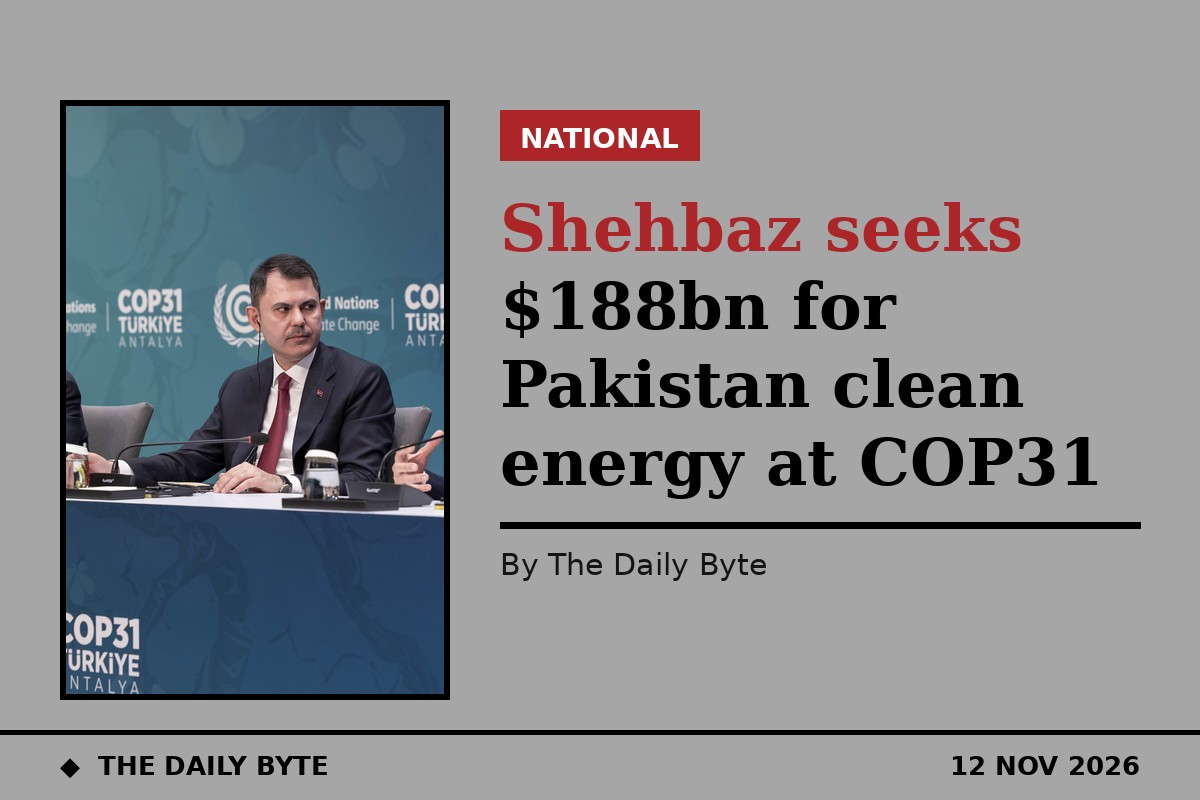
Prime Minister Shehbaz Sharif has told world leaders at the COP31 climate summit in Antalya that Pakistan needs about $188 billion by 2035 to complete its clean energy transition, and has urged international partners to provide concessional finance and affordable technology to make it possible.
Speaking on Wednesday, 11 November 2026, at a high-level dialogue titled “Clean Energy Transition by 2035: Powering the Future”, the prime minister said Pakistan would need about $138 billion for low-carbon electricity generation and a further $50 billion to replace coal-fired power with solar energy. The session was hosted by Turkish President Recep Tayyip Erdogan, according to the Prime Minister's Office.
A solar boom led by households
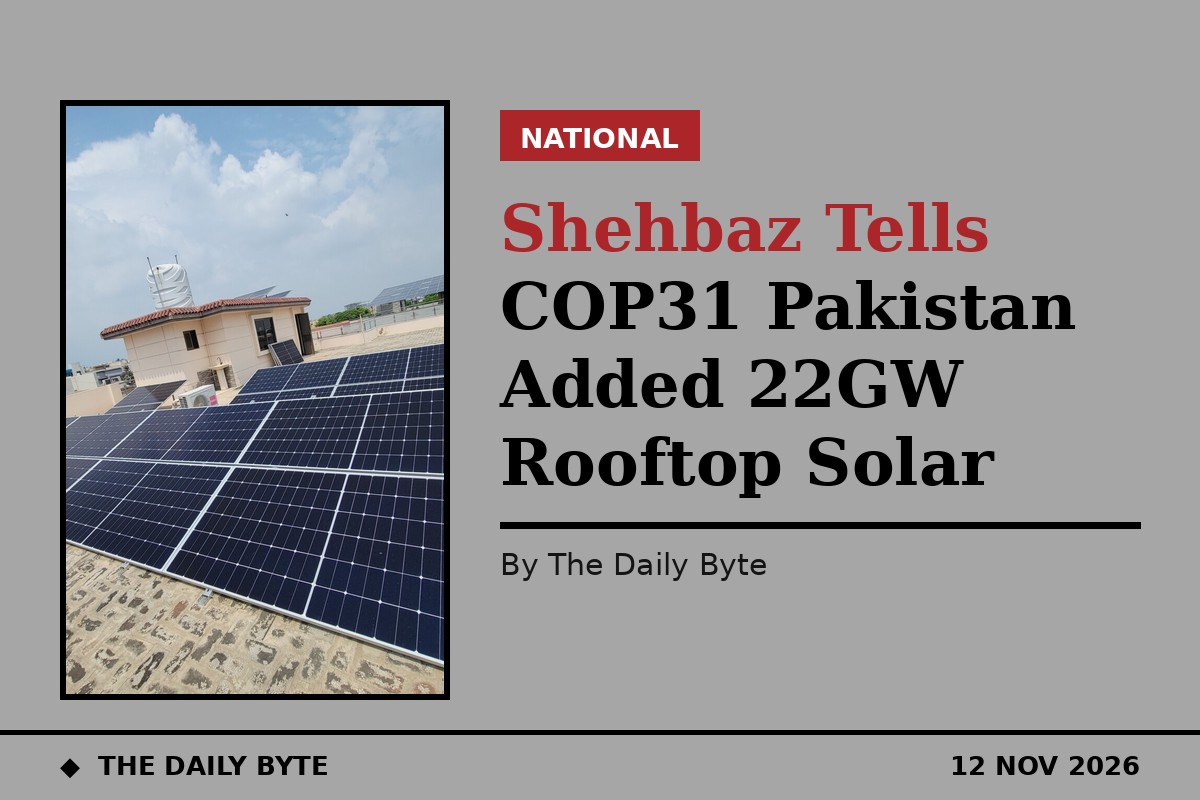
Shehbaz Sharif pointed to Pakistan's rapid growth in rooftop solar as evidence that the transition is already under way. He said the country had added nearly 22 gigawatts of rooftop solar capacity in just two years, describing it as a citizen-driven shift as households and businesses turned to their own panels in search of affordable and reliable electricity after years of high grid tariffs.
He also said clean energy now accounts for nearly 55 per cent of Pakistan's energy mix. The figures are the prime minister's own: estimates of installed rooftop solar capacity vary, and the 22-gigawatt figure has not been independently verified. Even so, the scale of the shift is widely accepted, and solar panels have become a common sight on rooftops across Pakistani cities.
What Pakistan is asking for
The prime minister's appeal was for concessional capital — low-cost loans and grants — rather than commercial borrowing. He said Pakistan fully supported the global “35 by 35” electrification target, but stressed that developing countries could not meet their climate ambitions without affordable financing and technology transfer.
That argument goes to the heart of the climate finance debate at COP31, the 31st Conference of the Parties to the United Nations Framework Convention on Climate Change, which is taking place in Antalya from 9 to 20 November. Pakistan contributes less than one per cent of global greenhouse gas emissions, yet it remains among the countries most severely affected by climate change, from the devastating floods of 2022 to worsening heat and the retreat of its glaciers. More than 13,500 glaciers have been identified in Pakistan, and their melt threatens water supplies for millions of people downstream.
Meetings on the sidelines
Shehbaz Sharif arrived in Antalya on Tuesday for the three-day Leaders' Summit, where he was due to deliver Pakistan's national statement and meet several world leaders. On the sidelines of the summit he met Iranian President Masoud Pezeshkian, and he also used the visit to highlight Pakistan's efforts on disaster preparedness and early-warning systems.
Before leaving for Turkiye, the prime minister had also pointed to the inauguration of a key component of Pakistan's seventh nuclear power plant, which is expected to add 1,200 megawatts to the national grid — another part of the government's push to expand low-carbon electricity.
An appeal, not a pledge
It is important to be clear about what the $188 billion figure is. It is Pakistan's stated estimate of what the transition will cost by 2035, not money that has been committed. Whether the appeal turns into real financing will depend on the negotiations in Antalya and on the willingness of wealthy countries to meet their climate finance commitments, including the long-standing promise to mobilise $100 billion a year for developing nations.
For Pakistan, the stakes are immediate. Every year of delay in funding adaptation and clean energy leaves its people more exposed to the next flood or heatwave — a crisis the country did little to cause.
Sources: Skardu Times, reporting the Express Tribune and the Associated Press of Pakistan and The Daily Spokesman.