Silver falls to $50.91 as Fed hike bets hit metals
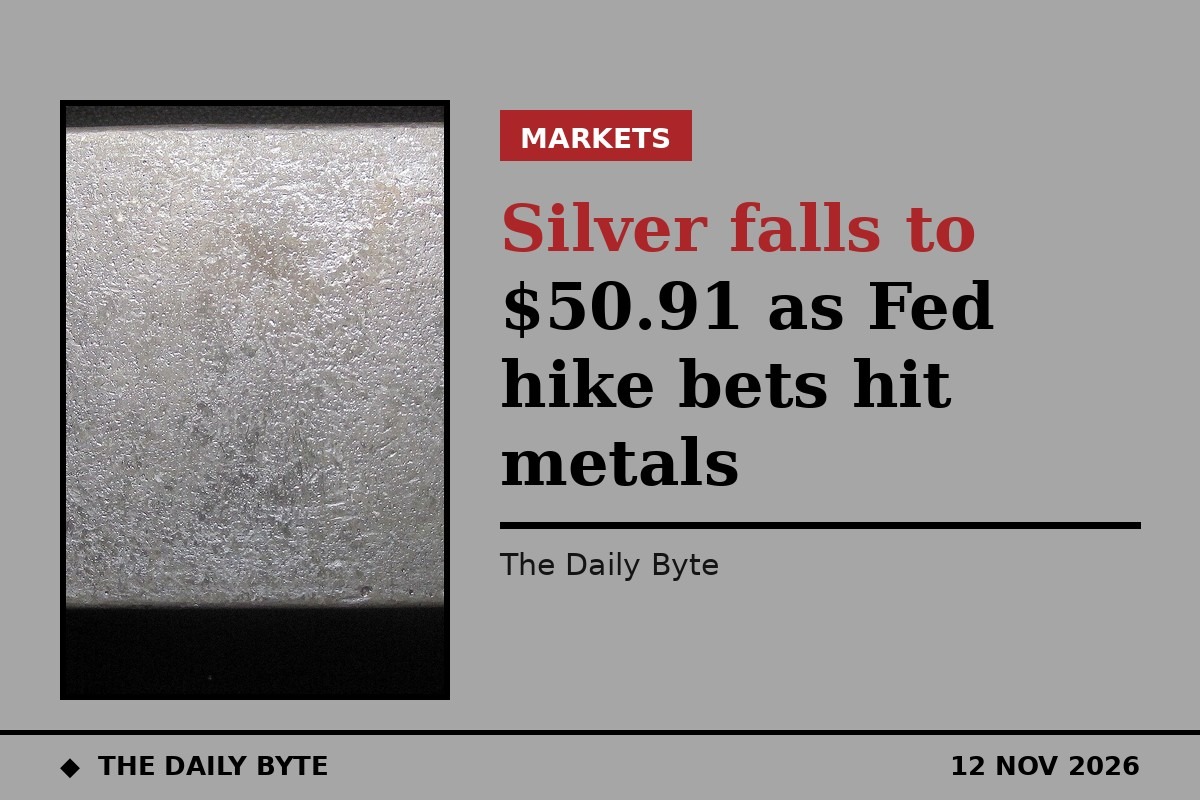
Silver fell on Thursday, 12 November, trading at $50.91 per troy ounce, down 1.57% from the $51.72 it cost on Wednesday, as rising bets on a US interest rate rise and a stronger dollar weighed on precious metals. Silver has now fallen 28.38% since the start of the year, and the gold-to-silver ratio, which shows how many ounces of silver equal one ounce of gold, stood at 77.22, up from 77.05 on Wednesday.
The drop extends a sharp slide that began earlier in the week. On Tuesday, spot silver fell 3.9% to $51.32 an ounce as speculators rapidly sold paper positions in the face of expectations of a more aggressive pace of rate rises from the Federal Reserve. Gold has moved in the same direction, falling for a third day and losing more than 3.7% over the past two sessions to about $3,942 an ounce, down from $4,057. COMEX silver futures were quoted at $51.225, down $0.77, or 1.49%, on the day.
Fed hike bets drive the sell-off
The trigger for the sell-off was US inflation data that came in hotter than expected, pushing traders to price in further tightening from the Federal Reserve. Markets now fully expect a quarter-point rate rise in December, with the odds of a larger half-point move on the rise. Two-year US Treasury yields have climbed about 20 basis points this week, and the dollar has gained almost 1%, with the dollar index around 102.9, its highest since April 2025. The yield on the US 10-year Treasury stands near 4.99%.
Silver, like gold, pays no yield, so it becomes less attractive when interest rates and bond yields rise, because investors can earn a return elsewhere without taking on price risk. A stronger dollar adds to the pressure, because silver is priced in dollars and becomes more expensive for buyers using other currencies. Traders are now looking to comments from Federal Reserve officials on Thursday and to US producer price data due on Friday, 13 November, for the next steer on the path of rates.
Real yields outrank supply worries
The near-term picture for silver is dominated by interest rates rather than by the metal's own supply and demand. Real yields, which measure bond returns after inflation, have moved sharply higher: the US five-year real yield stands at 2.56% and the 10-year at 2.78%, up from 2.35% and 2.63% respectively a week earlier. Analysts see $55 an ounce as a ceiling for silver while rates stay at these levels, and expect further selling until the rates picture changes.
That is a striking contrast with the longer-term story. According to the Silver Institute, the global silver market has entered its fifth consecutive year of structural supply deficit, meaning demand exceeds mined supply and recycling combined. Industrial consumption remains robust, with silver used heavily in electronics and solar panels because it conducts electricity better than any other metal. But for now, the macroeconomic headwinds are overwhelming that support.
What it means for investors
Silver tends to follow gold, and the two metals have fallen together this week as the market reprices the outlook for US rates. The rising gold-to-silver ratio suggests silver has fallen further than gold in relative terms, which some investors read as a sign that silver is cheap against gold, although a high ratio can persist for a long time. Holdings in silver exchange-traded funds were steady at 814.5 million ounces, suggesting long-term holders have not joined the selling so far.
For now, the metal's fate rests with US economic data. A softer producer price report on Friday, or any sign from Federal Reserve speakers that a December rise is not a done deal, could steady the market. Until then, silver remains caught between a tight physical market and a financial market that is betting rates stay higher for longer.
Sources: FXStreet; FXEmpire; SP Angel market view.