Sindh Declares Drought-Hit Tharparkar a Calamity-Hit District
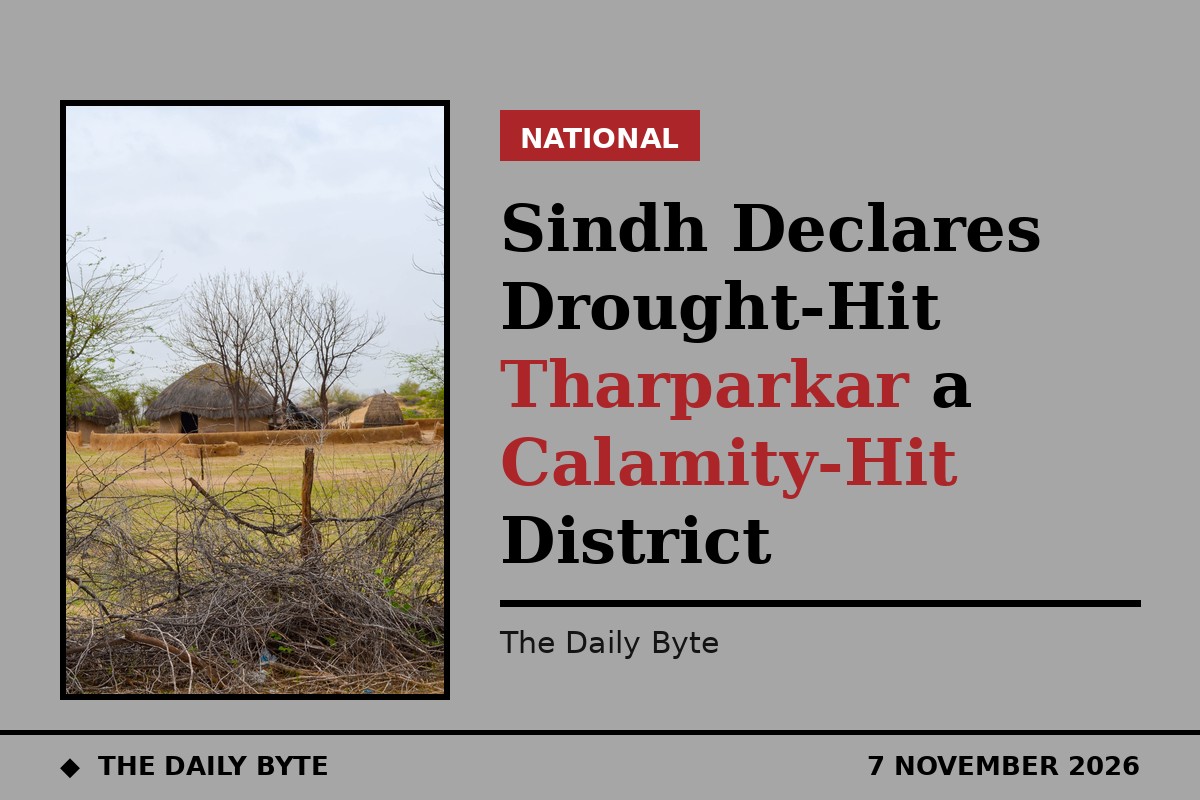
Sindh has decided to declare Tharparkar a calamity-hit district after drought destroyed most of this season's crops, with Chief Minister Murad Ali Shah ordering urgent relief measures after a briefing in Karachi on Saturday 7 November. The decision follows reports that drought-like conditions now grip all seven talukas of the desert district, where farming depends almost entirely on rain.
The briefing told the chief minister that 85 to 90 per cent of crops in the district had been destroyed or rendered unproductive, with the agriculture extension department putting the loss at about 90 per cent. Only 1 to 36 millimetres of rain fell across the seven talukas in September 2026, and because the rain was uneven, crops and natural grass dried out before maturing.
Water and livestock measures
Shah directed officials to ensure drinking water reaches residents, ordering broken reverse-osmosis plants repaired and brought back into use and all existing water sources restored immediately. He also asked the chief secretary to examine whether a water pipeline could be built from Nawkot to Mithi, the district headquarters, and ordered long-term planning for the area's water supply.
On livestock, the chief minister sought recommendations to protect animals hit by the drought and ordered continuous monitoring of relief work in the affected areas. "We will not leave the affected people of Tharparkar alone; the Sindh government will provide them all possible help," he said, in remarks reported in translation from Urdu.
Tharparkar, a largely desert district in eastern Sindh bordering India, has suffered repeated droughts, and its people depend on rain-fed farming and herding. The calamity-hit declaration opens the way for organised relief, with drinking water, livestock protection and help for affected families named as the government's priorities.