Sindh Unveils Rs5.3bn Aid for Tharparkar Families
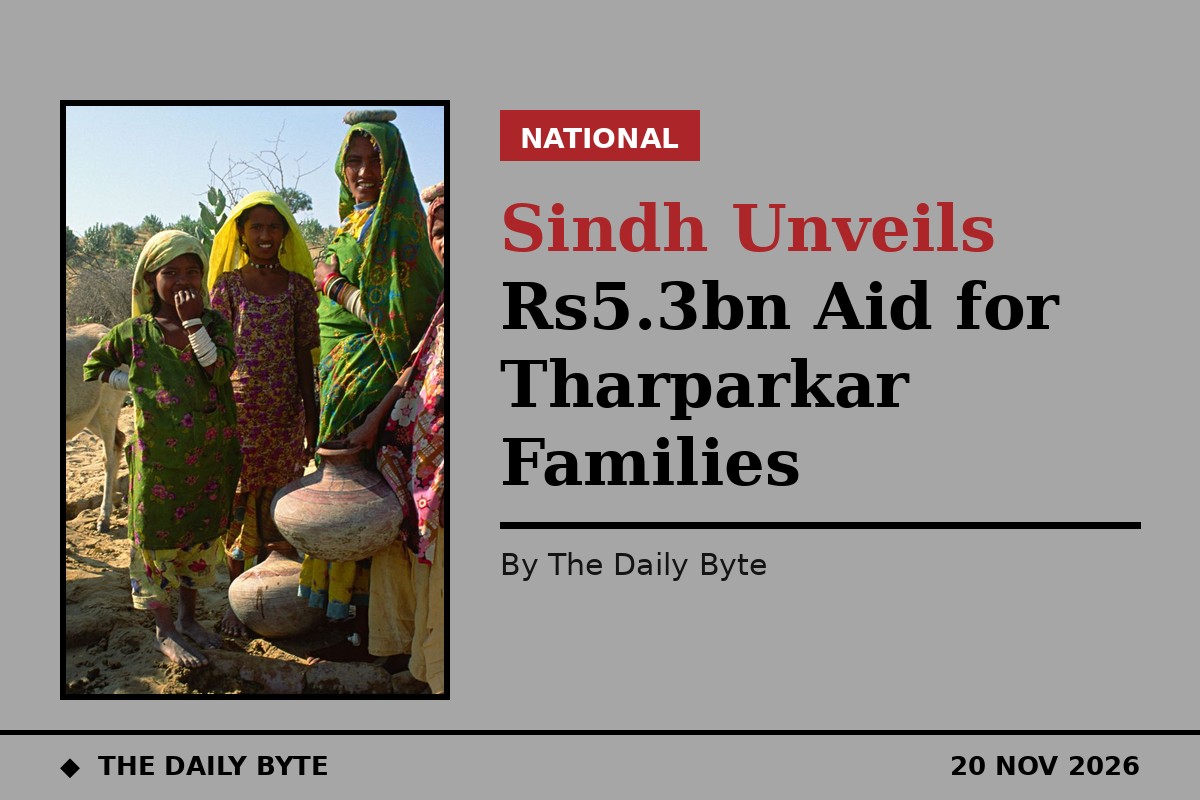
The Sindh government has unveiled a Rs5.3 billion assistance package for 220,000 low-income families in Tharparkar, the desert district where drought has destroyed most of this season's crops. Chief Minister Murad Ali Shah announced the programme in Karachi on Friday, setting out cash payments, a wider eligibility net and a separate wheat subsidy for growers.
Each selected household will receive Rs8,000 a month, paid in three instalments scheduled for 1 December, 1 January and 1 February. The money is intended to help families cover wheat, livestock feed and other household costs during the worst of the dry season.
Eligibility widened to reach more families
The province has raised the eligibility threshold for the scheme from a poverty score of 32 to 40, using Benazir Income Support Programme records. Families with scores from zero to 40 can now qualify, a change that brings thousands of additional households into the programme.
Shah said recipients would not be told how to spend the money and could use it according to their own needs. The payments will be made on top of the regular support that many of the families already receive through the Benazir Income Support Programme, which reaches about 126,000 women in Tharparkar, with nearly 152,000 children assisted under its related schemes.
Alongside the cash package, the chief minister declared 25 drought-hit villages in Tharparkar and Umerkot and announced a wheat subsidy of Rs4,000 per acre for growers in the affected areas.
A district already declared calamity-hit
The announcement follows weeks of worsening conditions across the desert region. Earlier this month the Sindh government declared Tharparkar a calamity-hit district after briefings said drought had damaged between 85 and 90 per cent of crops across all seven of its talukas. September rainfall in the district ranged from just one millimetre to 36 millimetres, and crops and natural grass dried up before reaching maturity.
At that time Shah ordered urgent steps on drinking water, livestock protection and relief, including the repair of non-functional reverse osmosis plants and a feasibility study for a water pipeline from Naukot to Mithi. Officials were also asked to survey food, water, health and livestock needs in the worst-affected talukas, including Diplo, Dahli, Chachro and Nagar Parkar.
Tharparkar is one of Pakistan's most drought-prone districts, and its largely rural population depends on rain-fed farming and livestock. When the monsoon fails, families face a double blow: crops wither in the fields and fodder runs short, forcing distress sales of animals that are often a household's main asset.
What happens next
The first instalment is due on 1 December, giving the administration less than two weeks to finalise the list of eligible households under the new poverty-score threshold. The test of the package will be whether the money reaches families in the remote desert talukas on schedule, and whether the wheat subsidy helps growers who lost most of this year's crop to the dry spell.
For now, the announcement gives drought-hit households in Tharparkar something concrete to plan around: a fixed monthly payment through the hardest months of winter, and a subsidy aimed at keeping the next sowing season alive. Abb Takk News reported the announcement, and The News reported the earlier calamity declaration and crop-loss figures.