Singles Day Sales Rise 2.4% as AI Shopping Takes Off
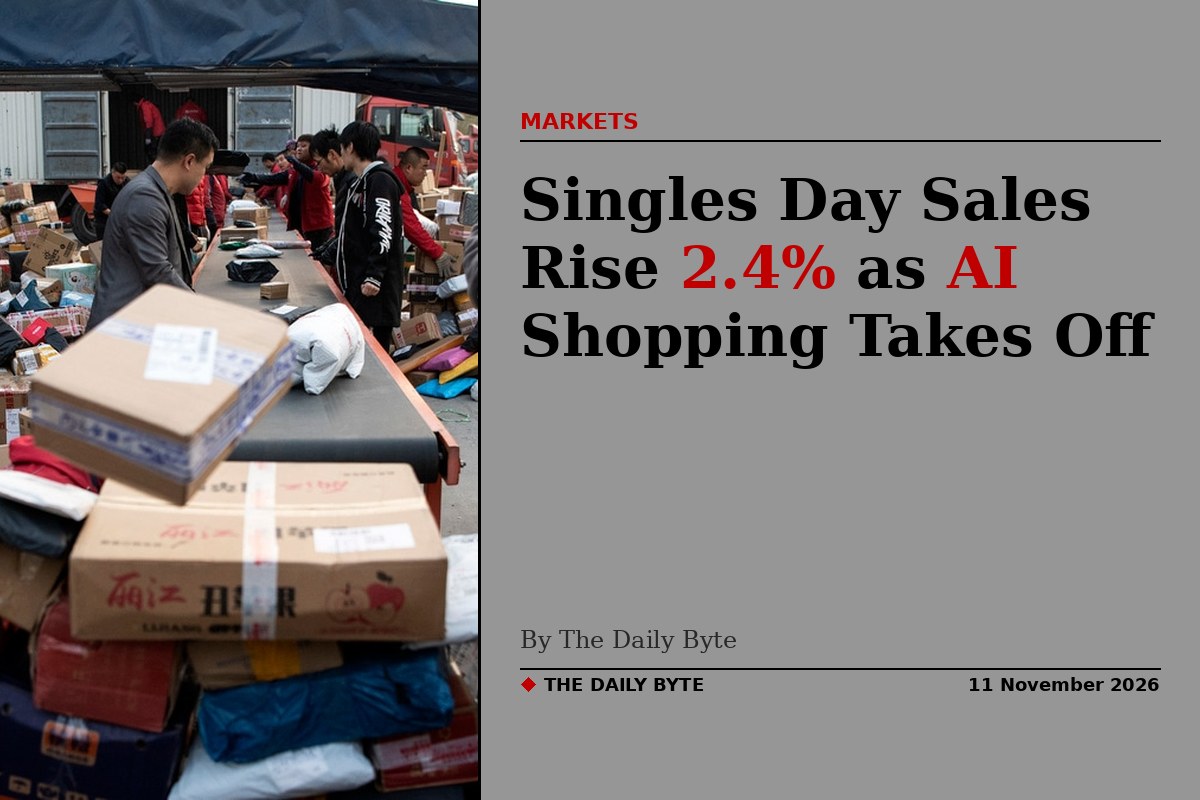
Sales for China's Singles Day shopping festival rose 2.4% between 7 and 31 October, according to third-party data platform Syntun, as the country's biggest online retailers turned to artificial intelligence to keep cautious shoppers spending. Reuters reported the figures on 11 November, the day the month-long festival reaches its peak.
The modest rise outpaced the 1.1% increase in China's total retail sales for the year through the end of September, but it still points to restrained demand rather than a spending rebound. Cumulative sales for the event had reached just over 1 trillion yuan, about $154 billion, by 31 October, broadly matching the total for the same period a year earlier, according to Syntun estimates reported by JournosNews. Syntun is due to publish an updated figure covering the full event on Thursday.
AI assistants do the shopping
This year's festival has become a test of how far AI has moved into everyday shopping in China. Alibaba's Tmall and Taobao platforms offer AI-driven research, virtual try-ons of clothing and tools to help shoppers find discounts, while JD.com said its AI shopping assistant, Dongdong, drew nearly 80 million users seeking advice during the festival, more than triple last year's total.
On Douyin, the short-video and social commerce platform, AI drove roughly 5% of purchases through chatbot links in October, according to data from WPIC Marketing + Technologies. For considered purchases such as supplements, that share exceeded 20%. Jacob Cooke, chief executive of the research firm, said he expected AI to account for a growing share of direct purchases, comparable to livestreaming or social commerce.
AI toys and robots lead new categories
AI-enabled products are also among the festival's fastest-growing categories. Alibaba said AI toys passed 100 million yuan, about $15 million, in sales on its platforms within one year of launching as a new category, and sales of AI companion robots rose nearly fivefold year on year in the second half of October. Tmall said sales of AI tokens, units of computing bought to use AI models, rose more than 700% between 15 October and 5 November compared with the period from 15 September to 5 October.
Top livestreamer Austin Li featured AI products for the first time, selling 100,000 monthly subscriptions to Alibaba's QwenWork workplace AI service within 30 minutes. The rush of sign-ups shows shoppers are willing to pay for AI tools, even if it does not yet prove they will keep paying month after month.
Cautious consumers hold back a rebound
Whether AI can lift overall spending enough to revive the festival remains unclear. Ben Cavender, managing director at Shanghai-based China Market Research Group, said some brands benefited more depending on how platforms tuned their systems or priced their products, while others could lose out if shoppers let an AI assistant do the searching and their goods no longer appeared.
The subdued figures reflect the wider challenge facing China's retailers. Official data showed online retail sales of goods rose 3.8% in the first nine months of 2026, while the economy grew 4.6% over the same period, supported more by exports than by household consumption. Singles Day began as a one-day event and has grown into a month-long campaign, but with discounts now available for much of the year, shoppers have less reason to wait for it. For Alibaba, JD.com and PDD Holdings, AI is the new way to stand out; the question is whether it can turn browsing into buying at scale.