MPs call Sizewell C deal 'terrible' for taxpayers
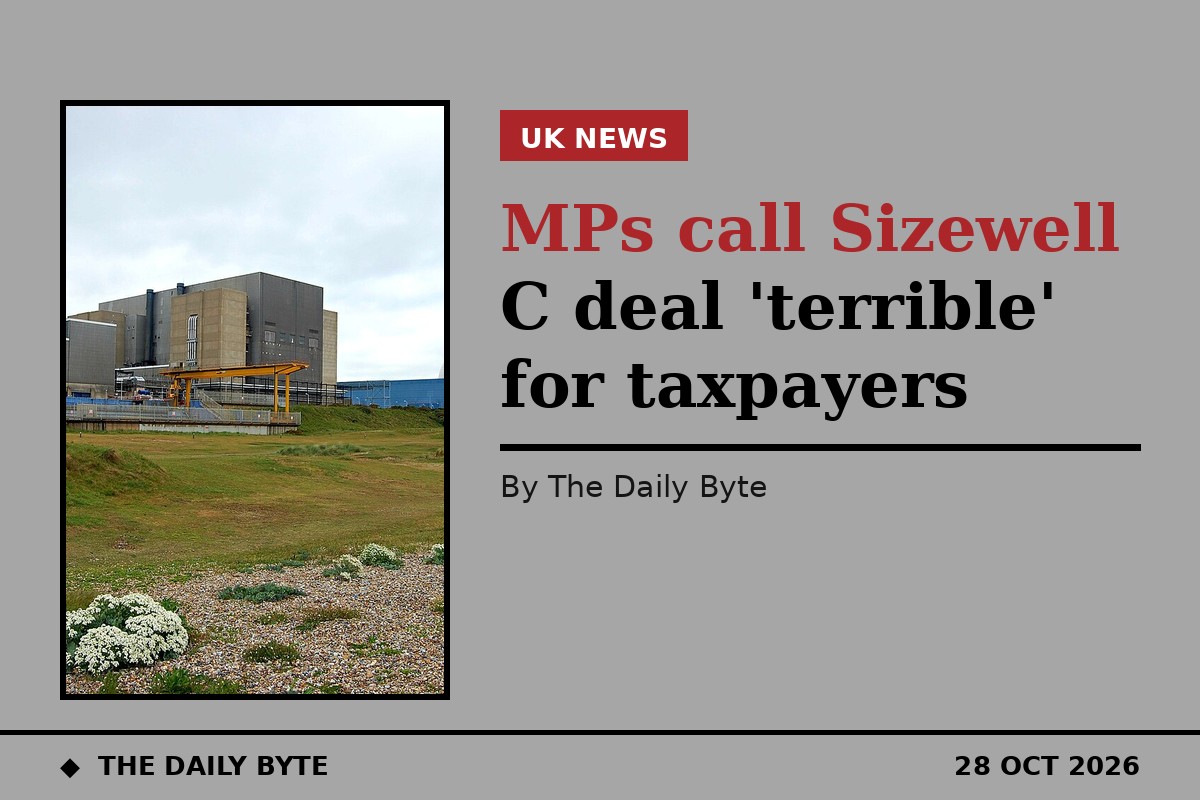
The Commons Public Accounts Committee has delivered a damning verdict on the financing of the Sizewell C nuclear plant in Suffolk, warning that taxpayers and billpayers are carrying extraordinary risk while private investors are largely protected. In a report published on 28 October, the committee said the deal should never be repeated in its current form.
How the costs could fall
The plant is forecast to cost up to £48 billion. The committee calculated that if costs reached the £47.7 billion higher threshold, consumers could face almost £22 billion in additional bills, while private investors would contribute only about £30 million extra. The government holds a 44.9% stake, alongside EDF, Centrica, La Caisse and Amber Infrastructure, and the National Wealth Fund is providing most of the debt finance. The project uses a regulated asset base model, under which customers start paying a fee on their bills during construction and share the risk of cost rises with investors, unlike Hinkley Point C in Somerset, where developers financed construction themselves.
The committee's warning, and the reply
The committee argued that successive governments' failure to deliver new nuclear capacity left the UK with little choice but to accept poor terms, with consumers and taxpayers shouldering significant financial risk while investors enjoy protected returns. It also warned that taxpayers remain liable for any shortfall in decommissioning funding, and called for six-monthly reports on costs, progress and forecast investor returns. The Department for Energy Security and Net Zero responded that the report overlooks the incentive for investors to finish construction as cheaply and quickly as possible, and said the plant could save £2 billion a year across the energy system once operating, with more than 2,000 workers already on site.
Sources: Construction News and New Civil Engineer.