Solar and batteries could cut Europe power costs by 40%
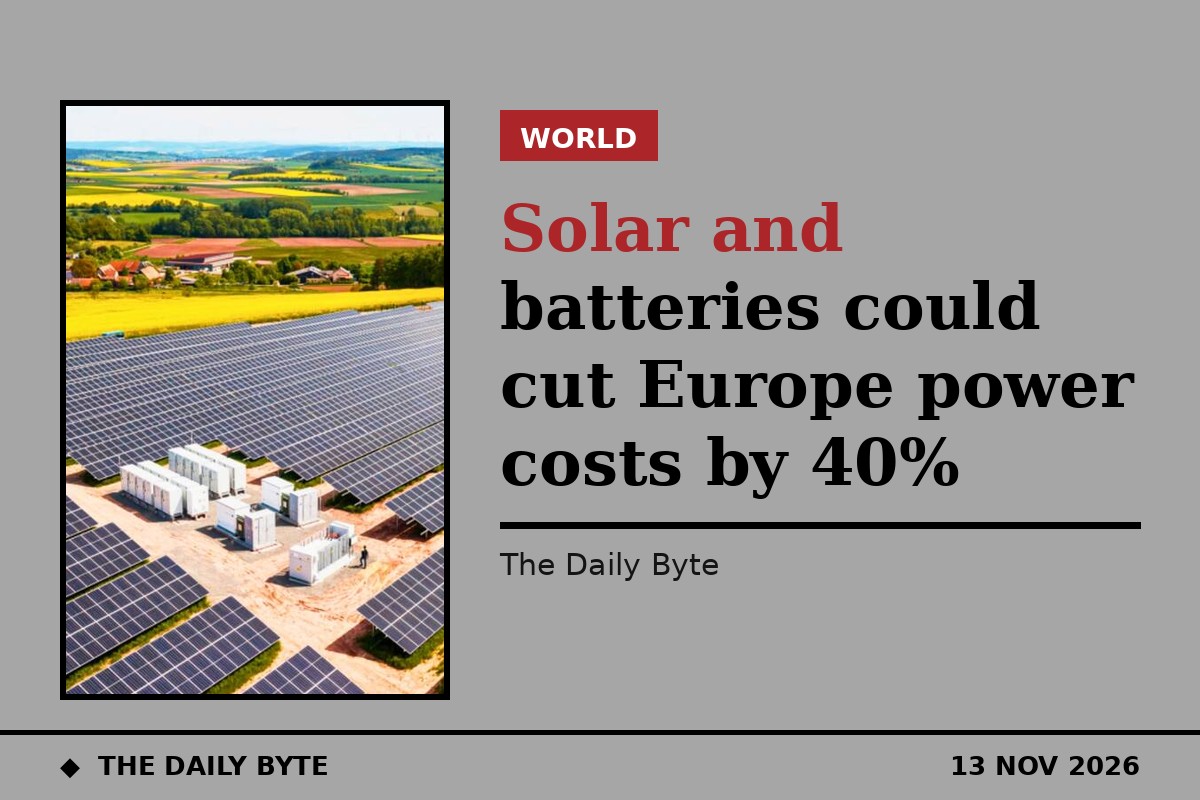
Solar panels and batteries could cut the cost of running Europe's electricity system by as much as 40% by the 2030s, according to new research from the Schneider Electric Research Institute (SERI). The report, System Costs of Electricity: A New Baseline for the 21st Century Economy, modelled 40,500 scenarios across different combinations of solar, battery and grid costs.
The answer, the researchers found, depends on coordination. When solar and battery deployment is synchronised with electrification — growing demand from electric vehicles, heat pumps and data centres — the overall cost of running the electricity system could fall by up to 40% by the 2030s as the technologies scale up. At current world-average installed costs outside the United States, the lowest modelled system cost is already 10% below today's benchmark, reaching 40% below under projected 2030s costs. The researchers estimate the savings could add 0.8% of GDP to the global economy by 2030.
Getting the balance wrong carries a cost
The report, launched at Enlit Europe and the COP31 climate summit in Antalya, also warns that the outcome is far from automatic. Battery deployment was one of the most significant variables in the modelling: under world-average cost conditions, a mismatch of battery durations across different types of assets could push total system costs to as much as 35% above the current benchmark. Scale alone is not enough — storage mix, demand timing and grid use must all line up.
Laurent Bataille, executive vice president of Europe operations at Schneider Electric, said accelerating solar and battery deployment could help Europe strengthen its energy sovereignty and competitiveness. The findings were also covered by ESG News. For policymakers, the message is that speed matters — but so does planning.