Somalia Presents Security Handover Plan
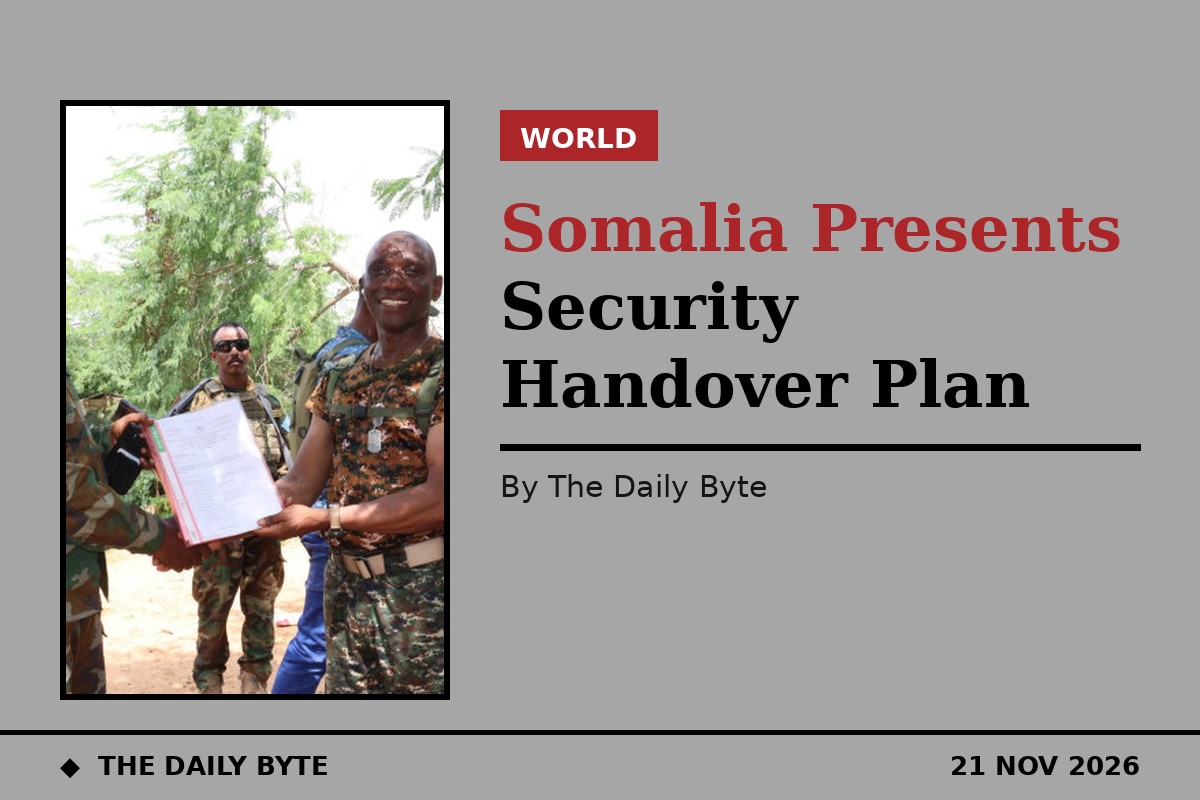
Somalia has presented its roadmap for taking full responsibility for national security at a conference co-hosted with the European Union in Brussels, as the clock runs down on the African Union force that backs Somali troops fighting Al-Shabaab.
The talks, held on Thursday, 19 November, brought together delegates from 50 countries, including neighbouring states, alongside regional and international organisations. They were held to prepare for December's United Nations Security Council decision on the mandate of the African Union Support and Stabilisation Mission in Somalia (AUSSOM), the EU's diplomatic service said.
What Mogadishu put on the table
Defence Minister Ahmed Moallim Fiqi outlined security conditions on the ground and the government's preparations for the handover in his opening address, according to the Somali defence ministry. President Hassan Sheikh Mohamud's senior defence adviser, Jihan Abdullahi Hassan, presented the transition roadmap to delegates.
Presidential Chief of Staff Abdihakim Mohamed Yusuf co-chaired the talks with Olof Skoog, deputy secretary-general for political affairs at the EU diplomatic service. EU Horn of Africa envoy Annette Weber joined Fiqi at the opening, while AUSSOM head El Hadji Ibrahima Diene and Graham Maitland, East Africa director at the UN Department of Political and Peacebuilding Affairs, also addressed delegates.
Speakers welcomed Somalia's plan and called for closer coordination to implement it, the defence ministry said. Partners agreed to continue technical and political consultations towards a common position, while the EU reaffirmed its commitment to a Somali-led transition.
The clock is running
AUSSOM's current mandate expires on 31 December, and the Security Council held closed-door consultations on the mission on Tuesday, 17 November. A US State Department spokesperson told AFP that Washington would support a one-year renewal of the mandates for AUSSOM and the UN Support Office in Somalia (UNSOS), which provides logistics to the AU force. The shift reversed an earlier American plan to end funding for UNSOS after Washington proposed in September giving the office 12 months to wind down.
Separately, Somalia and the African Union opened technical talks in Mogadishu on Wednesday with troop- and police-contributing countries. The meetings, running until 24 November, are reviewing a joint transition plan and staged base handovers tied to the readiness of Somali forces.
On Sunday, AUSSOM announced that its Ugandan contingent had handed over five forward operating bases around the southern port town of Barawe to the Somali National Army. The facilities in Lower Shabelle, Barawe Embresso, Barawe Knoll, Kismayo Road, Seaport and Runway, were fully operational at the time of transfer, AUSSOM said. Uganda, the mission's largest troop contributor, plans to withdraw all its forces from Somalia by the end of 2027, having begun pulling out an initial batch of soldiers in late October.
The transition is already under financial strain. Funding shortfalls briefly halted fuel and ration deliveries earlier this year until Britain contributed one million pounds in August. The mission's authorisation allows up to 11,826 uniformed personnel, including 680 police.
Politics could decide the outcome
Participants in Brussels also stressed the need for an inclusive political settlement, saying broader domestic agreement would help sustain Somalia's security arrangements. Somalia's federal government and opposition remain deadlocked over rules for the next national elections and constitutional amendments that extended the mandates of the president and parliament by one year. Talks due to open in Mogadishu on Saturday stalled after the opposition Somali Future Council stayed away.
In an October report to the Security Council, UN Secretary-General Antonio Guterres said UNSOS was supporting nearly 12,000 AU personnel and warned that Al-Qaeda-linked Al-Shabaab remained Somalia's primary security threat across central and southern regions. The December renewal vote will test whether the Council can fund an orderly drawdown without opening a security gap that Al-Shabaab could exploit.