Sony revives 1979 Walkman headphones with USB-C
Sony has brought back one of its most recognisable audio designs, reviving the headphones that shipped with the original Walkman in 1979 as a modern wired model with a USB-C connection. The new MDR-3R was announced on 5 November, priced at $59.99 in the United States and £49 in the United Kingdom, with a limited-edition Stranger Things version at $79.99 and £59.
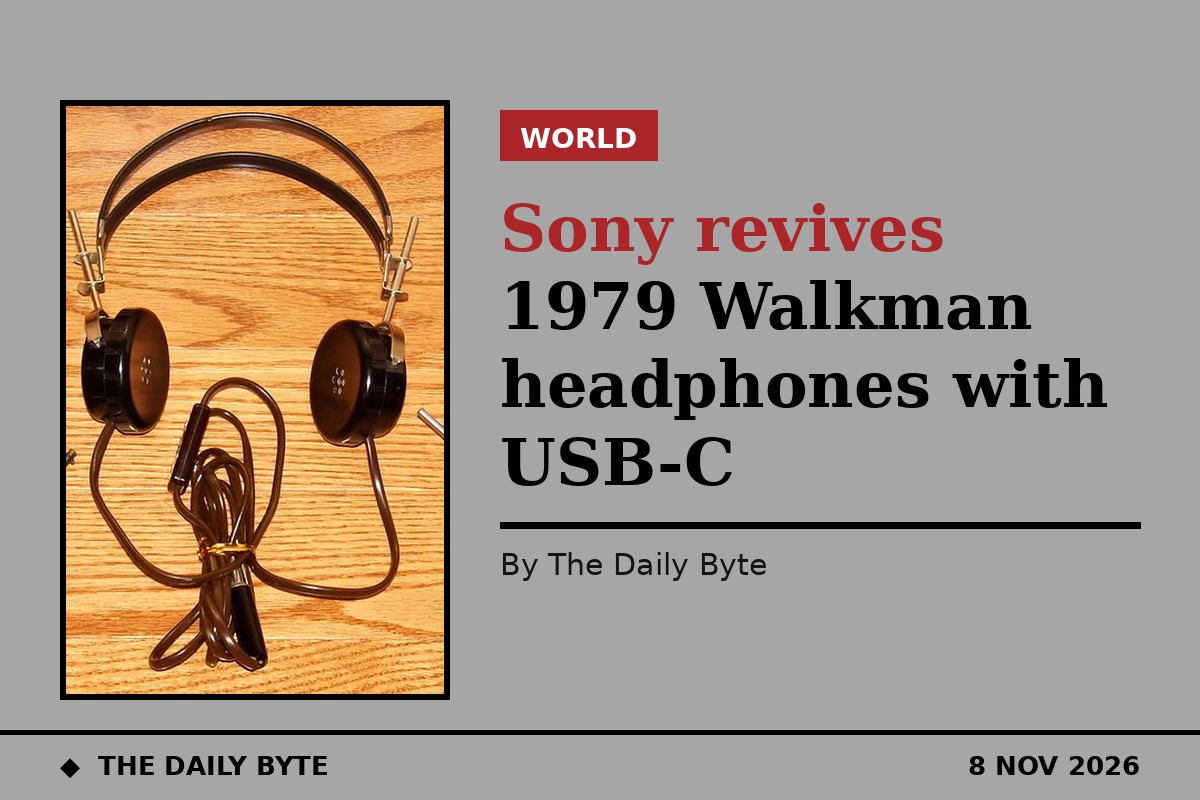
The design is a deliberate throwback. The MDR-3R keeps the thin adjustable headband, small on-ear housings and brightly coloured foam ear pads of the original MDR-3 family, which accompanied Sony's first Walkman, the TPS-L2, in 1979. The standard silver version comes with interchangeable blue and orange pads, so owners can change the look without buying a second pair. Sony has extended the retro styling to the packaging and instruction manual, which draw on the original model's presentation.
Inside, Sony says it returned to the original design specifications and re-engineered the 23mm drivers to reproduce a sound close to the MDR-3, with subtle tuning refinements for present-day tastes. The headphones weigh 38 grams, according to specifications reported by What Hi-Fi, making them far lighter than the large over-ear designs common in modern noise-cancelling ranges. Their purpose is a lightweight, open listening experience rather than enclosing the ears in padded cups.
The biggest practical change is the connection. The original 3.5mm analogue plug has gone, replaced by USB-C, so the headphones plug directly into compatible modern phones, tablets and laptops. The cable carries a built-in microphone and a three-button in-line remote for playback, skipping tracks, volume, calls and activating a connected phone's voice assistant. There is no battery to charge, no Bluetooth pairing and no app to manage: the appeal, Sony says, is simplicity.
That simplicity comes with a qualification buyers should understand. Sony specifies support for USB Audio Class 1.0 devices and warns that functions can vary with the connected hardware, operating system and application. Some smartphones may need a USB-device detection or USB On-The-Go setting switched on, and if a control does not work, Sony advises operating the connected device instead. A USB-C plug, in other words, does not guarantee identical behaviour on every phone or computer.
There is also an unexpected caveat for anyone drawn in by the Walkman heritage. Sony's own documentation states that use with a Walkman is not recommended, a warning that appears in both the European announcement and on the US product page. The new headphones borrow the old model's identity, but their digital USB-C interface is not the original connection, and the announcement does not establish a supported route for using them with a vintage cassette player.
Early hands-on coverage has been broadly positive about the sound, with reservations. Gizmodo's reviewer found the headphones surprisingly clear, with bright and clean mids and highs and solid stereo separation, and said they held their own for wired headphones at the price. Bass, as expected from small on-ear drivers, is not a strong suit: low frequencies are audible but not punchy, and the reviewer found a sharp upper-midrange emphasis on some snare drums.
The open on-ear design brings a further trade-off. Because the headphones rest on the ear without creating a seal, sound leaks out and ambient noise leaks in. Gizmodo reported that someone nearby could hear the music at high volume, and that the in-line microphone picked up room noise during calls. That is the nature of the form factor rather than a fault, and it suits listeners who want to stay aware of their surroundings, on the subway or at the airport, but not those who want to block the world out.
The Stranger Things edition adds a second nostalgia route, with an engraved logo, themed packaging and red and black ear pads, taking inspiration from the show's 1980s setting and the character Max's headphone style. Its launch was timed to Stranger Things Day on 6 November. Sony does not identify a separate upgraded driver system for the collaboration model; the announced differences centre on styling and presentation.
The launch lands as wired headphones are finding new takers, particularly among younger consumers revisiting products their parents grew up with. Circana reported that revenue from wired headphones in the US grew 3% in 2025, the category's first annual increase after five years of decline, and rose 20% in the first six weeks of 2026. Bose returned to wired earbuds in September after an 11-year gap. Whether the MDR-3R is a lasting revival or a novelty, it is a comparatively inexpensive way to revisit Sony's portable-audio history, even if its modern connector makes it a reinterpretation of 1979 rather than a return to it.


