South Africa IEC Warns Parties Could Forfeit Council Seats
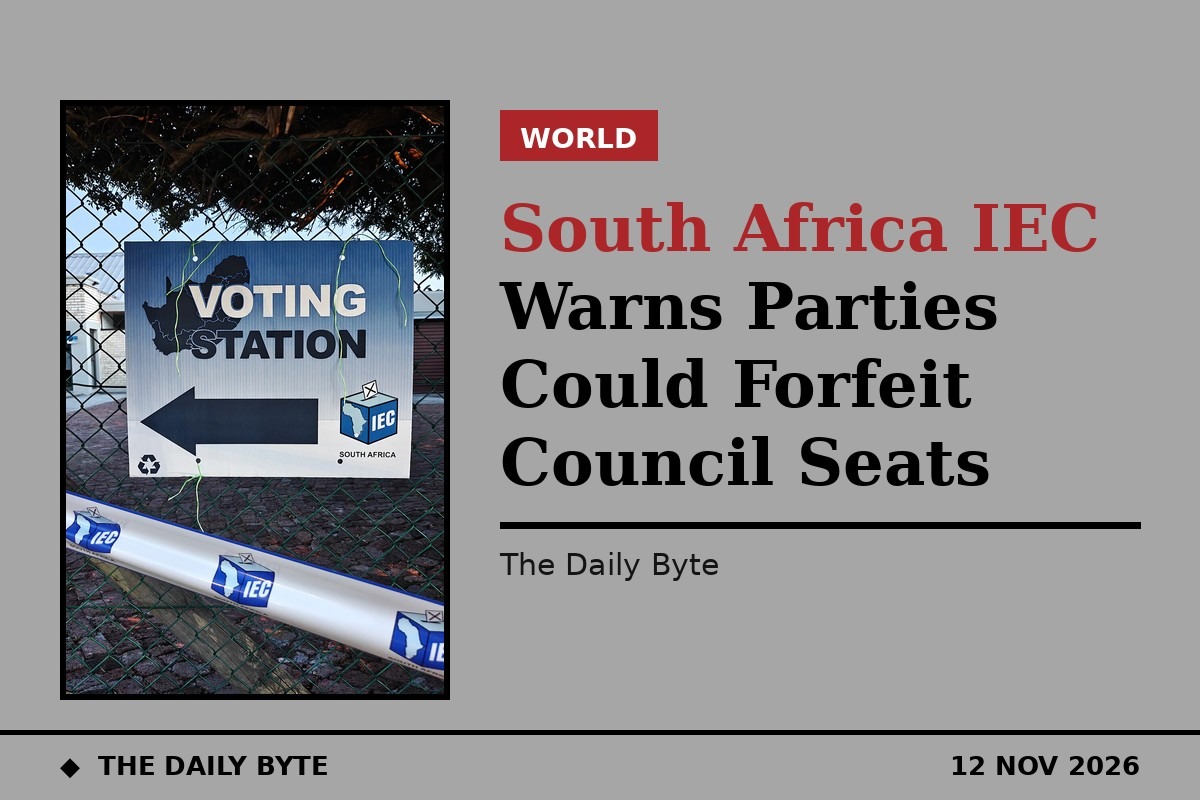
South Africa's Electoral Commission has warned political parties that they could lose council seats they won in last week's local government elections if they cannot supply enough candidates to fill them.
The commission, known as the IEC, set out the remaining steps towards finalising the 2026 local government elections on Thursday, 12 November, four days after the results were announced on Sunday, 8 November.
Parties given until 11 November to add names
Some parties won more proportional representation seats than the number of candidates they had nominated. The IEC said it wrote to those parties on Monday, 9 November, and gave them until 5pm on Wednesday, 11 November, to add extra names to their lists.
The commission stressed that the window was only for making up the shortfall, and not for changing lists or replacing candidates already nominated. A party that submitted fewer names than the seats it won risks forfeiting seats if the gap makes it impossible for the municipal council to reach a quorum, the IEC said.
The commission must also settle cases in which a candidate qualifies for more than one seat. If a candidate or an independent candidate fails to choose, the name must be removed from the list, the IEC said, adding that deleting a candidate who was due to take a ward seat would trigger a by-election.
More than 10,000 seats to be filled
Once both processes are complete, the final names of elected councillors will be published in the Government Gazette. Municipal managers must then convene the first meeting of each new council within 14 days of councillors being declared elected, under the Local Government: Municipal Structures Act.
A total of 10,526 seats were contested in the elections, according to the IEC. Of those, 8,825 are local council seats, made up of 4,485 ward seats and 4,340 proportional representation seats, while 1,701 are district council seats, comprising 707 directly elected and 994 indirectly elected councillors.
The commission said 707 district council seats, or 40 per cent of the total, had already been filled through the district proportional representation ballot. The remaining 994 seats will be filled by local councillors choosing representatives from among themselves to serve on district councils.
The IEC urged elected representatives and political parties to follow the remaining processes closely and to meet the deadlines, so that the new municipal councils can be constituted on time.