South Africa plans track-and-trace crackdown on R100bn illicit goods
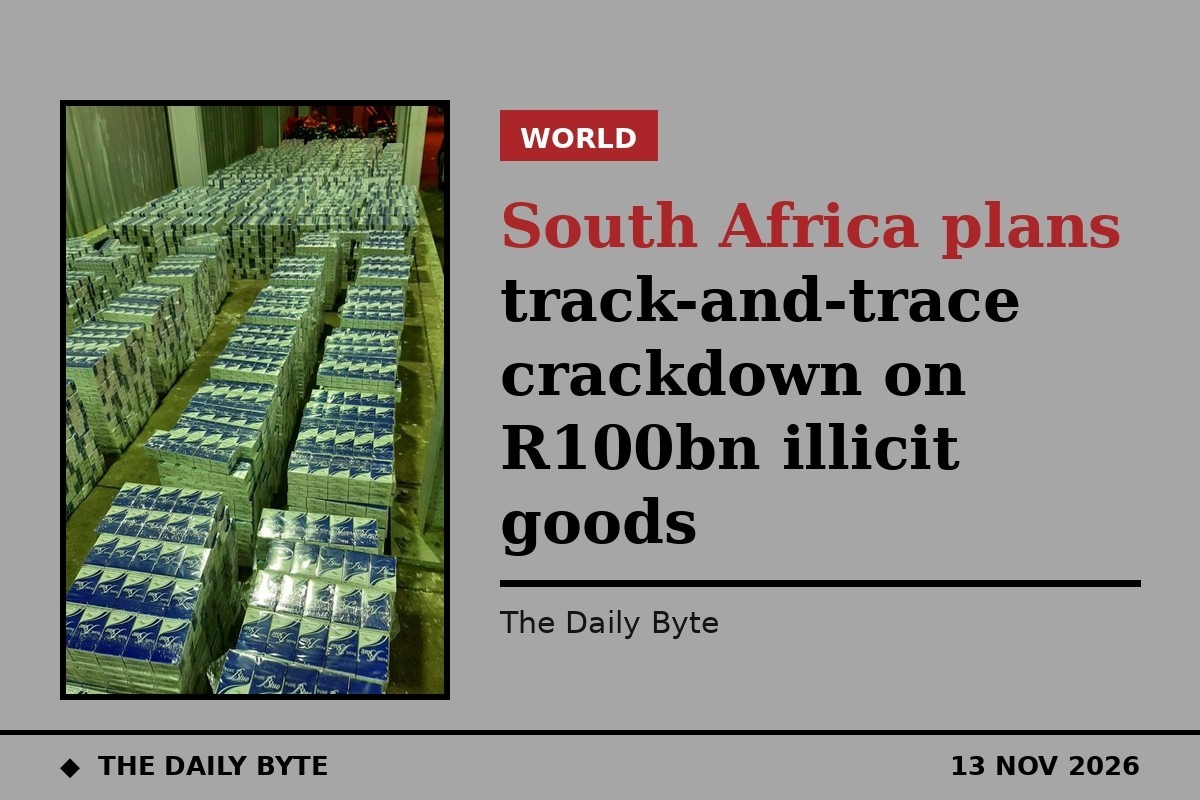
South Africa is set to launch its first track-and-trace system for tobacco, liquor, pharmaceuticals, food and appliances, as the government moves to rein in an illicit goods economy that the South African Revenue Service (SARS) says costs the country R100 billion a year.
The Department of Trade, Industry and Competition (the dtic) has published a discussion document on proposed track-and-trace regulations for public comment. The plan, reported by BusinessDay, would introduce a modern coded labelling regime for imported products in high-risk sectors, with the system expected to launch next year.
Illegal trade in tobacco, alcohol, pharmaceuticals, food and consumer appliances poses serious risks to consumers and the national economy, the department said. According to SARS, illegal trade costs South Africa R100 billion a year and is one of the biggest threats to national stability and economic growth. Illegal trade in cigarettes alone cost the fiscus billions in lost excise revenue, including an estimated R18 billion lost in 2022.
For decades, South Africa's consumer-protection framework has lacked a comprehensive track-and-trace system, relying instead on an antiquated excise diamond stamp for cigarettes and general labelling rules under the Consumer Protection Act of 2008. The proposed regulations would change that, building on the minister's powers under the Act to require prescribed goods to carry specified trade descriptions.
How the track-and-trace system would work
Under the proposals, each unit of a covered product would carry a unique machine-readable code, acting as a digital barcode passport linking the item to its origin and ownership. The regulations would focus on imported products in the high-risk sectors of tobacco, alcohol, pharmaceuticals, food and appliances, which the department says are associated with border smuggling and consumer harm.
The proposals also provide for a national track-and-trace repository, overseen by the National Consumer Commission, to hold the data generated by the system. The repository would sit at the centre of enforcement, allowing suspect goods to be checked against their recorded origin and movement.
The discussion document was published on the recommendation of the National Consumer Commission, under section 120(1), read with section 24, of the Consumer Protection Act. It does not replace the legislative process: it is an informal platform for engagement ahead of draft regulations being published in the Government Gazette.
Public comment open until 11 December
Written input on the discussion document must be submitted within 35 calendar days, no later than 11 December 2026. Submissions go to the department's consumer division, and commenting at this stage does not prevent members of the public from commenting again once the draft regulations are formally published.
The move comes as illicit trade continues to drain revenue and put consumers at risk from counterfeit and substandard goods. Fake liquor, tobacco, food, pharmaceuticals and electrical goods circulate widely, undercutting legitimate businesses that pay tax and follow safety rules, while the state loses the excise and other revenue that funds public services.
Businesses that comply with the law have long argued that illicit traders gain an unfair price advantage because they avoid tax and safety checks. A track-and-trace system would make it harder for untaxed and counterfeit products to reach shop shelves, since each item could be verified against the national repository.
The department has not yet set out the full timetable for finalising the regulations after the consultation closes, or the date from which businesses would have to comply. What is clear from the discussion document is the scale of the problem the government is trying to tackle: a R100 billion-a-year illicit economy that, in the department's own words, threatens both consumers and economic growth.
If the regulations go ahead as proposed, South Africa would join a growing number of countries using coded labelling and central databases to follow goods from the border to the till, and to give shoppers and inspectors a way to check whether what is on sale is genuine.