South Korea Offers Nuclear Expertise to Vietnam
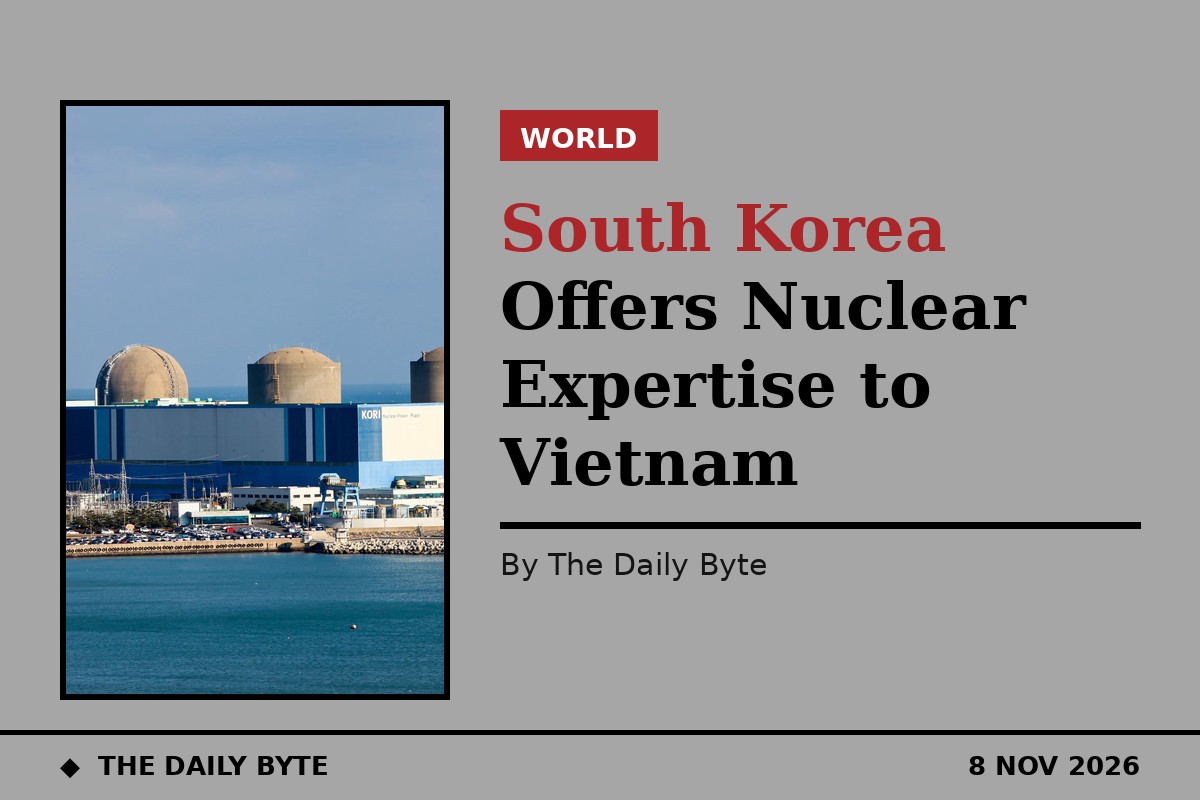
South Korea has offered to share about 50 years of commercial nuclear power experience with Vietnam, including for the Ninh Thuan 2 project, as Hanoi looks for a partner able to provide technology, affordable finance and training for Vietnamese engineers.
The offer was discussed at a meeting on 6 November 2026 between Vietnamese Minister of Science and Technology Vu Hai Quan and South Korean Ambassador Lee Miyon, according to a statement from the Vietnamese ministry reported by Asia Daily. The talks also covered artificial intelligence, intellectual property and research cooperation.
Ambassador Lee said nuclear plants produce about 30 percent of South Korea's electricity and expressed interest in sharing technology and operating experience with Vietnam. South Korea has said it could provide sovereign loans covering up to 85 percent of the project's investment, a position set out by Vice Minister Kang Kamchan in July.
Vietnam has set demanding terms for any partner. Hanoi wants local participation of 30 to 60 percent, credit at interest rates below 3 percent, and training for Vietnamese workers at operating plants. No partner selection, reactor design or final financing terms have been announced, and Vietnam had planned to choose a partner during the third quarter of 2026.
Ninh Thuan 2 is planned at Vinh Hai, near the separate Ninh Thuan 1 site at Phuoc Dinh, with state energy firm PetroVietnam assigned as investor for the second project. Japan withdrew from Ninh Thuan 2 in January 2026, citing the tight construction timetable, and France, South Korea and the United States have since expressed interest.
PetroVietnam sent a delegation to South Korea from 27 to 29 October to discuss cooperation with six major South Korean firms, including Samsung C&T, Hyundai Engineering and Doosan Enerbility, and held talks with Korea Electric Power Corporation and the Korea International Nuclear Graduate School. The two Ninh Thuan plants are planned with capacities of 2,000 to 3,200 megawatts, aiming for operation between 2031 and 2035.