South Sudan Ebola Risk: Six Embassies Warn Juba
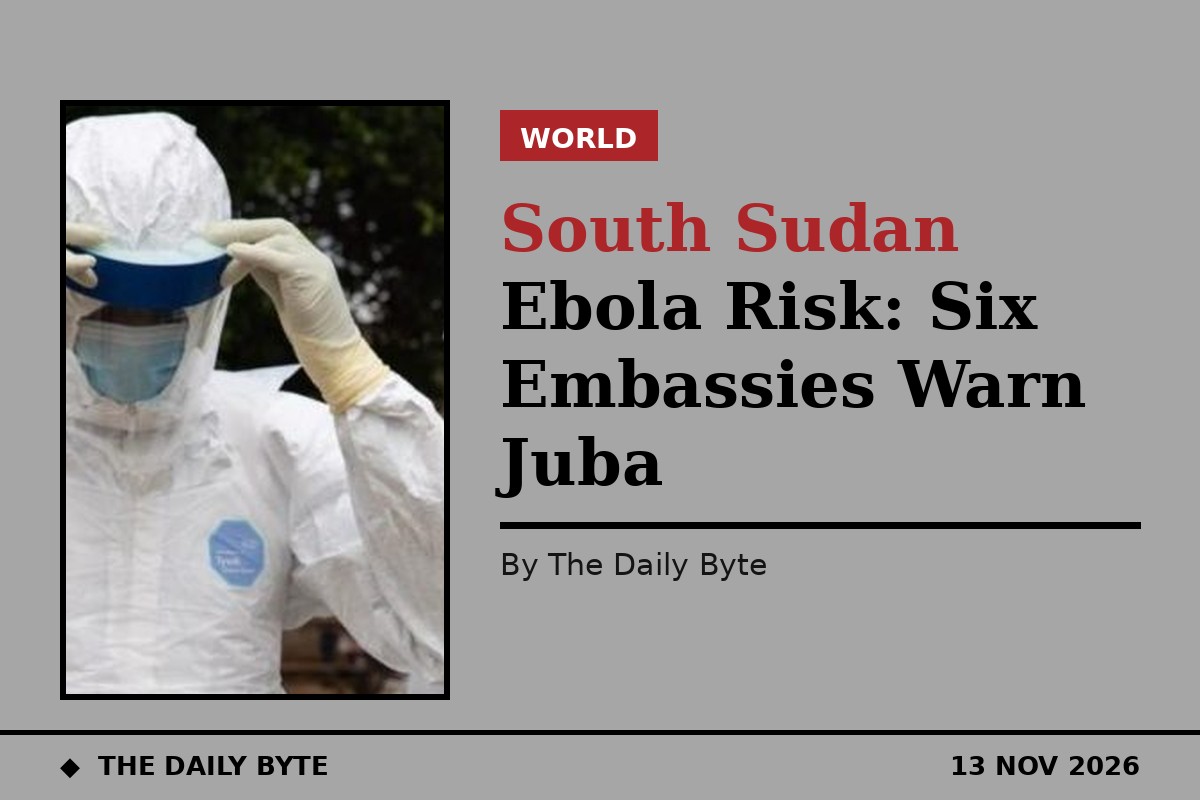
Six foreign embassies have warned of a high risk of an Ebola outbreak in South Sudan and urged the country's leaders to use public revenue to strengthen the health sector, as the deadly outbreak in neighbouring Democratic Republic of Congo continues to spread.
In a joint statement issued on Thursday, 12 November, the embassies of Germany, Japan, the Netherlands, Norway, the United Kingdom and the United States said they were deeply concerned about the threat facing South Sudan and called for urgent action to prepare the health system.
Embassies call for health funding and aid access
The diplomatic missions urged South Sudan's leaders to channel public funds towards healthcare services, including the payment of salaries for public health workers. They also called on the government to guarantee unrestricted access across the country for humanitarian organisations providing assistance to vulnerable communities.
"The Embassies of Germany, Japan, the Netherlands, Norway, the United Kingdom, and the United States of America reaffirm their concern about the high risks of an Ebola outbreak in South Sudan," the statement said.
The embassies added: "These risks give even greater urgency to the need for South Sudan's leaders to start using South Sudan's public revenue to fund the health sector, including the salaries of public health workers. It also gives greater urgency to our calls for South Sudan's leaders to support full access throughout the country for organisations providing assistance to South Sudanese people in need."
WHO puts importation risk at 99%
The warning comes as the World Health Organization (WHO) intensifies efforts to help South Sudan prepare for a possible spread of Bundibugyo virus disease, a type of Ebola virus disease, from the Democratic Republic of Congo.
In an update published on Thursday, 12 November, the WHO disclosed that its estimated risk of the virus being imported into South Sudan had increased from 67% in June to 99% in October 2026. The assessment was linked to porous borders, cross-border trade, population movements, humanitarian displacement and transport routes connecting the two countries.
Despite the elevated risk, South Sudan had not reported any confirmed cases of Bundibugyo virus disease as of the WHO's 12 November update. The Democratic Republic of Congo, with which South Sudan shares an approximately 813-kilometre border, had recorded more than 10,900 confirmed cases as of 9 November.
Health authorities and their partners identified 3,450 people who crossed into South Sudan from the Democratic Republic of Congo during a joint assessment in September. The WHO reported that South Sudan's overall preparedness level stood at 72.5% by the end of October, with significant differences in readiness across 11 response areas.
Suspected cases investigated
South Sudanese health authorities have been actively investigating suspected viral alerts. A fatal haemorrhagic fever case in Morobo County twice tested negative for Ebola before tests confirmed yellow fever on 10 November 2026. A separate alert in Yei was also awaiting laboratory confirmation in early November.
The regional picture adds to the urgency. Kenya, which recorded nine Ebola cases including two deaths after the virus was imported from the Democratic Republic of Congo, began a mandatory 42-day monitoring countdown this week. If no new case is recorded, Kenya will be declared free of Ebola on 23 December 2026, Health Cabinet Secretary Aden Duale said.
South Sudan is among the countries in the region facing Ebola-related travel restrictions from destinations including the United States, Canada, Saudi Arabia and the United Arab Emirates.
With no confirmed case yet on its territory, South Sudan's challenge is now one of preparation: funding its health workers, keeping surveillance strong along a long and busy border, and making sure aid agencies can reach the communities most at risk before the virus does.
Source: People Daily | Ghafla