Southeast Asian Travellers Look Beyond East Asia's Familiar Gateways, Traveloka Data Shows
Travellers across Southeast Asia are looking beyond East Asia's best-known gateways, according to new booking data from Traveloka published on Monday 9 November. The platform's year-to-date figures show different second cities gaining ground in each of its five main Southeast Asian markets, from Jeju in South Korea to Fukuoka in Japan and Hangzhou in China.
Jeju leads for Singapore, Fukuoka for Indonesia
For travellers in Singapore, Jeju is the standout, with flights to the South Korean island doubling year on year, helped by stronger direct flight connections. Jeju also topped Singapore's international destination list in Traveloka's Q3 2026 SEA Index, which covers July to September. In Indonesia, Fukuoka is becoming a favourite: flight bookings to the Japanese city have risen by more than 20 per cent year on year, while hotel bookings there have grown by close to 75 per cent.
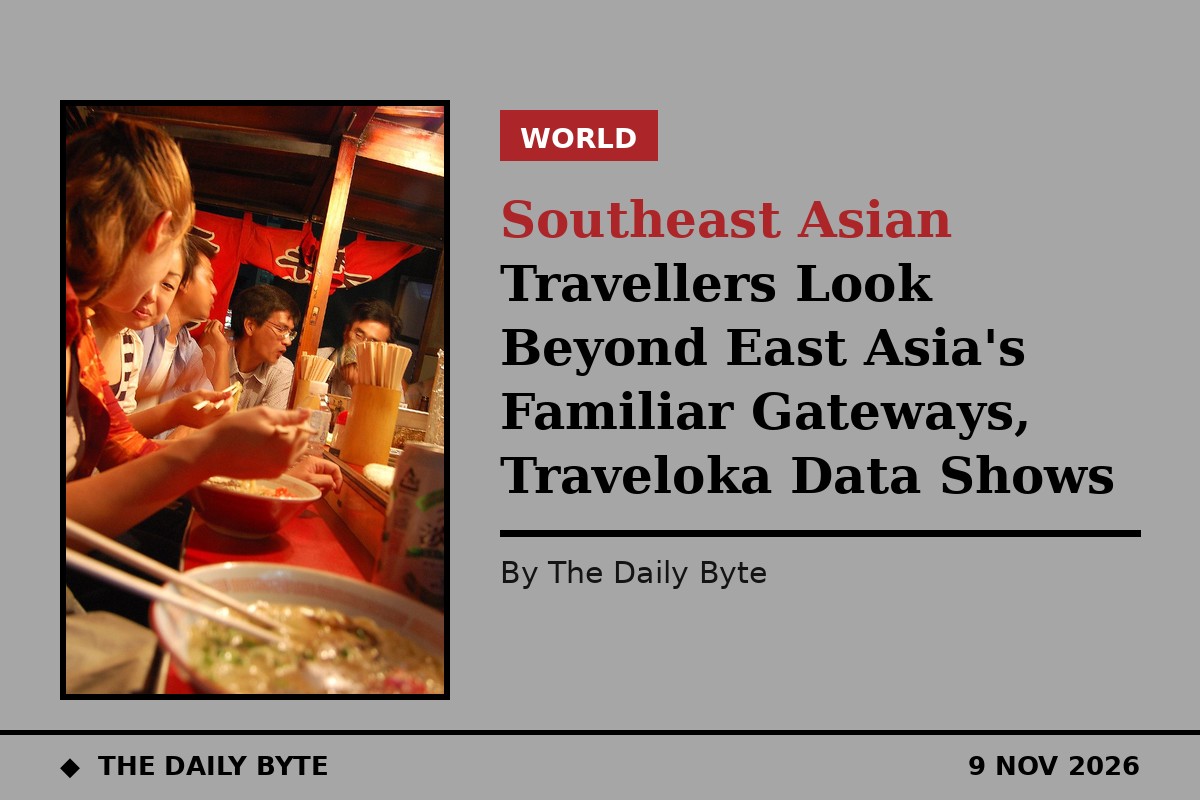
Fukuoka's appeal, according to Traveloka, lies in its food and city life, from the yatai street-food stalls around Tenjin and Nakasu in the evening to Ohori Park's lake and gardens during the day, with the oyster huts of Itoshima also highlighted as part of the city's quieter appeal.
Hangzhou, Chengdu and Xiamen gain ground
In Vietnam, Hangzhou has captured travellers' attention, with flight and accommodation bookings more than doubling year on year, helped by the introduction of new routes. The city, known for its West Lake landscape of causeways, gardens and pagodas, also topped Vietnam's international destination list in the Q3 index. In Thailand, Chengdu's share of China flight and accommodation bookings has doubled, with Traveloka pointing to social media visibility and the city's spicy Sichuan cuisine, Chengdu is a UNESCO City of Gastronomy, as draws.
Travellers in Malaysia, meanwhile, are turning to Xiamen, where the share of China flight bookings has more than doubled. Traveloka highlighted Kulangsu, known as Piano Island, with its car-free streets, well-preserved colonial-era architecture and the world's largest piano museum.
The figures come from Traveloka's own first-party booking data, so they describe activity on that platform rather than the whole travel market, and the destination-share figures come from a separate year-to-date analysis rather than the July-to-September index itself. Traveloka's head of marketing, Alex Jung, said the destinations gaining ground vary across Southeast Asia and described East Asia as a kaleidoscope of travel opportunities. The data was published as Traveloka's 11.11 Epic Sale runs from 3 to 12 November across Indonesia, Thailand, Vietnam, Malaysia, Singapore, Australia, Japan and South Korea, with a regional focus on China, Japan and South Korea.


