S&P 500 suffers worst earnings-season run since 2011
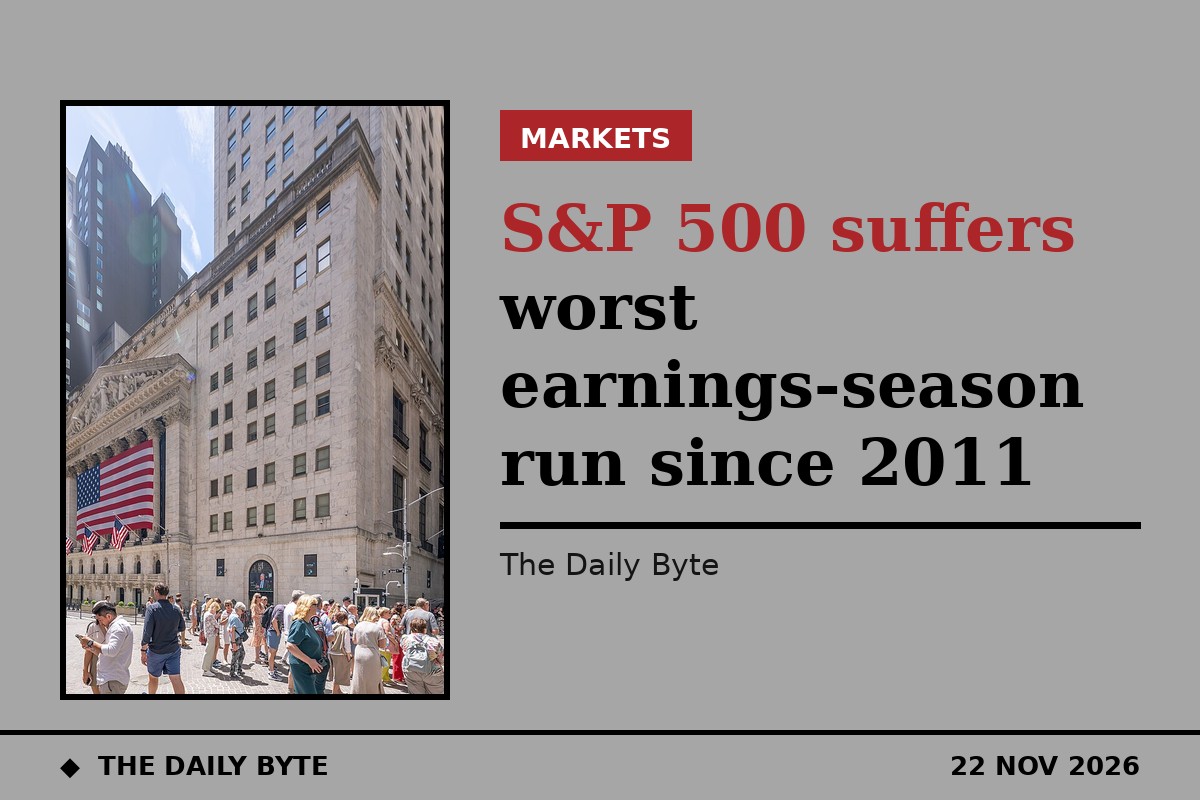
The S&P 500 has just suffered its worst earnings-season run since 2011, falling 8.1% between JPMorgan's results in October and Walmart's on Thursday, even though American companies delivered profit growth above 30% for a second straight quarter. Strong earnings, it turns out, were not enough.
The paradox of this reporting season is now clear in the data. According to FactSet, with 88% of S&P 500 companies having reported, 84% beat earnings-per-share estimates and the blended earnings growth rate for the third quarter stood at 31.4%. That would mark a third consecutive quarter of profit growth above 25%, with all 11 sectors growing earnings for the first time since 2021. Yet the index fell anyway, and fell hard.
Beats that were not good enough
The problem was not the results themselves but the size of the beats. In aggregate, companies reported earnings just 2.7% above estimates, according to FactSet, well below the five-year average of 7.5% and the ten-year average of 8.0%. If that figure holds, it will be the lowest earnings surprise percentage since the fourth quarter of 2022.
Years of strong quarters have trained investors to expect much more than a narrow beat. As BMO Nesbitt Burns noted in its weekly strategy review, aggregate earnings growth of nearly 30% was met with falling share prices as investors struggled to settle on a consistent story for the market, with revenue growth running at about 13% and margins doing the heavy lifting.
Why the market sold off anyway
The selling had a clear trigger: doubts about the artificial intelligence trade. Worries about the scale of AI spending, a reported SEC probe into Nvidia's accounting, and money rotating towards newly listed names such as Anthropic combined to hammer chipmakers and software stocks. Nvidia fell 14% on Friday alone, and the Nasdaq suffered its worst week since March 2020.
The S&P 500 closed on Friday at 6,910.39, down 3.7% on the day for its seventh straight daily loss and more than 10% below its October record, putting the index in correction territory. Bloomberg data cited in Monday's market coverage puts the fall across the earnings season at 8.1%, the worst such run since 2011.
What comes next
The season is not quite over. Hewlett Packard Enterprise reports after the close on Monday 23 November 2026, and Dell, Workday and Autodesk follow on Tuesday, offering a fresh test of whether AI hardware spending is holding up. The October PCE inflation report, the Federal Reserve's preferred gauge, is due on Wednesday, and markets close on Thursday for Thanksgiving.
For now, the lesson of the season is uncomfortable for bulls: profits can grow by nearly a third and shares can still fall by almost a tenth, when the story investors are buying is growth, not just earnings.
FAQ
How much did S&P 500 earnings grow in Q3 2026?
FactSet puts blended year-on-year earnings growth at 31.4%, the third straight quarter above 25%, with 84% of companies beating earnings-per-share estimates.
Why did the S&P 500 fall if earnings were strong?
The beats were small: earnings came in just 2.7% above estimates, the lowest surprise since late 2022, while worries about AI spending and Nvidia hit technology shares.
How far did the S&P 500 fall during earnings season?
It fell 8.1% between JPMorgan's results in October and Walmart's on Thursday, its worst earnings-season run since 2011, according to Bloomberg data.
Source: FactSet; additional reporting by Bloomberg via Market Index. Figures as reported on 23 November 2026.