Spain cardboard ballot box row grips overseas vote
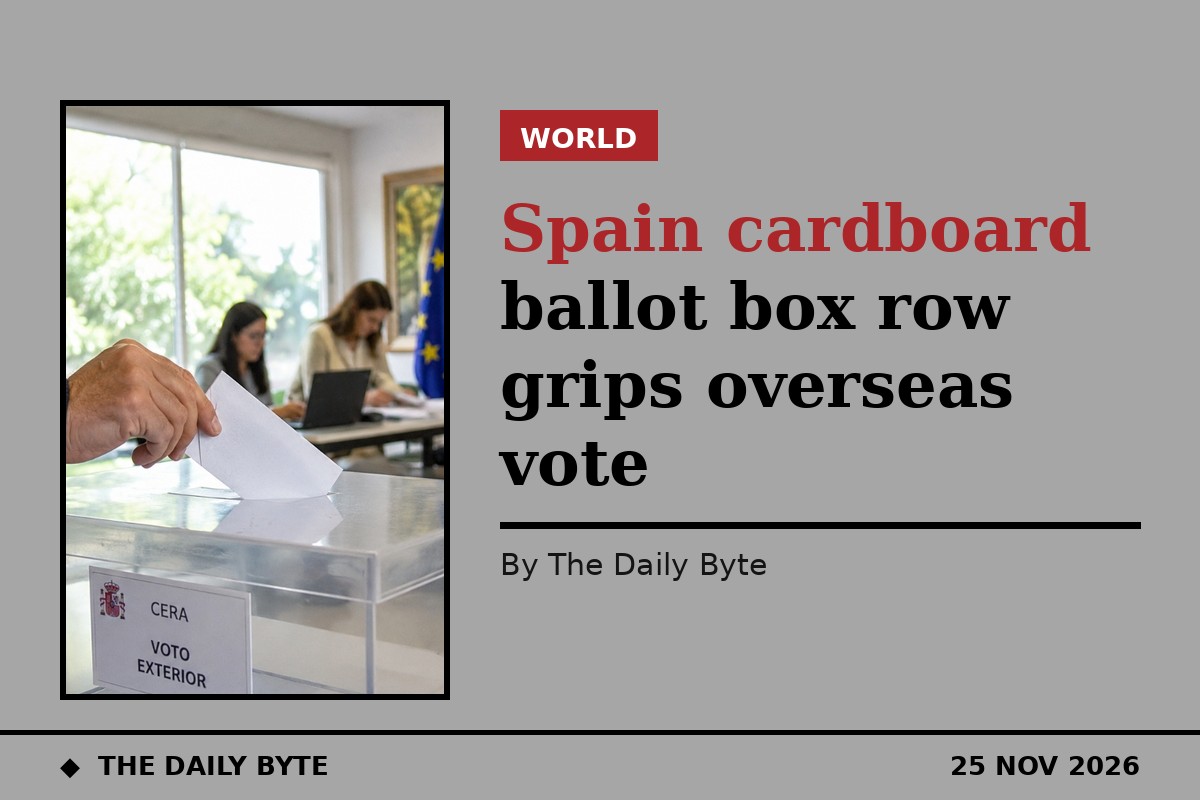
Spain's general election campaign has been gripped by a row over cardboard boxes used at consulates abroad, after the opposition leader voiced concern about the arrangement and the Foreign Ministry hit back by defending the professionalism of consular staff.
Alberto Núñez Feijóo, leader of the People's Party and candidate for prime minister, said on Tuesday that it obviously worried him that cardboard ballot boxes were being used in consulates for people granted nationality who, in his words, did not comply with the law under which nationality and the right to vote were granted. Speaking on the radio programme Más de uno on Onda Cero, he added: "This had never happened in our country." He also said he had faith that the consuls would shield the votes.
The row concerns Spaniards abroad who were naturalised under the Democratic Memory Law, known as the ley de nietos, or grandchildren's law. Spain's Supreme Court ordered on 23 October that people naturalised under the law who could not prove they were descendants of exiles should be excluded from the electoral roll. According to reporting by Antena 3 and the EFE news agency, the suspension affects 163,355 people, of whom only 901 had supplied consular certification of an exiled ancestor.
Separate boxes for suspended voters
When in-person voting abroad opened at the weekend, ahead of the general election on Sunday 29 November, some consulates set up a separate table with cardboard boxes for the affected voters. In Buenos Aires, the consulate general set up a table with two cardboard boxes acting as ballot boxes to collect the envelopes of those naturalised under the law, according to reports. EFE reported that the boxes in Buenos Aires were not sealed.
The Supreme Court's order said that if a person who did not appear on the updated electoral roll presented themselves to vote, consular officials should receive their electoral documentation but not put it in the ballot box. Instead, they were told to keep it aside for dispatch to the competent provincial electoral board, together with the rest of the electoral documentation but duly differentiated, with a record of the point in the consular report.
The Foreign Ministry, led by José Manuel Albares, responded on Tuesday, saying consular officials were scrupulously complying with the instructions sent by the Supreme Court. Ministry sources told Europa Press that the ministry and its entire external service, including the consuls, scrupulously complied and would comply with the law in force, and rejected outright what they called unfounded accusations against their work. The ministry said the differentiated cardboard boxes were used in some consular offices so that the documentation of the affected voters was kept separate from that of other voters.
Vox raises fraud claims
The far-right Vox party has gone further, announcing legal complaints over the arrangement and accusing the government of preparing traps around the overseas vote. Its leader, Santiago Abascal, has suggested the government will try to challenge the electoral process, while the party's MEP Jorge Buxadé has asked the Central Electoral Board to demand daily participation data from all consulates. None of these statements has provided evidence to support a plan to manipulate the result, and the claims remain contested.
The Foreign Ministry has not specified whether it was the ministry itself that ordered the use of the differentiated cardboard boxes, saying only that the receipt of the documentation happened by express mandate of the Supreme Court's order of 23 October. For now, the boxes hold separated documentation, not counted votes, and whether the arrangement is a lawful safeguard or an electoral risk remains a matter of dispute between the government and its critics, days before Spaniards vote.