Sri Lanka Braces for Heavy Rain from 13 November
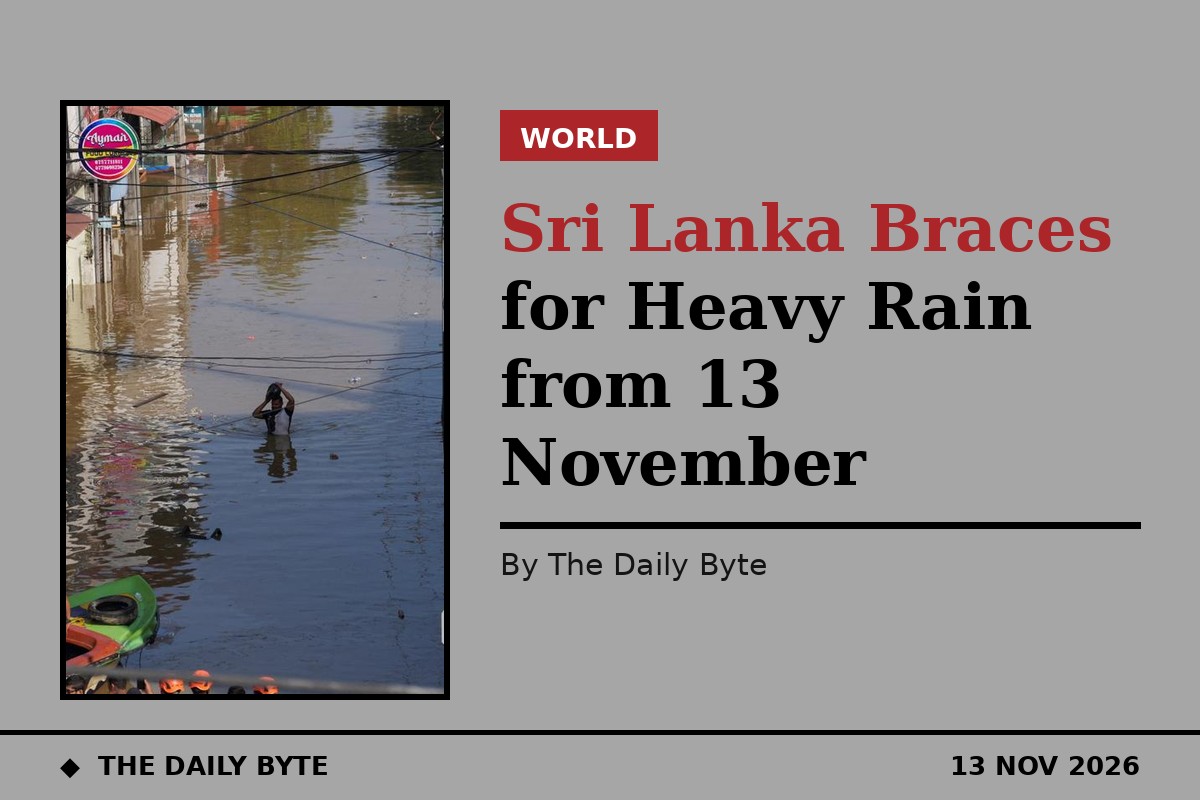
Sri Lanka's Disaster Management Centre has warned of heavy rain across several parts of the island from 13 to 15 November, as a low-pressure area is expected to form over the south-eastern Bay of Bengal.
The centre's director and spokesperson, Pradeep Kodippili, announced the warning at a media briefing at the Government Information Department on Wednesday, 11 November, urging the public to remain alert and to follow official advisories as the weather system develops.
The warning covers a three-day period in which heavy showers could affect several regions, with the low-pressure area expected to develop around 13 November and bring prolonged rain to parts of the island already saturated by weeks of wet weather.
Low-pressure system set to strengthen
The Department of Meteorology's forecast, issued at 5.30am on Friday, 13 November, anticipates a temporary reduction in showery conditions across most of the island today. But forecasters are watching the developing system in the south-east Bay of Bengal closely: it is expected to move north-westwards, intensify into a well-marked low-pressure area by Saturday, 14 November, and develop further into a depression around Sunday, 15 November.
The department has explicitly asked naval and fishing communities to pay close attention to future forecasts and bulletins, warning of significant changes in sea conditions as the system strengthens. Thundershowers could also bring temporary localised strong winds and lightning, and the public has been advised to take precautions against both.
Earlier forecasts pointed to falls of more than 100mm in some locations across five provinces - Western, Sabaragamuwa, Central, Southern and Uva - as the system approaches.
Landslide risk after Cyclone Ditwah
The warning carries added weight because of the damage left by Cyclone Ditwah, which caused severe flooding across the island. The National Building Research Organisation has warned that landslides could become active in areas where soil layers were destabilised by the cyclone, and it has urged people in vulnerable areas to stay alert.
Hilly districts such as Kandy, Ratnapura, Kegalle and Nuwara Eliya face an elevated risk of landslides and mudslides, especially where the ground is already saturated. Low-lying areas near major rivers, including the Kelani, Kalu and Gin, are particularly susceptible to flooding when rainfall is prolonged.
The Disaster Management Centre has called on communities in low-lying areas, on riverbanks and in landslide-prone hillside zones to exercise heightened caution throughout the warning period, and to monitor official weather updates regularly.
Monsoon season brings sustained rain
The alert comes during Sri Lanka's north-east monsoon season, which typically brings sustained rainfall from October through January. The season has already delivered repeated spells of heavy rain, and the government has approved reconstruction work on road sections damaged by Cyclone Ditwah, in a decision taken by the Cabinet on 9 November.
Officials say the situation will be monitored in real time, with updated advisories issued as the low-pressure system develops. Residents have been asked to keep clear of floodwater, avoid unnecessary travel during heavy downpours, and report any signs of landslides or rising water to local authorities.
Sources: News9; NationScope; Daily FC.