SS United States Sunk as World's Largest Artificial Reef
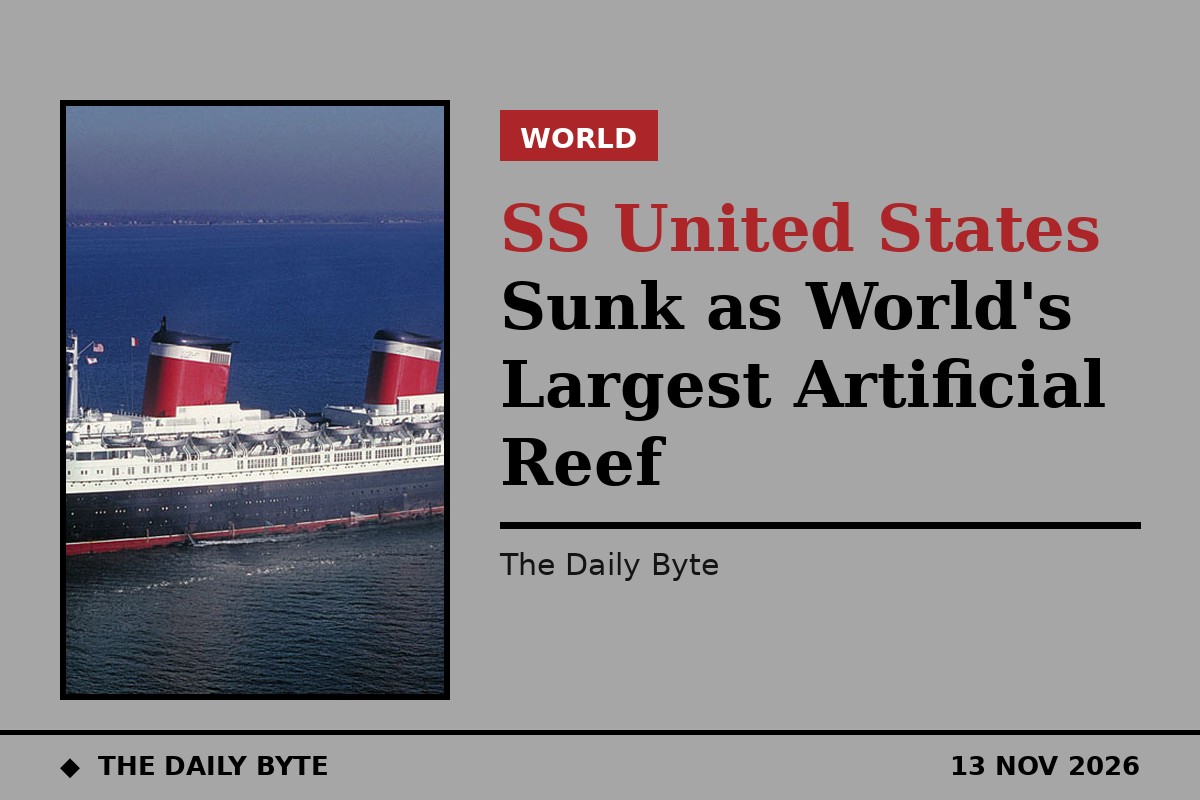
The historic ocean liner SS United States sank beneath the Gulf of Mexico off Florida on Wednesday, 11 November, and now rests upright on the sea floor as the world’s largest artificial reef, USA Today reported.
The 990-foot ship settled upright at 9:59 p.m. Eastern time, seven hours and 19 minutes after crews began flooding it at about 2:40 p.m. The vessel was fully flooded and had started to sink by 5:47 p.m., county officials said. It came to rest about 22 nautical miles south-west of Destin-Fort Walton Beach, in water roughly 180 feet deep, with its uppermost deck about 60 feet below the surface.
The sinking had been expected to take about 45 minutes after valves were opened at 1 p.m. Instead, spectators aboard dozens of boats waited for hours while crews filled additional tanks with seawater to stabilise the ship so it would settle correctly on the Gulf floor. Okaloosa County public information officer Nick Tomecek said the ship went down evenly at first, then shifted to its port side before trapped air rushed out of the portholes in a dramatic burst.
Confirmed upright on the sea floor
Sonar imaging and a remotely operated underwater vehicle confirmed on Thursday morning that the ship had landed upright, as planned. Rough weather prevented dive teams from carrying out their planned underwater inspection, and officials were still deciding when divers and the public would be able to visit the wreck. The safety zone around the site was lifted late on Thursday.
At 990 feet, the SS United States is longer than the aircraft carrier USS Oriskany, deliberately sunk off Pensacola in 2006, which was previously the world’s largest artificial reef. The two wrecks lie only about 12 nautical miles apart, and tourism officials say divers could conceivably visit both on a day trip. The new reef is expected to draw divers and anglers from across the United States, benefiting charter boat operators, hotels, restaurants and dive shops across north-west Florida.
The top decks, at 55 to 60 feet down, will be within reach of recreational divers with basic Open Water certification, while technical divers will be able to explore deeper sections, including the engine room and the pool. Marine life is expected to colonise the wreck quickly, with snappers, groupers, amberjack, sharks and turtles among the species divers are likely to see. Researchers from the Woods Hole Oceanographic Institution plan to study how marine organisms colonise the giant structure. Florida law forbids removing objects from the wreck, with penalties of up to a year in jail and a $1,000 fine.
End of a long fight to save the ship
For many who watched the sinking, it was a bittersweet farewell. Designed by naval architect William Francis Gibbs, the SS United States entered service in 1952 and set a transatlantic speed record on its maiden voyage, crossing the Atlantic in three days, 10 hours and 40 minutes. It carried more than a million passengers before retiring in 1969, as commercial aviation transformed international travel.
The SS United States Conservancy spent years trying to save the ship, contacting more than 40 ports in search of a permanent berth, but its size and the estimated $500 million cost of refurbishment made that impossible. Okaloosa County bought the vessel in October 2024 for $10.1 million and moved it from Philadelphia, where it had been docked for nearly 30 years, to Mobile, Alabama, for environmental preparation. A federal judge denied a last-minute lawsuit seeking to halt the sinking on 6 November. The ship’s red, white and blue funnels were removed and preserved for a planned land-based museum, which the Conservancy hopes will display more than 10,000 artefacts from the liner.
The sinking took place on Veterans Day, a date Okaloosa County Commission chairman Trey Goodwin said was especially meaningful given the vessel’s history and its connection to American service members. The Pensacola News Journal reported that the operation went according to plan despite the delays, and that the ship’s final journey ended exactly where planners had hoped: upright on the Gulf floor.