Sudani bloc tops Iraq election with 46 seats, results show
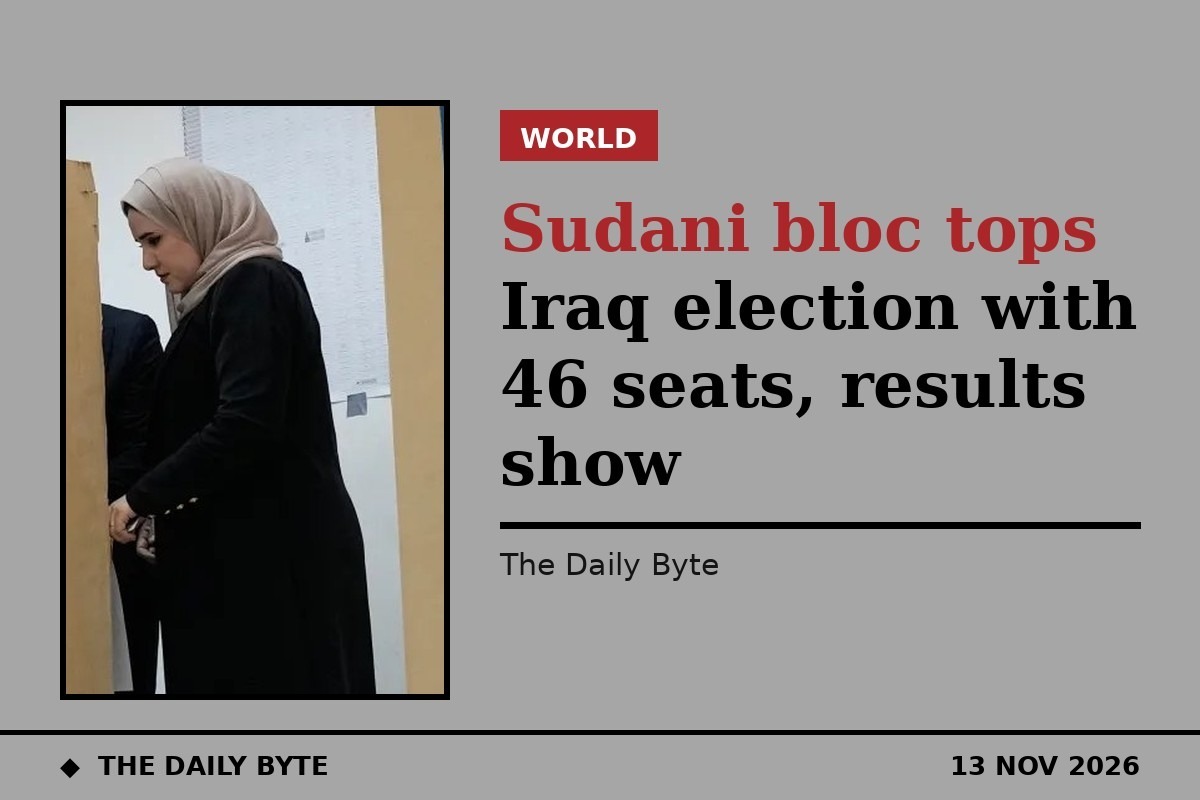
Prime Minister Mohammed Shia al-Sudani's coalition has won the most seats in Iraq's parliamentary election, taking 46 of the 329 seats in the Council of Representatives, according to final results released by the Independent High Electoral Commission.
The Reconstruction and Development Coalition, led by al-Sudani, received 1.317 million votes in Tuesday's election, about 370,000 more than its nearest rival, the commission said. The coalition placed first in eight provinces: Baghdad, Qadisiyah, Najaf, Karbala, Muthanna, Maysan, Dhi Qar and Babil.
In Baghdad alone, the coalition won 411,026 votes, securing 15 seats. Former parliament speaker Mohammed al-Halbousi's Taqaddum Party came second in the capital, followed by former prime minister Nouri al-Maliki's State of Law Coalition in third place.
Who won what
The final results put State of Law second overall with 29 seats, followed by Taqaddum with 27 seats and the Kurdistan Democratic Party (KDP) with 26 seats. The Patriotic Union of Kurdistan won 15 seats, according to analysis by the Washington Institute.
The KDP, led by Masoud Barzani, swept the Kurdish provinces of Erbil and Duhok and led in the mixed province of Nineveh, while the Patriotic Union of Kurdistan prevailed in Sulaymaniyah and Kirkuk. In Kirkuk, the Patriotic Union of Kurdistan won four seats with 178,629 votes, while the KDP won one seat with 59,294 votes.
Turnout reached 56.11 percent, the commission said, with 12,009,453 ballots cast from 21,404,291 registered voters. That was well above the record low recorded in the 2021 election, despite a boycott by the influential Shiite cleric Moqtada al-Sadr, whose movement stayed away from the vote.
More than 7,700 candidates contested the 329 seats in Iraq's sixth parliamentary election since the 2003 US-led invasion. Polling took place at 8,703 polling centres, with security forces and displaced people voting early on Sunday before the general vote on Tuesday.
Long road to a government
Despite leading the count, al-Sudani's coalition is far short of a majority, and forming a government is expected to take months of negotiation between Shia, Sunni and Kurdish blocs. Under Iraq's constitution, the largest bloc in parliament has the right to nominate the prime minister, but no single group can govern alone.
Parties in Iraq's Shia ruling alliance, the Coordination Framework, said after the results were announced that they consider themselves the largest bloc in parliament, having brought their parties together. The framework includes State of Law and other Iran-aligned parties, and analysts say it controls close to a plurality of seats, even though al-Sudani's own coalition won the most votes.
Al-Sudani, who is seeking a second term as prime minister, described the 56 percent turnout as clear evidence of success and said it reflected a restoration of confidence in the political system. He rose to power in 2022 with the backing of the Coordination Framework, but that bloc is now reported to be reluctant to endorse his return.
The election was held at a moment of rare stability for Iraq, even as war between the United States, Israel and Iran has raged across the region since February. The new government will have to navigate the delicate balance between Washington and Tehran, both of which exert influence in Baghdad, while addressing the public services, jobs and corruption that voters said mattered most to them.
Results are provisional until complaints are reviewed and the outcome is certified, and appeals are expected in the coming days. Once the results are confirmed, parliament must elect a speaker, confirm a president, and then authorise the largest bloc to form a cabinet.
Sources: Reuters via Red Hot, Reuters via SRN News, ANF News, Washington Institute.