Supreme Court Disposes of Mazari, Chattha Petitions
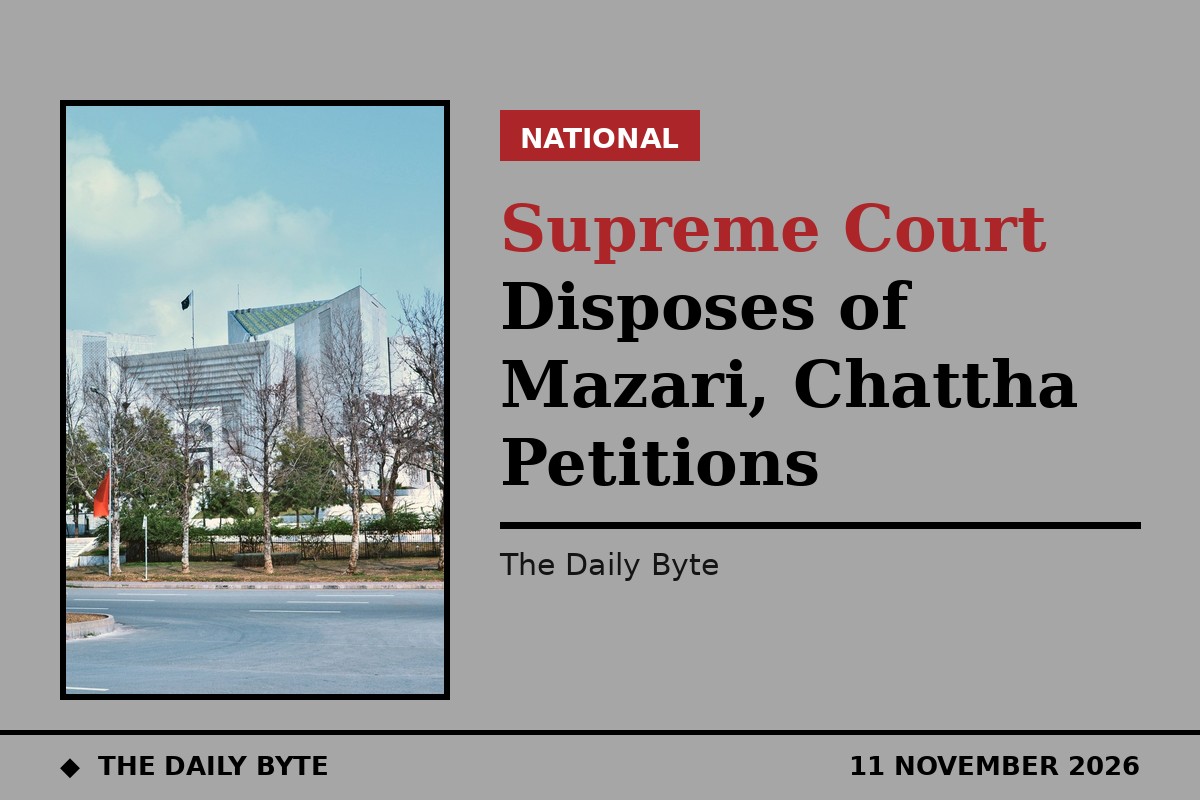
The Supreme Court of Pakistan has disposed of the petitions filed by human rights lawyers Imaan Zainab Mazari-Hazir and her husband, Hadi Ali Chattha, in the security breach case, declaring them infructuous after the couple's convictions.
A bench led by Justice Muhammad Ali Mazhar heard the pleas on Wednesday, 11 November 2026. The petitions had challenged the Islamabad High Court's refusal to stay the trial in the case and had also sought the transfer of the proceedings. With the trial now concluded and sentences passed, the court held that the petitions no longer had any practical effect.
The convictions behind the disposal
On 29 October, an anti-terrorism court in Rawalpindi sentenced Mazari and Chattha to 10 years in prison each in the security breach case. The court also imposed fines totalling Rs200,000 on each of them. The sentences were ordered to run concurrently, leaving each facing a total of 10 years in prison.
The convictions were handed down under section 7(h) of the Anti-Terrorism Act 1997, together with sections 186 and 353 of the Pakistan Penal Code, covering obstruction of a public servant and the use of criminal force to deter a public servant from duty. The verdict was announced by Judge Tahir Abbas Sipra at Adiala Jail in Rawalpindi, where the couple are detained.
The case, registered at Islamabad's Aabpara police station, stems from an incident on 25 October 2024, when the couple allegedly removed security barriers on a road in Islamabad during the movement of the visiting England cricket team. The prosecution said the barriers were part of the security arrangements for the team, who were treated as state guests.
A trial the couple say was unfair
Mazari and Chattha denied the charges throughout the trial and described the case as harassment aimed at punishing them for their human rights work. Their counsel had asked the trial court to defer its verdict until the petitions pending before the Supreme Court and the Islamabad High Court were decided, arguing that the court could not lawfully announce its decision while those applications remained under consideration.
The couple had approached the Supreme Court on 26 October, contesting the high court's order of 19 October refusing interim relief and seeking a transfer of the case to a different court. The petition was not heard before the anti-terrorism court delivered its verdict three days later, which is why the Supreme Court has now treated the petitions as infructuous.
The wider legal battle continues
The disposal does not affect the convictions themselves. Mazari and Chattha have separately approached the Islamabad High Court against their sentences, filing appeals along with applications seeking suspension of the sentences and release on bail. Their appeals argue that the trial failed to meet the requirements of a fair trial and that the jail trial was conducted in a way that resembled a secret trial.
The case is one of several facing the couple. They were arrested on 23 January 2026 and, a day later, a sessions court sentenced each of them to 17 years in prison in a separate case over social media posts, under the Prevention of Electronic Crimes Act. On 17 September, the Supreme Court suspended those sentences and granted them bail, but they were re-arrested the same day in connection with the security breach case before they could be released.
The 10-year sentences drew condemnation from international civil society organisations, including Amnesty International and the International Commission of Jurists, which said the convictions marked an escalation in the misuse of anti-terrorism legislation against lawyers carrying out human rights work. The couple's appeals before the Islamabad High Court are now the live forum for challenging the verdicts.