Syria Emerges as Oil Corridor as Hormuz Stays Blocked
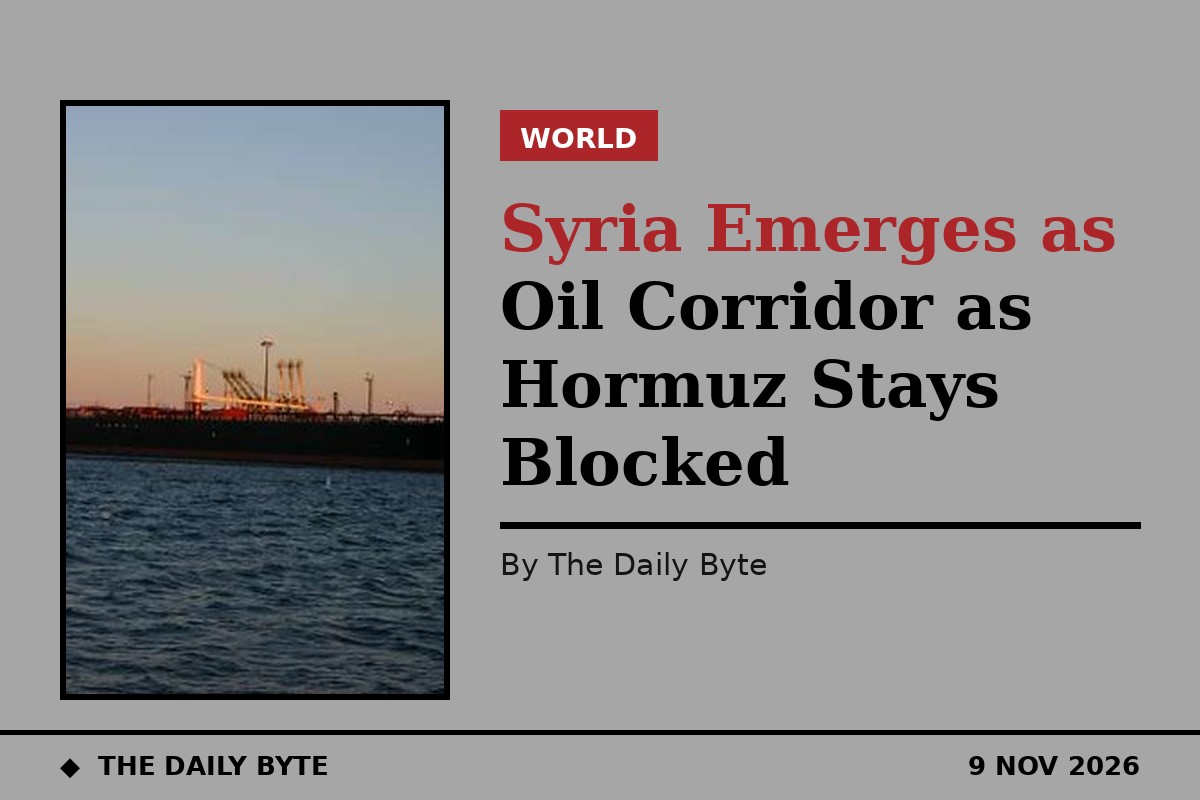
Syria is receiving hundreds of Iraqi oil trucks hauling crude overland to its Mediterranean port of Baniyas, turning the war-scarred country into an alternative energy corridor to Europe while the Strait of Hormuz remains largely blocked by the war between the United States, Israel and Iran.
Al Jazeera reported on Monday that the overland route has become a costly but crucial workaround for Iraq, one of the world's biggest oil exporters, whose main Gulf shipping lanes have been sharply curtailed since the conflict in the Gulf escalated earlier this year.
The arrangement works by road rather than by sea. Iraqi fuel oil and crude are loaded onto tanker trucks, driven west across Syria and unloaded at Baniyas, where the fuel is pumped from a marine platform into storage tanks and then onto waiting export tankers bound for markets in Europe and Africa. The workaround began operating in April, and millions of barrels of Iraqi fuel oil have already been moved this way.
According to energy officials quoted by Hydrocarbon Processing, Iraq's state oil marketer SOMO awarded contracts to supply about 650,000 metric tons of fuel oil a month from April to June for the overland journey through Syria. Baniyas can now unload an average of 900 tanker trucks a day, and Syria plans to open two extra unloading areas and other facilities at the port to handle Iraqi crude oil and naphtha as well.
The scale of the operation shows in the queues. Reporters have seen lines of Iraqi tankers stretching for more than 30 kilometres along the road to Baniyas, and Iraqi officials have said crude shipments could reach around 50,000 barrels a day once loading installations are ready. Iraq normally exports about 3.6 million barrels of oil a day, with around 3.4 million barrels a day flowing through its southern Basra terminals before the war, so the Syrian route is a supplement to its Gulf exports rather than a replacement for them.
For Syria, the corridor brings badly needed income. The country is earning transit fees from the fuel shipments, paid through buyers and intermediaries, as it tries to rebuild its economy after nearly 14 years of war and decades of isolation under the Assad family. Under President Ahmed al-Sharaa, Damascus has been working to reintegrate into the regional and global economy, and the oil route gives it a practical role as a bridge between Iraq and the Mediterranean.
Iraqi officials have said the diversification will continue even if shipping through the Strait of Hormuz returns to normal. The Iraqi oil ministry has described reducing reliance on a single export corridor as a government-approved strategy, and SOMO is set to open offices in Baniyas to manage the trade. Syria is also working on reviving the war-damaged Iraq-Syria oil pipeline, which officials say can pump up to 300,000 barrels a day, to replace the truck route over time.
The road is not without risk. Highways damaged by years of war make the journey slow and hazardous. In June, two Iraqi fuel tankers collided near Homs, spilling thousands of litres of fuel, while protesters in north-east Syria blocked Iraqi tankers to protest against rising fuel prices and deteriorating living conditions. Even so, with the strait effectively closed to much of its traffic, Iraq has little choice but to keep the trucks rolling through Syria.