Syria Reports Third Polio Case in Deir Ezzor
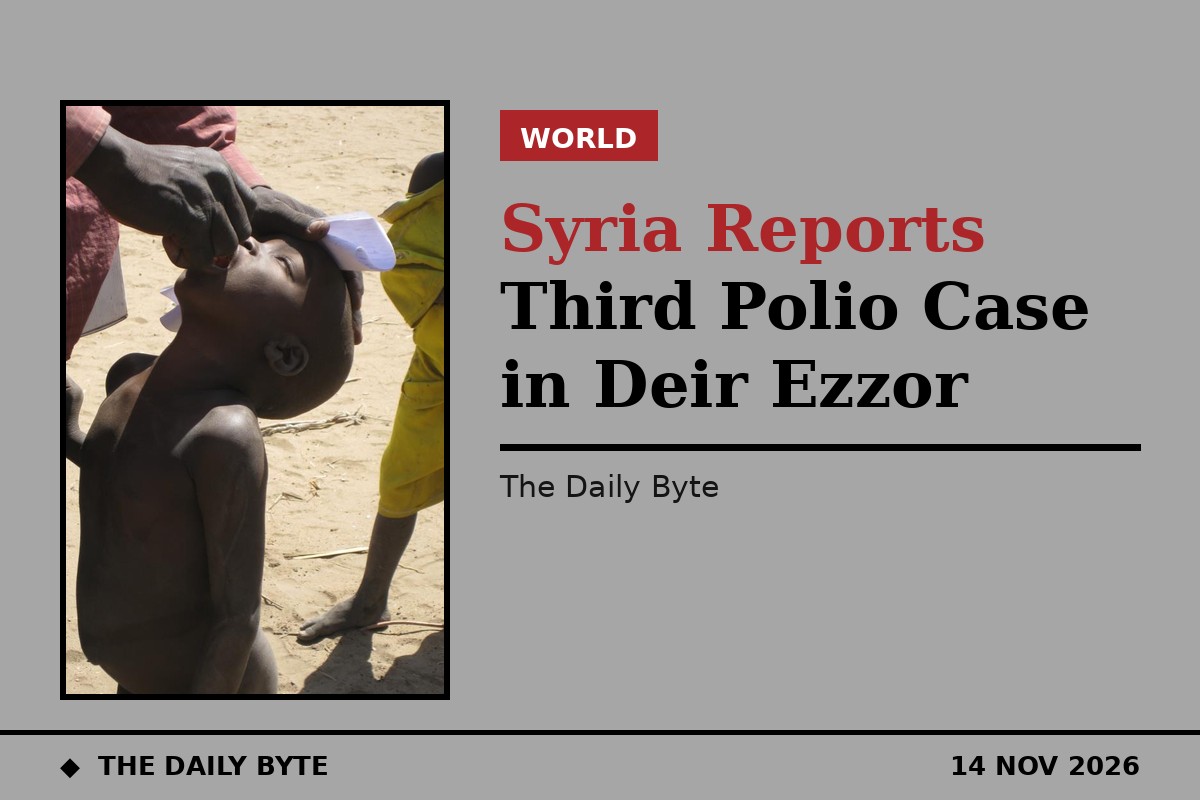
Syria’s Health Ministry has confirmed a third polio case in Mayadin, in the eastern province of Deir Ezzor, and has stepped up vaccination and surveillance in the area to prevent further spread. The ministry said vaccination remains its top priority and urged parents to make sure their children receive all routine immunisations and extra doses offered during campaigns, even if they were vaccinated before.
The latest case follows two confirmed infections in Mayadin, announced at a news conference last Sunday attended by representatives of the World Health Organization (WHO) and UNICEF. Health authorities are increasing surveillance, investigating suspected cases and monitoring people who may have been exposed, the ministry said.
Two children paralysed by vaccine-derived virus
In a joint statement on 9 November, the ministry, WHO and UNICEF said poliovirus type 1 had been detected in two children aged between six and 13 months who developed paralysis in Deir Ezzor Governorate. The virus was vaccine-derived poliovirus type 1, known as VDPV1, which can emerge in places where too few children are immunised.
Health teams had already begun vaccination in the affected areas, and a campaign on 18 October reached more than 34,000 children under five. A further campaign was planned for the following week, with more rounds and locations to be decided as assessments continue. The ministry said it would announce the areas covered, the eligible age groups and how families can reach vaccination services.
Turki Al-Daher, director of the ministry’s National Immunization Program, said the ministry was strengthening routine vaccination, improving surveillance and expanding public awareness campaigns to prevent further infections. The ministry also advised parents to seek immediate medical care if a child develops sudden weakness in the arms or legs, or loses the ability to walk.
Clinics reopen as response widens
Syria’s Health Minister, Dr Mousab Al Ali, said: “Vaccination is one of the most important steps families can take to protect their children from polio. We encourage parents and caregivers to complete their children’s recommended vaccinations and cooperate with health teams during upcoming campaigns.”
The number of working primary health care centres in Deir Ezzor has risen from 40 to 87, with a plan to increase it to 124, so more families can reach routine immunisation and basic care. WHO and UNICEF are supporting the ministry’s response, including field investigations to find any further cases and assess the risk of transmission.
Polio is a highly infectious viral disease that mainly affects young children and can cause irreversible paralysis. Vaccination is the most effective way to prevent infection, and high coverage helps stop the virus spreading. The ministry said it would give regular public updates on the situation and the response, and asked community and religious leaders to help share accurate information about vaccination arrangements.