Taiwan Readies $15bn Fund and Curbs Short Selling
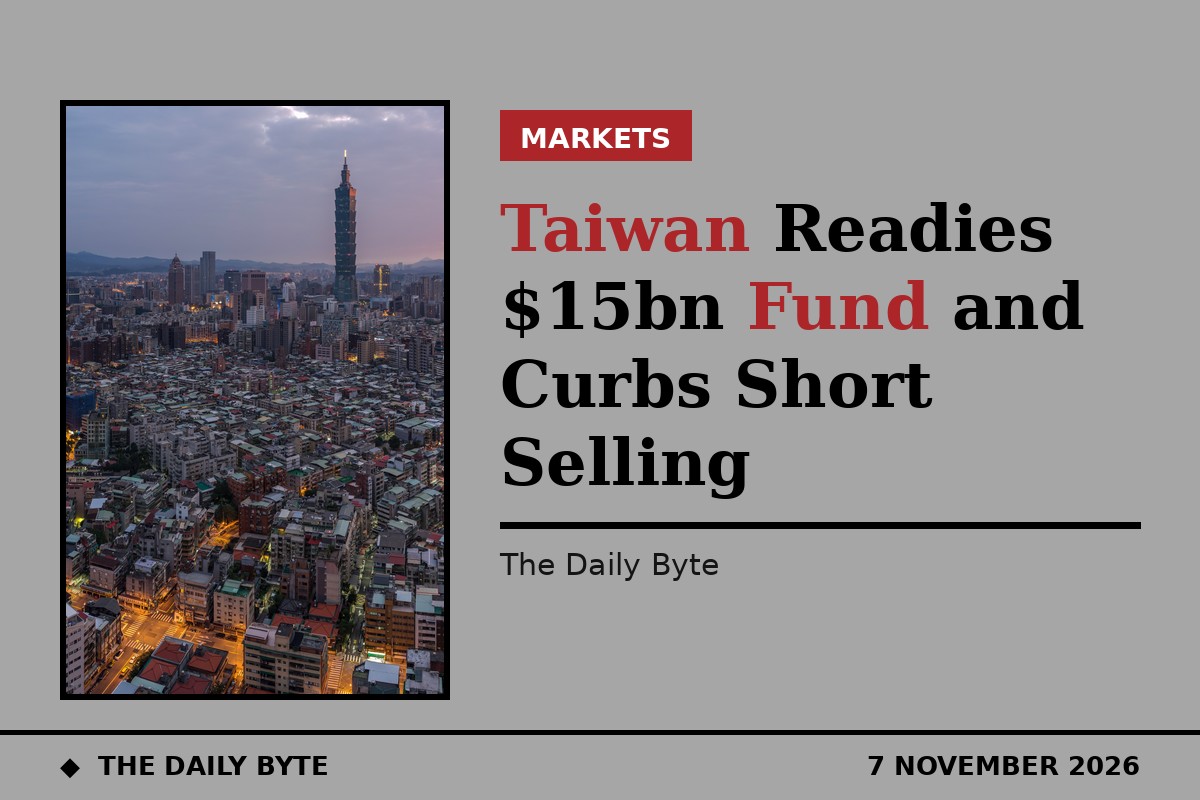
** Taiwan has moved to steady its stock market after a brutal sell-off in artificial intelligence shares drove its benchmark index into a bear market. The island's financial regulator will curb short selling from Monday, and the government has authorised its NT$500 billion (about $15 billion) stock stabilisation fund to intervene if needed.
The Taiex plunged as much as 9 per cent on Friday 6 November before closing down 4.51 per cent at 39,701.64. The index lost 12.19 per cent over the week, its worst weekly performance since 2001, as investors reassessed AI spending.
Short-selling curbs from Monday
Taiwan's Financial Supervisory Commission announced the measures after trading closed on Friday, and they take effect on 9 November. Intraday orders to sell borrowed shares will be capped at 3 per cent of a stock's average daily trading volume over the previous 30 days, down sharply from 30 per cent. The minimum margin requirement for short selling will also rise to 130 per cent, from 90 per cent, making it more expensive to bet against stocks.
Separately, the National Financial Stabilization Fund's committee authorised its executive secretary to deploy money as needed. It is the fund's 10th market intervention since it was set up in 2000, and the first in less than 10 months.
A fund with a profitable track record
The last intervention ran for 279 days, from 9 April 2025 to 12 January 2026, after the United States announced reciprocal tariffs. The fund deployed only NT$12.25 billion of its NT$500 billion capacity, buying eight stocks, and booked a net profit of NT$9.93 billion.
TSMC alone accounts for more than 40 per cent of the Taiwan market's capitalisation. TSMC fell 8.5 per cent intraday on Friday before closing about 4.7 per cent lower.