Taiz Cut Off for 20 Days as Pope's Appeal Highlights Yemen's Deepening Siege Crisis
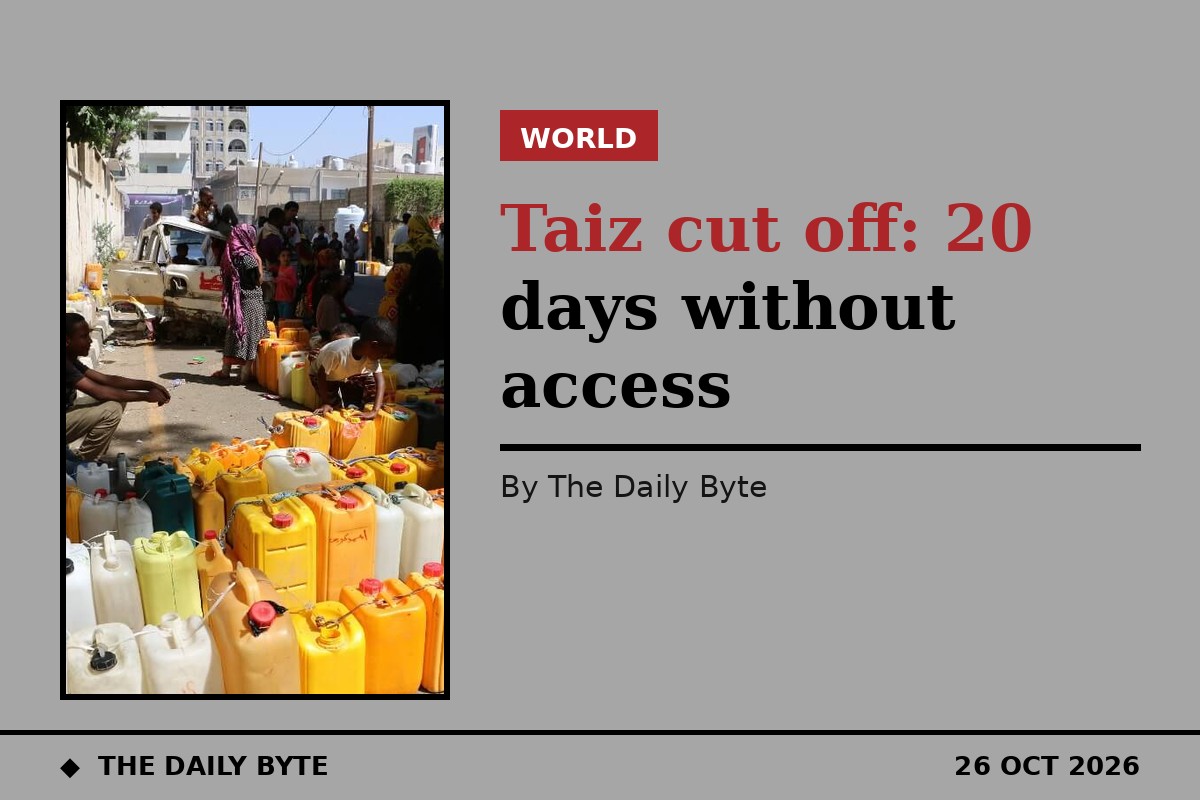
Twenty days cut off
Yemen's besieged city of Taiz has now been cut off for 20 days and counting, the United Nations humanitarian office said, with access roads closed so that very little fuel, food or other supplies have reached the city. Yemen's Foreign Ministry has welcomed an appeal by Pope Leo XIV over the situation in Taiz and urged practical international pressure to lift the siege and reopen the roads.
Water, food and disease fears
The crisis is most acute in water. Fighting since September between the Saudi-backed government and the Iran-allied Houthi group has disrupted supply routes, including the Taiz-Aden corridor, and fuel shortages have hobbled the pumps that serve water systems for an estimated three million people, at least 1.6 million of them children, according to UNICEF. Families are rationing drinking water and queuing from the morning to fill jerrycans, while the cost of trucked water has roughly tripled. Rubbish piling up along roads, because waste teams cannot reach dumping sites, is raising fears of disease outbreaks.
The wider toll
The World Food Programme has reported that more than 800,000 people in Taiz have been cut off from assistance, including 600,000 people dependent on humanitarian aid. UNICEF said it has screened more than 168,000 children in Taiz this year, with over 52,000 found acutely malnourished. Taiz governorate hosts nearly half of the 250,000 people displaced by the latest escalation, aid groups said. Relief agencies are calling for civilians, water infrastructure and essential services to be protected, and for roads to reopen so aid can reach the city.
Sources: Reuters; UNICEF.