Takaichi tax rebels face LDP action over walkout
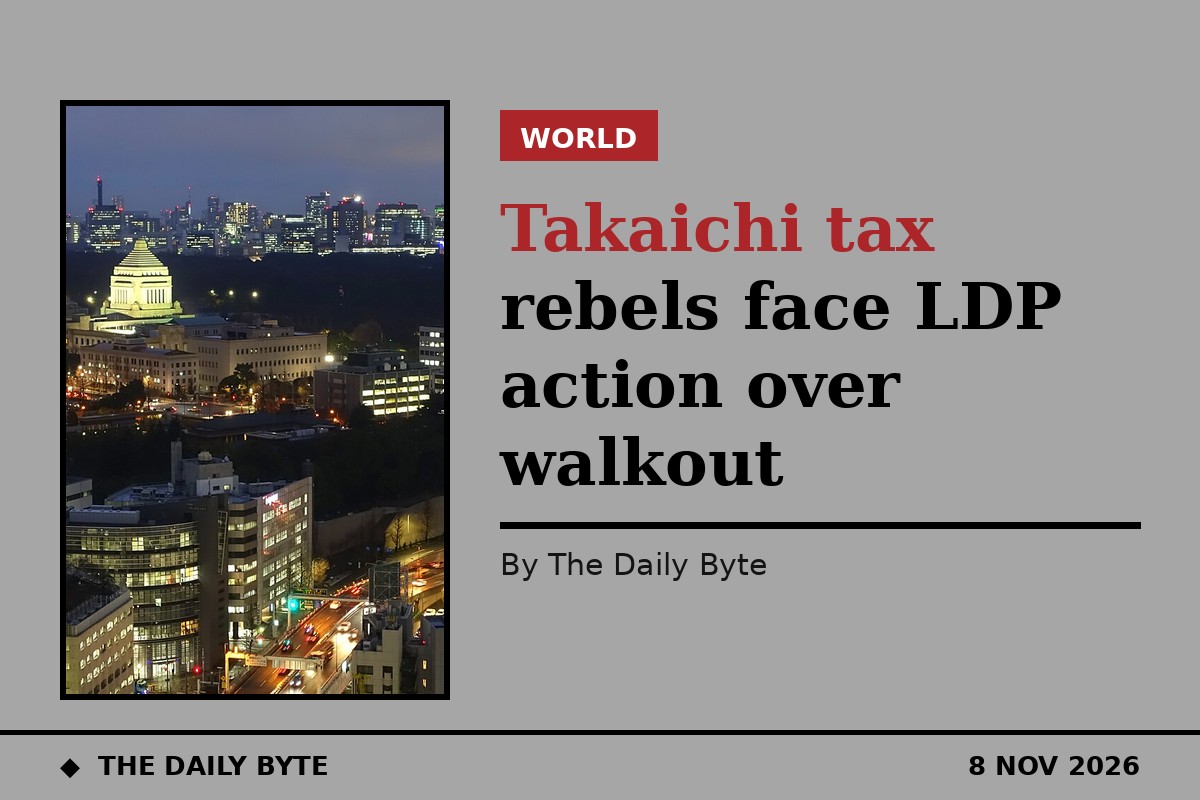
Japan's ruling Liberal Democratic Party is demanding explanations from four of its own senior lawmakers, including former prime minister Shigeru Ishiba, after they walked out before a vote on Prime Minister Sanae Takaichi's flagship consumption tax cut. The protest has exposed a split inside the governing party just as the bill moves to the upper house, where the government does not hold a majority.
The House of Representatives approved the consumption tax cut on Friday, 6 November, but the government's success was overshadowed by the decision of four senior LDP lawmakers to absent themselves from the vote. Alongside Ishiba were Yuko Obuchi, Yoshihisa Furukawa and Hajime Funada. The party has set a Monday deadline for the four to provide explanations before the leadership decides on any action against them.
Takaichi, who heads the party, has pushed for the temporary tax cut to help households hit by rising living costs. In the first reduction since the consumption tax was introduced, the ruling coalition of the LDP and the Japan Innovation Party aims to cut the rate on food and beverages to 1 percent from 8 percent for two years from April. The bill also seeks to introduce cash benefits for low-income earners, although opposition parties have described it as sketchy.
Funding fears behind the walkout
The four rebels are fiscal hawks who have been vocal in their opposition to the tax cut. Ishiba, who was replaced as prime minister by Takaichi in October 2025, took issue with the lack of clarity over funding, telling reporters: "Our concerns (about fiscal discipline) have yet to be dispelled." He told colleagues he could not agree to the measure, warning that the source of funding was unclear and that it would damage public finances.
Obuchi, an advocate of fiscal discipline who resigned as a senior member of an intraparty tax panel in July, also voiced worries about funding on Friday, noting the importance of the consumption tax for future generations. Her father was part of the cabinet that introduced the tax in 1989.
After the vote, the rebels repeated their concerns about the bill's impact on government finances, the risk to the social security system and the reality that the expiry of the tax cut in two years could mean an effective tax increase for most taxpayers. Opposition parties have also flagged the lack of detail on how additional subsidies will be distributed, how the cut will be financed and how businesses will be supported with the costs of implementing it.
Leadership response and the upper house test
Takaichi has refrained from openly criticising the four, but other LDP leaders have been furious. Policy chief Takayuki Kobayashi called the walkout "extremely regrettable" and warned that the four could face punishment for failing to vote in accordance with party instructions. Another senior party member said: "It's not the kind of action a former prime minister should take." Some leaders have even called for the rebels to resign their seats.
The bill cleared the ruling coalition-controlled lower house, but the ruling camp does not hold a majority in the Senate and will need support from opposition parties to enact the legislation before the current Diet session ends in December. Deliberations in the upper house are due to begin on 11 November, where opposition parties will use an ad hoc committee to press the government after what they felt was an inadequate debate in the lower house.
In the committee, opposition parties outnumber the ruling parties twenty to nineteen, with the LDP's Yoshifumi Matsumura chairing. The committee cannot stop the legislation from reaching the whole house, because legislation referred from the lower house has to go to a plenary session, so its role is advisory. Even so, it will hold a more extensive debate that could air many of the grievances raised by Ishiba and the others.
Takaichi suggested in questioning on Friday that additional payments could go to roughly 30 percent of workers, a proposal that is unlikely to sway her opponents. The prime minister is still likely to secure her tax cut, perhaps even without a second vote in the lower house, if the government can convince a few independents to back the bill. But the rebels have made it less likely that a main opposition party will work out a compromise to support the legislation in the upper chamber, and have drawn public attention to the way the government has moved the bill through the Diet while leaving major questions about its plan unanswered.
[Source: Kyodo News](https://www.europesays.com/japan/120473/) | [Source: IwPost](https://iwpost.com/takaichi-vs-the-tax-rebels/)