Tehran Reviewing US Proposal as Talks Gather Pace
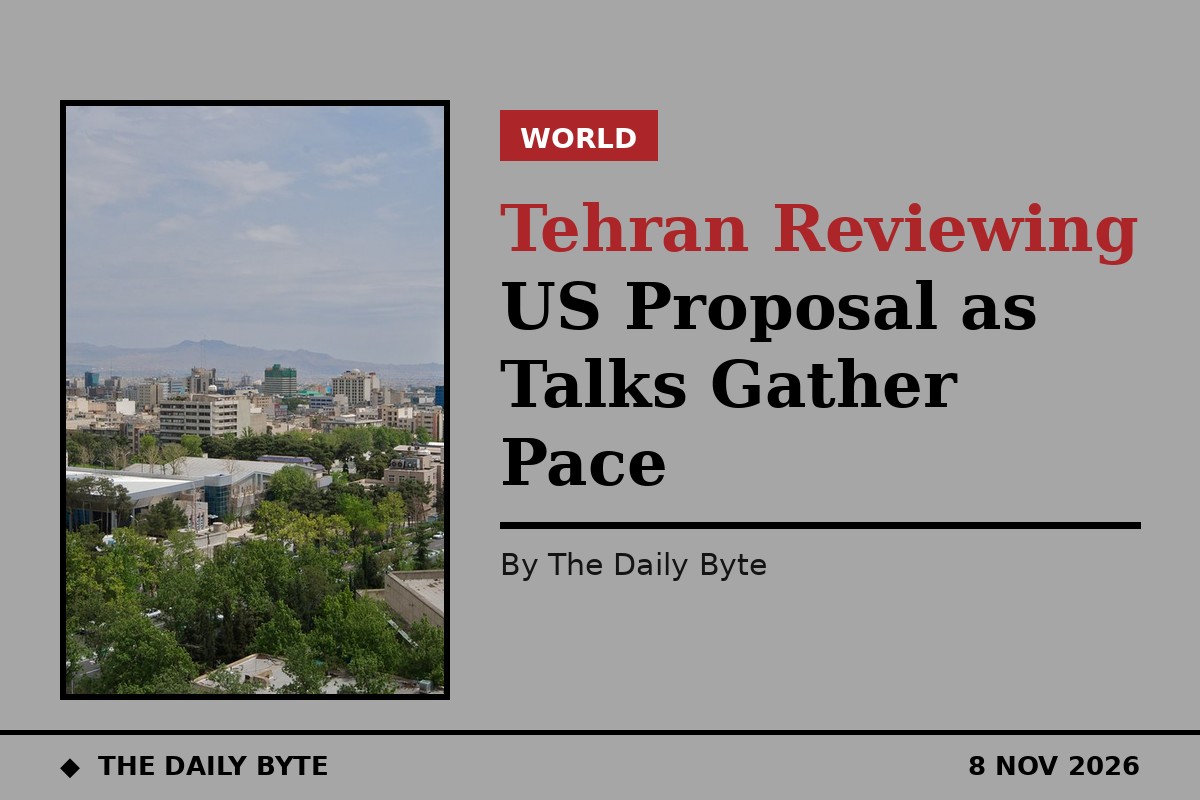
Iran has said a United States proposal to end the war is still under review, and that Tehran will send its response through Pakistan once it has settled its position. Foreign Ministry spokesman Esmaeil Baghaei told the ISNA news agency that the proposal remained under review and that Iran would communicate its response after it had finalised its views. The statement came as US President Donald Trump said the two sides had held very good talks and suggested that a deal could be within reach.
Trump told CNN in a phone interview on Sunday that renewed American attacks on Iran were highly unlikely as long as negotiations showed progress. He said it depended on whether Tehran signed what he called a very strong agreement, and repeated the phrase five times during the 20-minute interview. The talks cover Iran's nuclear programme and the reopening of the Strait of Hormuz, through which shipping has been repeatedly attacked during the conflict.
Trump is aiming to secure an agreement before the end of his upcoming trip to China, with negotiators working through a reported 14-point framework passed through Pakistani mediators. Pakistan's Prime Minister Shehbaz Sharif, described as a key mediator between Iran, the United States and Israel, said he was hopeful that the current momentum in the negotiations would lead to peace in the region.
Diplomatic activity has quickened since last week's midterm elections in the United States. On Friday, Qatar said Trump had called Qatari Emir Sheikh Tamim bin Hamad Al Thani to discuss de-escalation, and a day earlier Iran's Foreign Minister Abbas Araghchi spoke with his counterparts from Saudi Arabia, the United Arab Emirates, Oman, Pakistan, Kuwait, Jordan, Turkey, Cyprus and Qatar. Araghchi also said Tehran was looking to China's support for a new post-war regional framework. Qatar has acted as a mediator in the talks.
The negotiations have reached this point after eight months of war with little military action or significant diplomatic progress in recent weeks, while oil tankers passing through the Strait of Hormuz have come under Iranian attack. Washington has meanwhile stepped up pressure, offering a reward of up to 20 million dollars for information on Iran's nuclear programme and launching a task force aimed at blocking Tehran from moving advanced weapons and other materials by land. Trump said three American aircraft carriers were in the region and that US forces were ready if he gave the order to strike.
Trump also claimed that Iran retained only 10 percent of its missile capacity and 15 percent of its drone capabilities, and that its air defences had been destroyed. Those claims have not been independently verified. Iran's Parliament Speaker Mohammad Bagher Ghalibaf mocked recent American military operations on social media, joking that one operation had failed and that Washington had moved on to another. The US military said separately that a Navy fighter jet had fired on and disabled the rudder of an Iranian-flagged oil tanker in the Gulf of Oman after the vessel allegedly tried to breach Washington's blockade of Iranian ports.
Neither side has disclosed the contents of the American proposal, and both governments, along with Qatar, have kept quiet about the detailed state of the negotiations. Tehran is now finalising its views before replying through Pakistan. Whether the compressed timetable produces a breakthrough remains uncertain, but any agreement would have to settle both the nuclear question and the future of shipping through the Strait of Hormuz.


