Thailand data centre rules set as applications surge
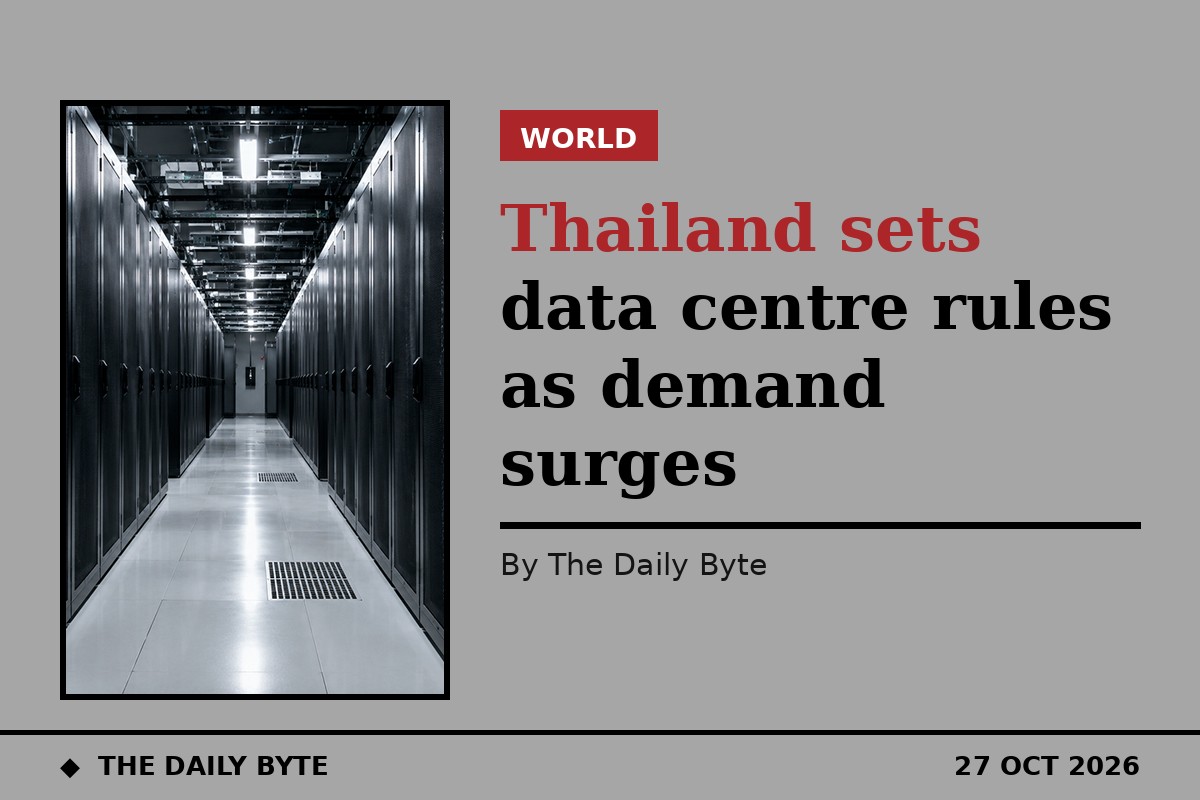
Thailand's data centre committee said on Tuesday that it will establish minimum requirements for data centre operators, as a surge in applications prompts closer scrutiny of the fast-growing sector. The rules will cover location and land use, fuel storage and water management infrastructure, as well as an environmental code of practice.
Seven tiers and a 2027 reopening
Data centres will be divided into seven tiers based on power demand, the committee said. Danucha Pichayanan, secretary-general of the National Economic and Social Development Council, said the criteria will be submitted to cabinet next week, with new data centre applications expected to open in early 2027. Existing data centres will have one year to meet the new minimum requirements once they take effect.
A boom drawing more than 100 hopefuls
Danucha said there were more than 100 prospective operators. As of February, Thailand had 42 data centres, representing 3,400 megawatts of IT load and about 750 billion baht ($22.58 billion) in investment. Some of the largest recent projects have come from TikTok, which invested $24.61 billion this year, according to the Reuters report, while Google announced a $1 billion investment in data centre and cloud infrastructure in 2024. Thailand, Southeast Asia's second-largest economy, wants to position itself as a regional data infrastructure hub, similar to Singapore and Malaysia.
Why the rules matter now
The boom brings jobs and investment, but also heavy demands on power, land and water, which is why the government is moving to set a baseline before the next wave of applications opens. Tiering by power demand should let regulators judge large and small facilities differently, rather than applying a single standard to all. For operators already in the country, the one-year compliance window will be the first test of how demanding the new standards prove in practice.