Thar Coal Mining Shifts to Grid Power, Saving $30m a Year
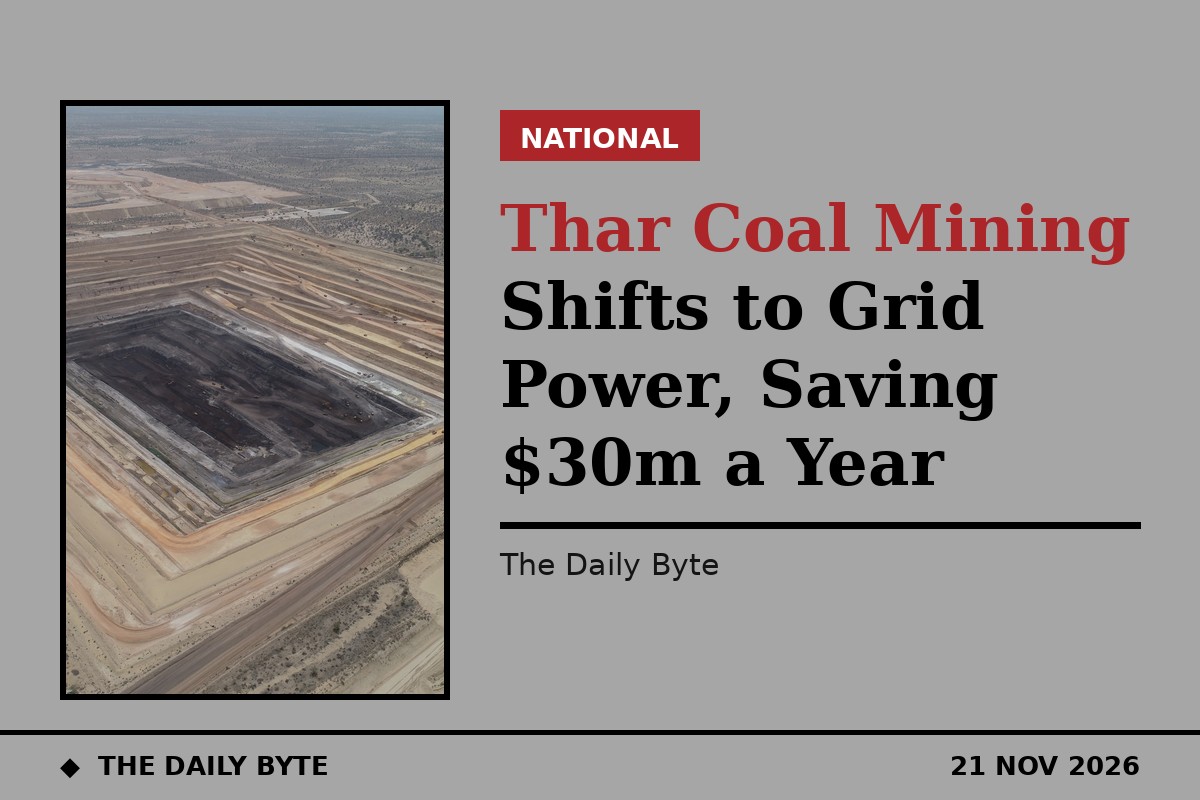
Work has formally begun on shifting coal mining in Thar from diesel power to the national grid, a change the government says will save Pakistan between $25 million and $30 million in foreign exchange every year.
The project was announced on Wednesday, 18 November, after a review meeting on the electrification of Thar Block I and Block II. The contract for the work has been awarded and the contractor has mobilised at the site, moving the project from planning into execution.
Completion has been brought forward to the first quarter of 2028, by April of that year, roughly eight to nine months ahead of the original end-of-2028 target. The progress was reported at a meeting chaired by Federal Minister for Power Sardar Awais Ahmad Khan Leghari, attended by representatives of the Thar Coal and Energy Board, the Sindh Engro Coal Mining Company, Sino Sindh Resources Limited, the Power Division and the Hyderabad Electric Supply Company.
The work is being carried out under the direction of Prime Minister Shehbaz Sharif, with the Power Division leading the shift from diesel generation to grid supply for the mining operations in both blocks.
Cheaper power for the mines
The project will connect the mining operations in both blocks to the national grid through 132-kilovolt transmission infrastructure from the Islamkot Grid Station, supplying around 60 megawatts of electricity to the mining sites.
The financial case is direct. Mining operations currently burn between 200,000 and 250,000 litres of diesel a day, including about 35,000 litres for dewatering alone. Daily diesel savings from the switch are projected at around Rs25 million.
Power for the mines currently costs around 33 cents per kilowatt-hour when generated from diesel. Once the sites are connected to the grid, that is expected to fall to 13 cents, a reduction of more than 60 per cent. The lower cost of coal production is expected to cut the coal tariff by about $0.70 per tonne, lowering the overall cost of the power generated from Thar coal.
Cleaner as well as cheaper
The switch is also expected to reduce carbon emissions from the mining operations by about 80,000 tonnes a year, as diesel generators are replaced by grid electricity. Diesel-powered mining vehicles are to be converted to electric systems over time, with Block I planning to induct about 40 electric trucks by the end of this year and Block II targeting electric vehicle deployment in 2028, alongside the completion of grid connectivity.
Thar coal is a central part of the China-Pakistan Economic Corridor and of Pakistan’s energy security, and the minister told the meeting that cutting diesel imports, easing pressure on foreign exchange reserves and lowering the cost of electricity from local coal would turn a national resource into more affordable power for consumers.
With the contract awarded, the contractor on site and the deadline pulled forward, the savings are now tied to delivery rather than planning. The grid connection is due to be completed by April 2028, and the benefits, cheaper mining power, lower coal costs and reduced diesel imports, are expected to begin flowing as soon as the lines are energised.